How Deep Space Spacecraft Navigate Without GPS
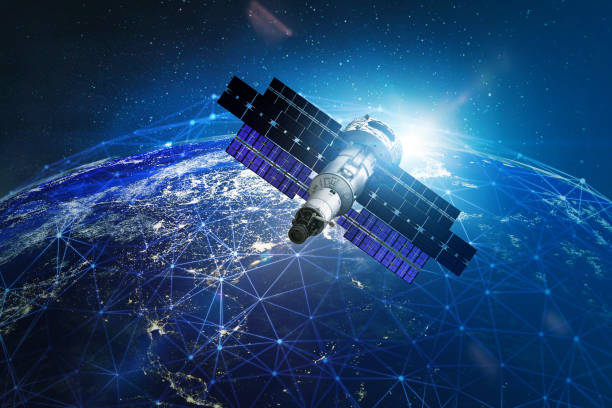
The old way was ground teams. NASA’s Deep Space Network uses giant antennas in California, Spain, and Australia. They send signals, measure the delay, and track Doppler shift. The spacecraft gets commands from Earth. But light takes time. Mars can be twenty minutes away one way. If a thruster sticks or a sensor glitches, waiting for a room full of engineers to answer is not an option. So modern spacecraft need more autonomy baked into the black box.
Sensors are the first layer. Star trackers take pictures of constellations and compare them to a catalog. Sun sensors find the sun. Inertial measurement units use gyros and accelerometers to track rotation and acceleration. But IMUs drift. Star trackers can get blinded by glare. So a navigation filter blends the data. A Kalman filter estimates position, velocity, attitude, and uncertainty. It weighs noisy readings and updates the estimate. This is the math that turns raw sensor data into a working sense of self.
Optical navigation adds eyes. Cameras look at moons, asteroids, and planets against the star background. The angle and size of a target give distance and direction. New Horizons used optical navigation to reach Pluto. OSIRIS-REx used it to close in on Bennu. Future missions to Europa, Titan, and small asteroids will lean on it even more. For landing, terrain relative navigation takes pictures and matches them to an onboard map. NASA used that on Mars 2020 Perseverance. LiDAR and hazard detection find safe spots. This is how a lander avoids a boulder field without a human at a joystick.
The black box itself is not just a recorder. It is flight software running on radiation-hardened processors. It has fault protection. If sensors disagree or the computer resets, it can go into safe mode, point solar panels at the sun, and wait for instructions. It logs telemetry and events. When something goes wrong, engineers replay the data to find the cause. The black box has to work when communications are weak, when the spacecraft is far away, and when a cosmic ray flips a bit. Future AI could let it make bigger calls: reroute around a malfunction, pick a landing site, or dodge debris. But trust is hard. You do not want a chatbot hallucinating a course correction.
The hardest part is knowing when the answer is wrong. Spacecraft cannot call a mechanic. They have to monitor themselves. Navigation software compares expected sensor readings with actual ones. If a star tracker reports a constellation that cannot be there, the filter rejects it. If a thruster fires longer than commanded, fault protection cuts it off. If the main computer fails, a backup takes over. This redundancy is boring until it saves a billion-dollar mission. The black box also keeps time. Stable clocks and ephemeris data tell the spacecraft where planets and moons will be years from now. Without that, a course correction is just a guess.
This matters for future space travel. Artemis, the lunar Gateway, Mars missions, and commercial stations will create more spacecraft and more traffic. Ground stations are finite. You cannot joystick every drone on the Moon. Autonomous navigation and black-box resilience let spacecraft operate independently. They also lower cost. A smallsat with good onboard navigation can do science without a huge operations team. For people who grew up with GPS and smartphones, it is easy to assume location is free. In space, it is a hard-won engineering problem. The next generation of explorers will rely on black boxes that think fast, log everything, and keep flying when Earth is just a pale blue dot on the screen.
Space News
Latest Articles
New rockets, upcoming launches, and the stories shaping humanity's push off this planet. No astronomy degree required.