Lunar night survival and the two-week darkness
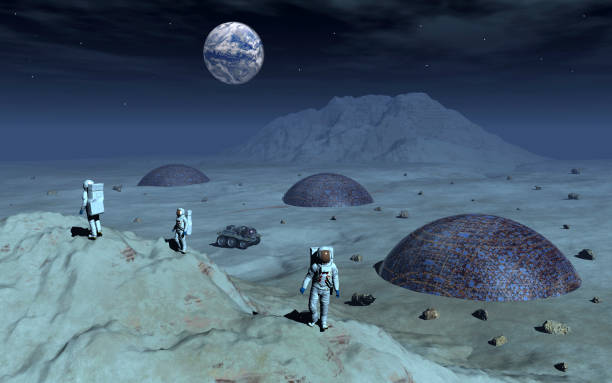
The Moon’s day-night cycle is brutal because it’s not like Earth’s gentle rotation. A lunar day lasts about 29.5 Earth days, split evenly into two weeks of daylight and two weeks of darkness. During the day, solar panels feast on unfiltered sunlight and can generate abundant power. But when night falls, those same panels become dead weight. If your habitat, life support, and scientific instruments don’t have a way to stay warm and running, everything freezes solid. That’s where technology steps in, and not just the kind you see in sci-fi trailers.
Right now, the leading contender for lunar night survival is the regenerative fuel cell system, sometimes called a reversible fuel cell. Think of it as a battery that breathes. During the lunar day, excess solar power is used to split water into hydrogen and oxygen via electrolysis. These gases are stored in tanks. When night hits, you feed the hydrogen and oxygen back into a fuel cell, which combines them to produce electricity, heat, and water. The water then cycles back into the system for the next day. It’s a closed loop, and it’s efficient. NASA and private contractors like Blue Origin have been testing these units in vacuum chambers, and the early results are promising. The key advantage is that this system delivers both power and heat—critical for keeping electronics from becoming brittle and crew quarters livable.
But fuel cells alone won’t cut it for a full-scale base. You need redundancy, and you need something that doesn’t rely on consumables that could leak or degrade. That’s where nuclear power comes back into the conversation, specifically small fission reactors. NASA’s Kilopower project, which ran a successful prototype called KRUSTY in 2018, proved that a compact uranium-fueled reactor can generate about one to ten kilowatts of electricity continuously for years. A single Kilopower unit can run a small habitat through the lunar night without blinking. The fission core produces heat, which is converted to electricity via Stirling engines—no moving parts exposed to the vacuum, high reliability, and no dependence on sunlight. The challenge is weight and launch cost. A Kilopower system with its shielding might weigh a ton or more, and lifting that to the Moon isn’t cheap. But if SpaceX’s Starship can deliver payloads at a fraction of current costs, nuclear becomes the obvious baseline.
Then there’s the thermal management side. Even if you generate power during the night, you have to keep the hardware from radiating all that heat away into the void. Insulation is critical, but so is phase-change material technology. Engineers are experimenting with salts and waxes that freeze at specific temperatures, storing heat during the day and releasing it slowly during the night. Advanced multi-layer insulation blankets, like those used on the James Webb Space Telescope, can cut heat loss drastically. But they have to be rugged enough to survive abrasive lunar dust that gets into everything.
The reality is that no single system will do the job. The most likely architecture for a permanent base will combine solar power during the day, regenerative fuel cells for the first week of night, and a small fission reactor as a baseline load that never turns off. That hybrid approach hedges against component failure and keeps the margin of error wide enough to save lives.
For the casual enthusiast tracking the future of space travel, the lunar night is where theory meets reality. Solar panels and batteries are fine for a weekend camping trip. But on the Moon, you’re not camping—you’re homesteading. And homesteading means building a power system that doesn’t flinch when the Sun disappears for half a month. The technology is already rolling off test benches. The question isn’t if we can survive the lunar night. It’s whether we’re ready to ship the hardware that lets us do it in style.
Space News
Latest Articles
New rockets, upcoming launches, and the stories shaping humanity's push off this planet. No astronomy degree required.