Orbital Habitats Are Becoming Commercial Real Estate in Space
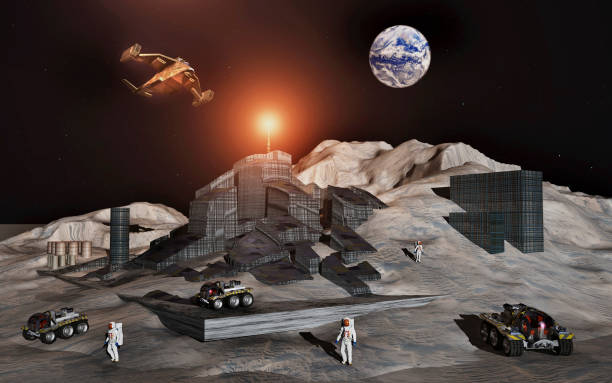
Companies like Axiom Space, Vast, Blue Origin, Sierra Space, and Voyager are all working on pieces of this. Some are starting with a single module attached to the ISS. Others are planning free-flying stations. Some are betting on inflatable habitats that launch compact and expand in orbit. Others are using rigid metal cylinders. The hardware looks different, but the business plan is similar. Launch a core module. Add power, cooling, life support, and docking. Then sell time and space to researchers, manufacturers, tourists, and satellite operators. That is not a science fair. It is real estate.
The cost of getting mass to orbit is falling. Falcon 9 made reusable rockets normal. Starship is aiming to make them cheap and huge. When launch is no longer the main bottleneck, the habitat becomes the product. You do not need a billion-dollar government program to put a lab in orbit. You need a module that can dock, a power system that works, and a customer who will pay. That is why so many companies are suddenly interested. They see the same curve that happened with satellites. What used to be government-only is now commercial.
Microgravity is the hook. In orbit, you can grow protein crystals that are hard to make on Earth. You can draw fiber optics with fewer imperfections. You can print human tissue. You can study how fluids and flames behave without buoyancy. You can manufacture drugs that are difficult to stabilize. These are not giant markets yet. But they are real. A single successful product can pay for a lot of upmass. The ISS has already proven that. Now the question is whether private stations can do it cheaper and more often.
Tourism is the flashy customer. It gets headlines. A wealthy passenger pays millions for a week in orbit. That money helps, but it is not the backbone of a commercial station. The backbone is repeat business. A pharmaceutical company that runs experiments every month. A satellite operator that needs to refuel or repair a spacecraft. A company that wants to test a new sensor in vacuum. A media outfit that wants to film in zero gravity. Those customers do not care about flags. They care about price, schedule, and access. If a habitat can deliver that, it wins.
The hard part is not building a cool module. It is keeping people alive. Life support has to recycle air and water. Power has to survive orbital night. Thermal control has to dump heat. Shielding has to handle debris and radiation. Docking has to be standard so different vehicles can connect. Insurance has to be affordable. Legal disputes over jurisdiction and liability have to be sorted out. None of that is glamorous. It is plumbing, power, and paperwork. But that is what turns a prototype into a platform.
The commercial future of orbital habitats depends on NASA as an anchor tenant, not as the owner. NASA can rent space, buy services, and send astronauts to do research. But private companies need other customers to close the business case. That means lower prices, more launch options, and clear rules. It also means accepting that some stations will fail. That is how commercial markets work. The ISS was a one-off. The next era will be a neighborhood. Some buildings will be nice. Some will be cheap. Some will be abandoned. The ones that survive will be the ones that make money.
For casual space fans, this is the thing to watch. Not just the next rocket launch. Not just the next astronaut. Watch who is buying space on a commercial station. Watch which modules actually launch. Watch which companies sign customers before the hardware is even built. That tells you whether orbital habitats are a real industry or just a render. The answer will not come from a press release. It will come from a docking port, a power bill, and a paying customer.
Space News
Latest Articles
New rockets, upcoming launches, and the stories shaping humanity's push off this planet. No astronomy degree required.