Phantom Space aiming for mass production
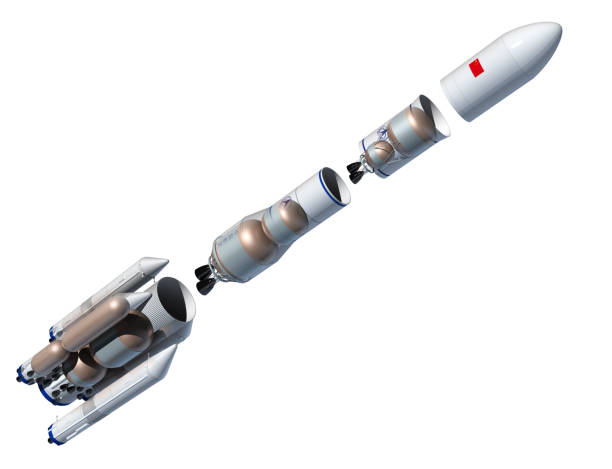
The core problem with rockets today is simple: they’re essentially hand-built. Even SpaceX, with all its automation, still assembles most of its vehicles in a process that looks more like a custom fabrication shop than a factory floor. Each rocket is a unique, high-stakes project. That drives up costs, slows down production, and makes it nearly impossible to scale to the launch rates we need for things like satellite constellations, space stations, or even interplanetary missions. Phantom Space is attacking that bottleneck directly.
Their philosophy is brutally practical. Instead of designing a rocket from scratch around exotic materials or bleeding-edge propulsion, Phantom is using off-the-shelf components wherever possible. Their Daytona rocket uses a pressure-fed engine cycle, which is simpler and cheaper to build than the turbo-pump systems used by most modern rockets. Pressure-fed engines aren’t new. They were used in the Apollo lunar module and early intercontinental ballistic missiles. But Phantom has updated the concept with modern computer control, 3D-printed combustion chambers, and composite tanks. The result is a vehicle that is reliable, cheap, and most importantly, easy to replicate.
Phantom’s real innovation is in the production line itself. They are building a factory designed to output a completed rocket every week, eventually scaling to one every two days. For context, most small launcher companies are lucky to deliver a handful of vehicles per year. Phantom wants to make dozens. To do this, they are using a build philosophy called “lean manufacturing,” borrowed directly from the automotive industry. They minimize inventory, standardize parts, and use automated welding, fiber winding for composite structures, and robotic assembly arms. The goal is a rocket that comes off the line like a Ford F-150, not a Ferrari.
The Daytona rocket is the immediate proof of concept. It’s a two-stage vehicle capable of lifting about 500 kilograms to low Earth orbit. That puts it squarely in the small-launch market, competing with Rocket Lab’s Electron and Relativity’s Terran 1. But while those companies focus on unique selling points like carbon-fiber structures or 3D-printed engines, Phantom is focused on volume. They aren’t trying to offer the cheapest launch per kilogram. They’re trying to offer availability. If you need a ride to orbit and you need it next month, not next year, Phantom wants to be your go-to. They are already running static fire tests of the Daytona’s engine at their test facility in Mojave, California, and are targeting an orbital test flight within the next twelve months.
This mass-production approach solves another huge problem in the industry: supply chain fragility. Right now, if a single machined part for an engine turbine fails inspection, the whole rocket build can be delayed weeks. Phantom’s reliance on standardized, commercially available parts means they can source replacements from multiple vendors almost immediately. Their engines have fewer moving parts overall, which reduces failure points and simplifies maintenance. That resilience is a major selling point for customers who are tired of launch delays.
Phantom Space also benefits from a clear-eyed understanding of what customers actually need. Most of the market today isn’t launching massive communications satellites or Mars rovers. It’s launching modest-sized payloads for Earth observation, internet connectivity, and defense applications. These customers don’t need the most powerful rocket ever built. They need a launch that happens on schedule, at a predictable price. Phantom’s business model is built around that reality, not around flashy engineering records.
The implications of mass-produced rockets extend beyond just the small launch market. If Phantom proves the model works, it will force incumbents like ULA and even SpaceX to reconsider their own manufacturing strategies. The space industry is waking up to the fact that the future of space travel depends not on better engines, but on better factories. Phantom Space is betting that the company that masters production will win the next decade, not the one with the most thrust.
For the casual space enthusiast wondering what to watch, Phantom’s upcoming test flights will be the tell. If the Daytona works and they start rolling out vehicles at industrial speed, the entire game changes. No more waiting months for a ride. No more custom-built, million-dollar delays. Just a rocket, in stock, ready to fly. That future is already in testing.
Space News
Latest Articles
New rockets, upcoming launches, and the stories shaping humanity's push off this planet. No astronomy degree required.