Psyche mission and the metal asteroid target
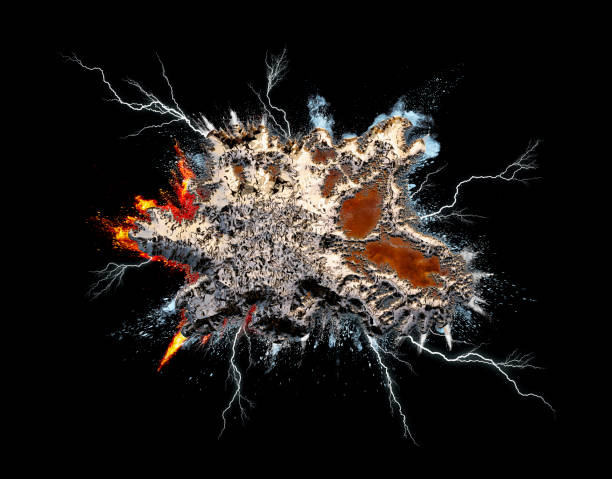
16 Psyche is roughly 140 miles wide, and what makes it stand out from the thousands of other asteroids in the belt is its composition. Radar and spectral observations suggest it’s made mostly of nickel-iron metal, similar to Earth’s core. That’s a big deal because most asteroids are carbonaceous or stony. Psyche looks like it might be the exposed core of an early planet that got smashed apart billions of years ago. In other words, it’s a front-row seat to how planets form, and it’s loaded with stuff we actually use.
The Psyche mission launched in October 2023 from Kennedy Space Center atop a SpaceX Falcon Heavy. It’s scheduled to arrive at the asteroid in August 2029 after a Mars gravity assist. Once it gets there, the orbiter will spend about 26 months mapping and studying Psyche from orbit. It won’t land, but it will use a suite of instruments including a multispectral imager, a gamma-ray and neutron spectrometer, and a magnetometer to figure out what the asteroid is really made of and whether it has a magnetic field. The goal is to confirm whether Psyche is indeed a planetary core and to understand the building blocks of terrestrial planets.
But here’s where this destination gets interesting for the “Asteroid Belt and Resources” section of this website. If Psyche is as metal-rich as scientists believe, it represents an absurd amount of industrial raw material just sitting in space. Estimates put the value of the nickel, iron, and precious metals like platinum and gold at quadrillions of dollars. Now, nobody’s going to haul an asteroid back to Earth to crash the precious metals market—that would tank the value of what you mined. The real play is in-situ resource utilization: using asteroid metals to build spacecraft, fuel depots, and infrastructure in space without having to launch everything from Earth’s gravity well.
For a guy in his twenties thinking about the next few decades, Psyche is a proof of concept. If we can send a probe there, map it, and understand it, then the next step is learning how to extract and process that metal in zero-G. The Asteroid Belt is packed with similar bodies, but Psyche is the heavyweight champion in terms of accessible metal. Missions like this are the reconnaissance for a future where space-based manufacturing is real. Think about it: every rocket you launch from Earth burns insane amounts of fuel just to get off the ground. If you can build ships and stations from asteroid metal, you skip that gravity tax entirely. That’s how you open up the solar system.
The Psyche mission also matters because it’s a stepping stone for deeper destinations. NASA’s Artemis program aims to establish a permanent presence on the Moon, and from there, the Asteroid Belt is the next logical leap. Understanding Psyche helps us identify which asteroids are worth mining and which aren’t. It gives engineers data on how to land on or orbit these bodies, and what kind of equipment you’d need to process metal in a vacuum with no atmosphere and extreme temperature swings.
Bottom line: 16 Psyche isn’t just a rock. It’s a destination that answers two huge questions at once. First, how do planets like Earth form? And second, where will we get the materials to build our future in space? The Psyche mission is the first real shot at answering both. For anyone who wants to know where space travel is headed, this is one of the most important places to watch over the next decade.
Space News
Latest Articles
New rockets, upcoming launches, and the stories shaping humanity's push off this planet. No astronomy degree required.