The coffee machine in mission control
At places like Kennedy Space Center’s Launch Control Center or SpaceX’s Hawthorne mission control, the coffee machine is a silent workhorse. It’s not glamorous. It’s not on any livestream. But it keeps the people who keep rockets safe alert, functional, and sane. For an American man in his twenties who grew up watching Falcon 9 landings and dreaming of Mars, understanding why that coffee machine matters is understanding how real launch operations actually work.
Launch sites are chaotic by design. A single rocket launch involves hundreds of people working in different rooms, different buildings, and different time zones. The launch control center is the nerve center, but it’s not a Hollywood set. It’s a fluorescent-lit room filled with desks, screens, and the low hum of stressed conversations. Shift lengths for launch directors, propulsion engineers, and range safety officers routinely stretch twelve to sixteen hours. Weather delays push those shifts longer. Fueling issues, sensor glitches, and last-second holds mean the team stays put until the rocket either flies or gets rolled back.
This is where the coffee machine becomes a mission-critical system. Without caffeine, focus drops. Decision-making slows. A tired flight controller misreading a pressure spike could delay a launch or, worse, miss a real problem. NASA and its commercial partners don’t leave this to chance. In the Launch Control Center at Cape Canaveral, you’ll find industrial-grade commercial coffee brewers, not Keurigs or single-serve pods. They’re wired into the same backup power as the computers, because a power outage during a countdown can’t be the reason everyone runs out of fuel internally.
There’s also a culture around it. The coffee machine in mission control is a gathering point. It’s where engineers swap notes before a meeting, where a veteran flight director tells a rookie to relax, and where someone quietly asks if the rumors about a scrub are true. In the high-pressure hours before a launch, that machine is a social anchor. It’s a place to take a breath without leaving the building. Some centers even have a dedicated “coffee runner” during long countdowns—a junior engineer whose only job is to keep the pot full so nobody has to walk away from their station.
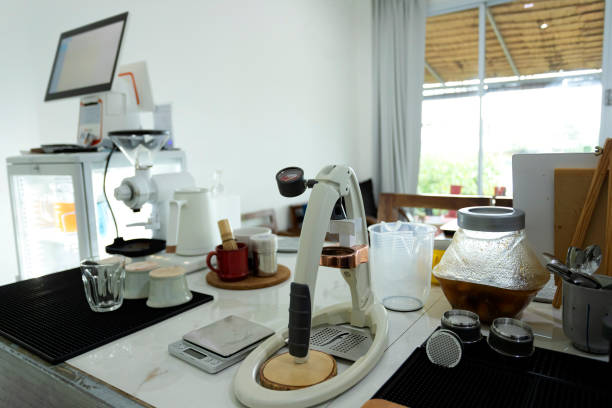
The hardware itself isn’t romantic. It’s a stainless steel commercial brewer with a thermal carafe, a hot water spigot for tea or instant soup, and a big red button that says “brew.” But when a scrub pushes a launch to the next day, and the team has to stay overnight to reset the count, that button becomes a lifeline. Veteran launch controllers will tell you stories of specific models—the Bunn, the Curtis, the Fetco—that have been in service for decades, surviving coffee spills, late-night crashes, and the occasional celebratory splash when a rocket hits orbit.
For casual space enthusiasts reading SpacePilgrim.com, it’s easy to obsess over the rocket itself: the engines, the trajectory, the payload. But the launch site relies on people, and people rely on basic tools. Oxygen tanks are checked. Propellant lines are purged. And the coffee machine is kept full. It’s not a metaphor. It’s logistics.
So next time you watch a launch livestream and see the camera cut to mission control, look at the back of the room. You might not see the coffee machine on screen. But know it’s there. It’s brewing. And it’s doing exactly what it’s supposed to do: keeping the people in charge sharp enough to get that rocket off the pad. In the world of launch sites, that’s not a luxury. It’s a requirement.
Space News
Latest Articles
New rockets, upcoming launches, and the stories shaping humanity's push off this planet. No astronomy degree required.