The partnership holding through invasion and sanctions
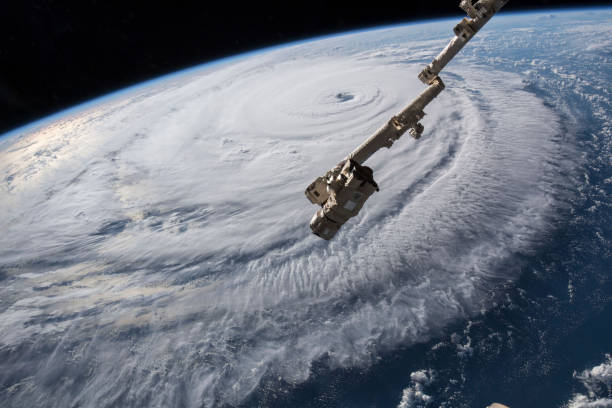
The ISS was never a friendship project. It was a strategic mission born from the ashes of the Cold War. In the 1990s, NASA needed Russia’s experience with long-duration spaceflight, and Russia needed cash and legitimacy. The resulting agreement was brutally pragmatic. The two sides built interdependent systems: American solar arrays powered Russian modules, Russian thrusters kept the station’s orbit stable, and neither could function fully without the other. That dependency was the point. It made walking away catastrophically expensive for both nations. When the Ukraine war erupted, critics called for cutting Russia off. But doing so would have meant abandoning the station—an option NASA rightly refused. The mission dictated that the partnership outlast the crisis.
Sanctions hammered Russia’s aerospace sector. Western export controls blocked components for Soyuz rockets and Russian-made electronics. Yet the ISS kept flying. Why? Because the mission’s daily operations were already built on pre-sanctioned hardware and protocols. The core life-support systems, the docking mechanisms, the communications links—these were set in stone years before the invasion. Sanctions couldn’t un-screw a bolt already in space. More importantly, both sides understood that the ISS was a rare channel of communication that did not depend on ambassadors or phone calls. When diplomats froze talks, engineers on the ground and astronauts in orbit still talked. The mission required it. Water recycling, exercise equipment, and air filters don’t care about geopolitics.
This resilience is not accidental. The ISS was designed with a grim assumption built in: that someday, one partner might become an adversary. Every critical system has backups on opposite sides of the station. The propulsion is split between Russian and American segments. The power grid can be reconfigured. Even the bathrooms are modular. This redundancy was sold to Congress as a safety feature, but it was also a political insurance policy. You can’t hold a station hostage if taking your ball home means your own astronauts suffocate. The result is a partnership that functions not on trust, but on mutual assured destruction—the same logic that kept the Cold War from turning hot.
For American men in their twenties, this might sound like boring engineering talk. But consider what it means for the future. The Artemis program aims to put boots on the Moon, and eventually Mars. Those missions will also require international partners. China is already building its own station. Private companies like Axiom Space are planning commercial modules. The lesson from the ISS is clear: long-term space missions will never succeed if they rely on friendly relations alone. They must be built with the assumption that politics will go sideways. The partnerships that last are the ones where leaving is worse than staying.
The ISS legacy is not a triumphant story of peace and cooperation. It is a gritty, unsentimental reality check. When sanctions bit and invasion news dominated headlines, the station’s crew did not debate politics. They replaced a carbon dioxide scrubber. They conducted a material science experiment. They waved at the camera. The mission did not care about borders. It cared about keeping three hundred miles of vacuum on the outside. That mission—simple, brutal, and non-negotiable—is what held the partnership together. And it is the only model that will work for what comes next.
In the end, the ISS proved that space exploration is not a escape from human conflict. It is a crucible for it. The pressure of war and sanctions did not break the partnership. It revealed its architecture. That architecture was built for survival, not harmony. And survival, not sentiment, is what keeps the station—and the dream of going further—alive.
Space News
Latest Articles
New rockets, upcoming launches, and the stories shaping humanity's push off this planet. No astronomy degree required.