Advanced Plant Habitat and the Arabidopsis studies
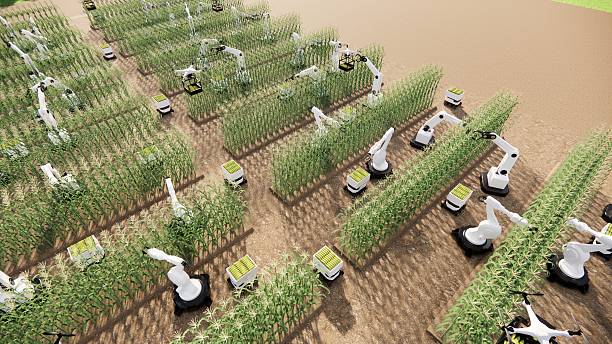
The APH is not your uncle’s greenhouse. It is a sealed, controlled environment roughly the size of a carry-on suitcase that sits on the International Space Station. Inside that box, LEDs pump out specific wavelengths of light because sunlight is too weak and too variable in low Earth orbit. Sensors monitor every variable you can name: humidity, temperature, oxygen levels, water delivery, and even the air pressure around the roots. The entire system is automated because astronauts do not have time to hand-water basil while they are fixing a carbon dioxide scrubber. The plant growth chamber isolates everything from the station’s ambient atmosphere, meaning the plants breathe their own recycled air and drink precisely metered amounts of water. This is not gardening. This is engineering a closed-loop biological machine, and the machine has to work every time.
The star test subject is Arabidopsis thaliana, a small flowering plant that biologists love the way car guys love a Chevy small block. It grows fast, it has a complete genome, and it does not complain about cramped conditions. But in space, Arabidopsis does something weird. It struggles to figure out which way is up. Without gravity, root systems go wandering instead of drilling down. That triggers stress responses, slower growth, and lower yields. If we are going to feed crews on a three-year round trip to Mars, we cannot afford plants that are confused. So the APH experiments are systematically figuring out exactly which light recipes and humidity levels trick Arabidopsis into behaving like it is back in a field on Earth. They have already found that red and blue LEDs in the right ratio can significantly improve root orientation, and that slightly elevated carbon dioxide levels actually boost growth in microgravity. But it is not a solved equation.
Why should you care, other than the obvious desire to avoid eating protein bars for the rest of your natural life? Because the APH data is directly tied to the logistics problem of deep space. Right now, the ISS gets fresh produce only when a cargo Dragon or Cygnus docks with a bag of salad tucked in between the spare pumps and the crew supplies. That works for a station that gets a resupply every few months. It does not work for a Mars convoy that will be on its own for years. The math is brutal. A single astronaut needs about two thousand calories a day. That is roughly one pound of dry food per day per person. For a crew of four on a three-year Mars mission, that is over four thousand pounds of food. That is not just weight. That is volume. That is mass that could have been science gear, shielding, or fuel. Every pound of food you grow in space is a pound you do not have to launch from Earth.
The Arabidopsis studies are the foundation work. They teach us how plants handle stress in microgravity, how they reproduce when there is no pollinator and no breeze, and what happens to their gene expression after multiple generations in space. The APH runs experiment after experiment, automatically seeding, watering, harvesting, and preserving tissue samples so scientists on the ground can look at the RNA. This is not just about lettuce. It is about understanding the fundamental biology of plants in a place that evolution never prepared them for. If Arabidopsis can adapt and produce viable seeds, then we can move on to dwarf wheat, soybeans, and eventually potatoes. Each success shortens the supply chain. Each failure rewrites the protocol.
Let’s be blunt. Nobody is going to Mars just to eat astronaut ice cream. That was a PR gimmick from the Apollo days that somehow survived into the present like a bad tattoo. Real deep space survival depends on closing the loop on water, air, and food. The Advanced Plant Habitat is one of the few pieces of hardware designed specifically to close that last loop. The Arabidopsis studies are not flashy. They do not involve rocket engines or moon bases. They are small, slow, and meticulous. But they are the difference between a crew that can keep going and a crew that runs out of food halfway between here and the red planet. So the next time you see a headline about astronauts eating space lettuce, remember that lettuce was grown in a sealed box that cost millions of dollars and years of design. It is not a novelty. It is a proof of concept. If we can make Arabidopsis grow straight in zero-G, we can feed a crew to Mars and back. If we cannot, we are staying right here.
Space News
Latest Articles
New rockets, upcoming launches, and the stories shaping humanity's push off this planet. No astronomy degree required.