Annihilation signals and the gamma-ray excess
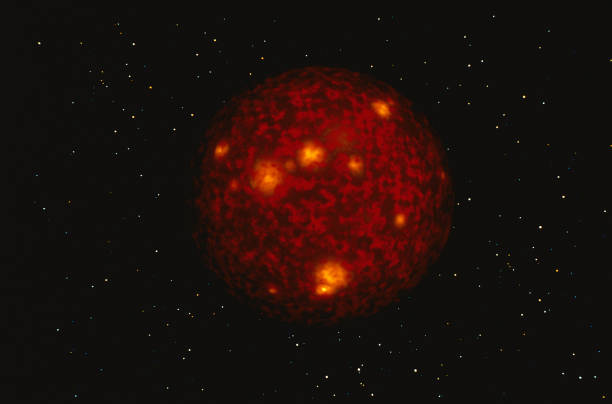
First, let’s get the basics straight. Dark matter makes up about 85 percent of all matter in the universe. You can’t see it, touch it, or detect it directly. It doesn’t emit, absorb, or reflect light. What we do know is that it has gravity, and that gravity holds galaxies together. Without dark matter, the outer stars in a spiral galaxy like the Milky Way would fly off into intergalactic space. It’s the invisible scaffolding of the cosmos.
Now, if dark matter is made of particles—and most physicists think it is—those particles should occasionally collide and annihilate each other. When they do, they release energy in the form of gamma rays, neutrinos, and other particles. This annihilation signal would be strongest where dark matter is densest, and the densest spot in our galaxy is the center. That’s exactly where the Fermi Gamma-ray Space Telescope and other instruments have been looking since the early 2000s.
What they found is a clear excess of gamma rays between about 1 and 3 GeV (giga-electronvolts) coming from a spherical region around the Galactic Center. This is the gamma-ray excess. It’s real. It’s been confirmed by multiple teams using different analysis methods. The shape of the emission—smooth, spherical, extending out about 5 degrees from the center—matches exactly what you’d expect if dark matter particles with a mass around 30 to 100 GeV were annihilating. That’s a big deal because it could be the first direct evidence of dark matter’s particle nature.
But here’s where the no-nonsense part comes in. This signal could also be caused by something far more mundane: a population of millisecond pulsars. These are rapidly spinning neutron stars that blast out gamma rays like cosmic lighthouses. We know they exist in globular clusters, and there’s no reason they wouldn’t be swarming near the Galactic Center. The problem is that we can’t resolve individual pulsars in that crowded region with current telescopes. The emission looks diffuse, but it could be the sum of thousands of unresolved point sources. If that’s the case, the gamma-ray excess is not a dark matter signal at all. It’s just astrophysical noise.
So where does that leave us? The debate is still open, and it’s been one of the most heated arguments in astrophysics over the last decade. Teams at the Fermi Collaboration, Princeton, and the Kavli Institute have published competing analyses. Some say the pulsar explanation fits the data better when you look at the energy spectrum and spatial distribution. Others argue that the signal is too smooth and too symmetric for pulsars, which tend to cluster in a more irregular pattern. The truth is, we don’t know yet, and that uncertainty is what makes this exciting.
What does this mean for the future of space travel and deep space science? If the gamma-ray excess is indeed from dark matter annihilation, it gives us a direct window into the invisible universe. It means we can study the properties of dark matter particles without building a billion-dollar underground detector. It also means the Galactic Center becomes a laboratory for fundamental physics. For those of us interested in the future of space travel, understanding dark matter is critical because it shapes the gravitational landscape of the entire galaxy. Any future interstellar missions—whether robotic or crewed—will need to account for dark matter’s distribution to navigate accurately and plot efficient trajectories.
On the other hand, if the signal turns out to be from pulsars, that’s still valuable. It tells us that the Galactic Center is even more packed with exotic objects than we thought, which has implications for gravitational wave sources and stellar evolution. Either way, this isn’t a dead end. It’s a push to build better telescopes, more sensitive detectors, and more sophisticated models. The next generation of gamma-ray observatories—like the Cherenkov Telescope Array—will have the resolution to tell apart pulsars from a dark matter glow. That’s coming online within the next five to ten years.
For now, the gamma-ray excess remains one of the most promising—and frustrating—mysteries in astrophysics. It’s a signal that could rewrite the textbooks or turn out to be a false alarm. But for anyone keeping an eye on the invisible universe, this is the kind of problem that makes deep space worth watching. It’s not hype. It’s the slow, patient work of untangling a signal from the noise. And when we finally crack it, we’ll know a whole lot more about what holds the universe together.
Space News
Latest Articles
New rockets, upcoming launches, and the stories shaping humanity's push off this planet. No astronomy degree required.