Ariane 5 first flight software glitch
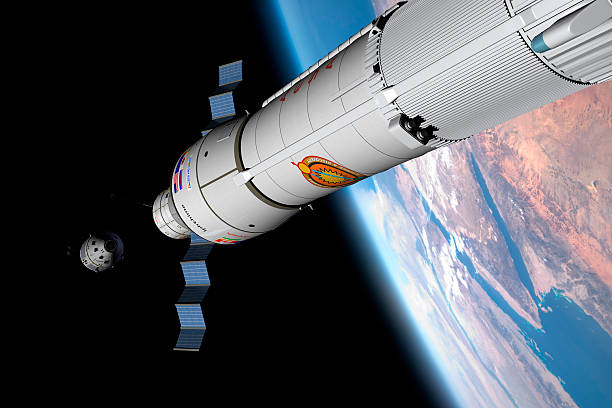
The story begins with a critical piece of software called the Inertial Reference System, or SRS. This system calculates the rocket’s position, velocity, and attitude by integrating data from accelerometers and gyroscopes. Essentially, it tells the flight computer where the rocket is and which way it’s going. The SRS on the Ariane 5 had been lifted directly from its predecessor, the Ariane 4, which had flown successfully many times. The problem was that the Ariane 5 followed a much more aggressive trajectory than the Ariane 4. The new rocket’s horizontal velocity increased far more rapidly early in flight. That faster acceleration meant that a 16-bit floating point number—used to store the rocket’s horizontal bias—overflowed.
Here is the technical breakdown without any fluff. The SRS software stored a value representing the rocket’s horizontal velocity relative to a fixed reference. On the Ariane 4, this value never got large enough to exceed the maximum number that could be represented in 16-bit floating point format. But on the Ariane 5, that value went from about 6,500 meters per second equivalent to over 26,000 meters per second equivalent during the first few seconds of flight. When the number exceeded the 16-bit limit, the computer crashed. The system flagged a diagnostic error, and the flight computer interpreted that diagnostic as a complete failure of both the primary and backup SRS units. It then initiated a sudden, hard turn to compensate for what it thought was a navigation error. That turn exceeded the rocket’s structural limits, and within half a second, the rocket began tumbling. The self-destruct system engaged at about T+39 seconds.
The European Space Agency’s subsequent investigation was brutally honest. The software design assumed that the SRS would only ever see the same range of values as it had on the Ariane 4. Nobody considered that a faster rocket could push a simple variable past its limit. The code had been tested thoroughly—for the Ariane 4. But the test scenarios for the Ariane 5 did not fully simulate its actual flight envelope. So the overflow happened, and because the software had no error-handling routine for that specific condition, it crashed the system entirely. The backup SRS had the exact same bug, so it crashed too. Single point of failure? Not exactly—it was a single point of assumption.
The fallout was massive. The explosion destroyed the rocket and its payload, a set of four European scientific satellites worth about $370 million in 1996 dollars. It also set back the Ariane 5 program by nearly a year. Engineers spent months redesigning the software to handle the overflow properly, and they added a software exception that would allow the SRS to continue operating even when a number overflowed. The European Space Agency also overhauled its software validation procedures, requiring that all reused code be fully re-verified against the new rocket’s trajectory profile, not just assumed safe based on past performance.
What makes this failure so instructive is that it was not caused by a hardware defect, bad weather, or a manufacturing error. It was a pure software bug—a stupid, preventable overflow that had been hiding in plain sight. The engineers made a classic mistake: they assumed that because the software worked before, it would work again. They forgot that a rocket is a system, not a collection of independent parts. Changing the trajectory without changing the navigation software is like putting a race car engine into a sedan and not updating the speedometer. You will eventually max it out, and when you do, everything stops.
Today, the Ariane 5 went on to become one of the most successful rockets ever built, with over 110 consecutive successful launches after that first failure. But the lesson from that first flight still echoes through every launch pad from Cape Canaveral to Baikonur. When you reuse software, you do not just copy it. You re-validate it against the new system’s actual physics. And you always, always plan for the variable you think will never overflow. Because it will.
Space News
Latest Articles
New rockets, upcoming launches, and the stories shaping humanity's push off this planet. No astronomy degree required.