Gloves and the fingernail delamination problem
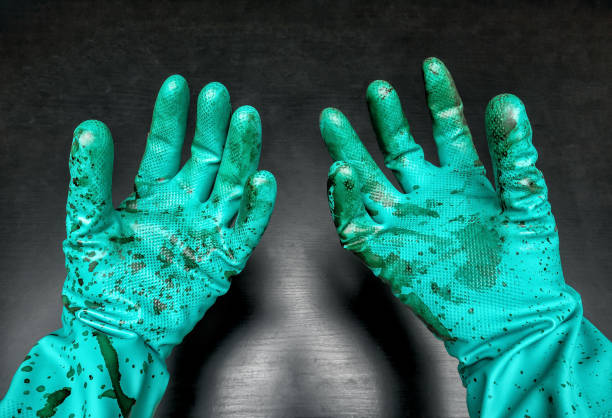
The physics is brutal but straightforward. A spacesuit glove must maintain about 4.3 pounds per square inch of pure oxygen pressure to keep your blood from boiling in vacuum. That pressure pushes your hand against the inside of the glove like a fist trying to escape a balloon. To move your fingers, you have to overcome that pressure, which requires force. Over a six-hour spacewalk, your fingers flex and push tens of thousands of times. The result is shear stress at the nail bed. The nail is harder than the surrounding tissue. When the glove’s restraint layer—the stiff fabric that stops the bladder from ballooning—doesn’t match your hand’s natural curvature, the nail gets levered. The tip lifts. The bed tears. You lose the nail. It’s medically annoying and operationally dangerous. Blood in a zero-g glove means compromised dexterity and potential suit contamination.
The current state of the art is the EMU glove, which uses a complex system of bearings, multi-layer restraints, and a separate inner bladder. It works for some astronauts, but the fit is never perfect because gloves are mass-produced in half-sizes. Custom molding exists, but it’s expensive and time-consuming. The real breakthrough is coming from the commercial sector. Companies like Collins Aerospace and SpaceX are redesigning gloves from the ground up, treating the finger-digit interface as a mechanical system rather than a piece of clothing.
One promising technology is active pressure regulation inside the glove. Instead of a fixed 4.3 psi applied evenly everywhere, new designs use embedded sensors and microvalves to adjust local pressure based on finger position. When you curl your fingers, the glove reduces pressure on the tips and increases it over the knuckles. This offloads shear at the nail bed. The engineering challenge here is reliability. You’re adding electromechanical components to a piece of gear that must survive vacuum, thermal cycling from minus 250 to plus 250 degrees Fahrenheit, and repeated impact. Early prototypes have shown a thirty percent reduction in nail trauma reports, but the failure rate for the valves themselves is still too high for EVA use.
Another line of attack is material science. Traditional gloves use a urethane-coated nylon bladder inside a cut-resistant outer layer of Kevlar or Vectran. These materials have excellent tensile strength but poor hand conformity. Researchers at the University of North Dakota are testing a composite glove that integrates shape-memory alloys into the fabric. When heated by your body heat, the alloy wires memorize the neutral position of your open hand. As you grip, the wires resist with a spring-like force that counters the suit pressure, reducing the net shear on your nails. The effect is subtle but measurable. In simulated zero-g flights, test subjects lost nails at half the rate of standard gloves. The downside is weight. The alloy wires add roughly fifteen percent more mass to the glove, which translates to more fatigue over a long spacewalk.
Software modeling is also entering the picture. NASA’s Johnson Space Center now runs finite element analysis on individual astronaut hand scans before assigning glove sizes. They simulate the mechanical stress distribution across each finger joint during typical task sequences like torqueing bolts or manipulating handrails. The models predict exactly where delamination is likely to occur. Then they modify the glove’s internal padding pattern—adding high-durometer foam pads at specific stress risers—before the glove ever goes through manufacturing. This is personalized engineering at scale, and early results suggest it cuts nail injuries by roughly sixty percent compared to off-the-shelf sizing.
The bottom line is that fingernail delamination isn’t a human factors inconvenience. It’s a technological bottleneck for extended space operations. If we want crews to spend weeks in orbit assembling stations, repairing satellites, or prepping Moon bases, the glove has to stop destroying their hands. The solution won’t be a single silver bullet. It will be a combination of active pressure control, advanced composite fabrics, and high-fidelity simulation. The smart money is on a hybrid glove that uses simple passive materials for everyday tasks and actuates local pressure changes only during high-grip periods. That approach trades complexity for user comfort and operational safety.
For the casual space enthusiast, this might sound like an obscure problem. But every time an astronaut loses a fingernail, the mission loses hours of productivity and gains a risk of infection or distraction. The next generation of gloves will make those losses rare. The technology is almost there. But don’t take off your own gloves just yet.
Space News
Latest Articles
New rockets, upcoming launches, and the stories shaping humanity's push off this planet. No astronomy degree required.