Al Bean painting the Moon from memory
Al Bean wasn’t supposed to be an artist. He was a Naval aviator and a test pilot. He flew the Apollo 12 mission in 1969, the second lunar landing, and spent nearly eight hours on the Moon’s surface with Pete Conrad. He was a straightforward guy, no-nonsense, the kind of man who thinks in checklists and procedures. When he came back to Earth, he did what astronauts do: parades, speeches, NASA work. He went through the motions. But something had shifted. You don’t look at the Earth from a quarter million miles away and come back the same. The problem was, nobody knew how to talk about it.
So Bean did something that, on the surface, sounds crazy for a man with his background. He quit his job at NASA in 1975 and became a full-time painter. Not a hobbyist. Not a weekend dabbler. He went all in. He studied under professional artists. He learned color theory, composition, and brush technique from scratch. For a guy who had flown jets off carriers and handled million-pound rockets, he sat down in a studio and started learning how to mix paint. The criticism came fast. Some people thought he was cashing in on his fame. Others wondered why a man who had actually been to the Moon would bother painting it when photographs exist. Bean’s answer was always the same: photographs are flat. They don’t tell you what it felt like.
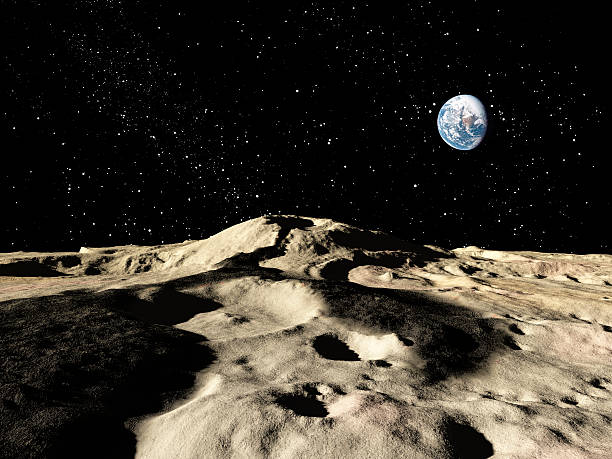
This is the part that matters, and this is why Al Bean belongs in a series about astronauts you never heard of. He understood something that most of us, including the other Apollo guys, never quite articulated. The Moon is not a postcard. The Moon is a place of overwhelming silence, dust that sticks to everything, a horizon that curves in a way that messes with your instincts. Photographs capture light, but they don’t capture presence. Bean realized that the only way to share what he had experienced was to reconstruct it with his own hands. He started painting the Moon not from photographs, but from memory. The way the sunlight hit the gold foil of the lunar module. The way the sky looked blacker than anything you can imagine. The way his own footprints stayed there, untouched, because there’s no wind to erase them.
His paintings are not photorealistic. That’s the point. They’re layered, impressionistic, thick with texture. He literally mixed Moon dust into his paint. He used his Apollo 12 checklist as a palette knife. The man was leaving literal pieces of the Moon inside his work. He painted over and over, hundreds of canvases, trying to get it right. And in doing so, he solved a problem that a lot of people face when they experience something so rare it doesn’t fit into normal life. He found a way to make it real again. Not just for himself, but for anyone willing to look.
Here’s why this matters to you, right now, in a world where space travel is becoming commercial, where SpaceX and Blue Origin are launching tourists and habitats are being planned for Mars. The Apollo era gave us the hardware, the engineering, the flags. But Al Bean gave us something else. He reminded us that space is not just a destination. It’s a sensory event. It changes the person who goes there. And if we’re going to send more people up, we need to be ready for what that does to them. Not the technical stuff. The human stuff.
They say the Apollo 12 landing was so precise that Bean and Conrad landed right next to an old robotic lander, the Surveyor 3. Bean took a piece of that Surveyor back to Earth. But the real retrieval he made was the memory. And he spent the next forty years pouring it onto canvas. He died in 2018, but his work hangs in museums and private collections. The paintings are strange and vivid. They don’t look like NASA photos. They look like what you would see if your brain tried to remember something too big to hold.
Al Bean went to the Moon and came back human. Then he spent the rest of his life trying to show you what that felt like. That’s the story. That’s the guy you never heard of. And honestly, he might be the most honest astronaut of them all.
Space News
Latest Articles
New rockets, upcoming launches, and the stories shaping humanity's push off this planet. No astronomy degree required.