Hayabusa2 and the Ryugu surface touchdown
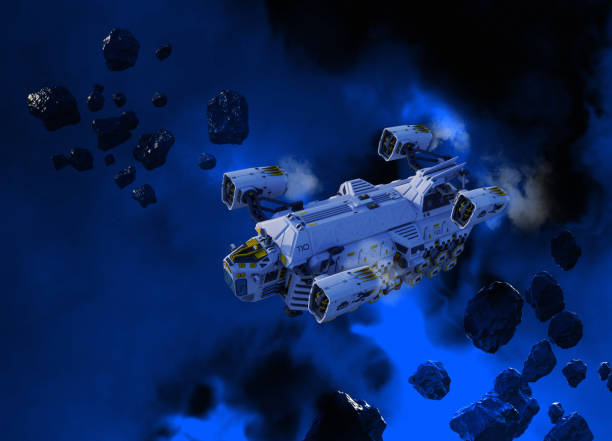
Let’s start with the destination itself. Ryugu is a C-type asteroid, meaning it’s rich in carbon and water-based minerals. It orbits the Sun between Earth and Mars, part of the vast Asteroid Belt that stretches out there like a cosmic junkyard of leftover planet-building material. Ryugu is only about 900 meters wide, but what it lacks in size it makes up for in value. Hayabusa2 launched in 2014, spent three and a half years traveling to Ryugu, and then spent another year and a half orbiting the rock before it finally descended for a touchdown in February 2019. That touchdown wasn’t a gentle landing either. The spacecraft used a sampling horn that fired a projectile into the surface to kick up dust and pebbles, then caught them before they drifted off into space. It was a precision operation in zero gravity, and it worked.
Why bother? Because Ryugu is a time capsule and a resource map. The samples Hayabusa2 brought back in December 2020 have already revealed that the asteroid contains organic compounds and water that date back to the early solar system. That means asteroids like Ryugu probably delivered the water and organic chemistry that made life on Earth possible. But for the practical-minded reader, the real headline is this: those same compounds can be turned into rocket fuel, drinking water, and even breathable oxygen. If you’re thinking about long-term space travel—manned missions to Mars, mining operations in the Belt, or a permanent presence on the Moon—you cannot afford to launch everything from Earth. The fuel alone would crush your budget. The alternative is to get resources from asteroids. And Ryugu just showed us how.
The Hayabusa2 touchdown was a proof of concept. It demonstrated that a spacecraft can identify a safe landing site on a rotating, irregular-shaped asteroid, descend autonomously, collect material, and return it to Earth. That’s not just science. That’s logistics. Companies like Planetary Resources and others have been talking for years about asteroid mining, but talk is cheap. What Hayabusa2 did was deliver actual payload. And because Ryugu is a carbonaceous asteroid, it represents the most common and useful class of asteroid in the Belt. We now know exactly what that material looks like up close. We know its density, its porosity, its surface temperature, and how it behaves when you poke it. That data is gold for anyone planning to build a fuel depot or a refueling station in the Belt.
Let’s get specific about the resources. Ryugu’s surface contains hydrated minerals. Water, trapped in clay-like compounds. That water can be electrolyzed into hydrogen and oxygen. Hydrogen is rocket fuel. Oxygen is both fuel and breathable air. A single medium-sized carbonaceous asteroid could contain more water than all the Great Lakes. We’re not talking about a few gallons. We’re talking about enough fuel to send dozens of missions to Mars, or to power a permanent space station in orbit around the Moon. The Hayabusa2 mission showed us that extracting that water is not only possible but practical. The touchdown itself kicked up a plume of material, and Japanese scientists confirmed that the surface regolith contained water-bearing minerals. You don’t need to dig a mine shaft. You just need to heat the rock in a closed container and collect the steam.
Of course, there’s a catch. The Asteroid Belt is far. Ryugu is about 300 million kilometers from Earth at its closest. Traveling there takes years, and the delta-v—the energy needed to change velocity—is significant. But that’s exactly why destinations like Ryugu matter. If we’re serious about becoming a spacefaring species, we need to stop treating every asteroid as a flyby curiosity. We need to treat them as waypoints. Future spacecraft will leave Earth without enough fuel for the whole trip. Instead, they’ll stop at a refueling station in cislunar space supplied by asteroid materials, then head to a second station in the Belt. Ryugu is not that station yet. But it showed us the blueprint.
The bottom line for the casual space enthusiast: Hayabusa2’s touchdown on Ryugu was not just a victory for Japanese engineering, though it was certainly that. It was a milestone in the transition from exploration to extraction. The Asteroid Belt is full of Ryugu’s cousins. We now know how to land on them, sample them, and what they’re made of. The next step is to go back and grab the whole rock. Or better yet, bring the processing plant to the rock. The resources are there. The technology is being proven. The destinations are real.
Space News
Latest Articles
New rockets, upcoming launches, and the stories shaping humanity's push off this planet. No astronomy degree required.