Asteroid mining and the platinum group metals
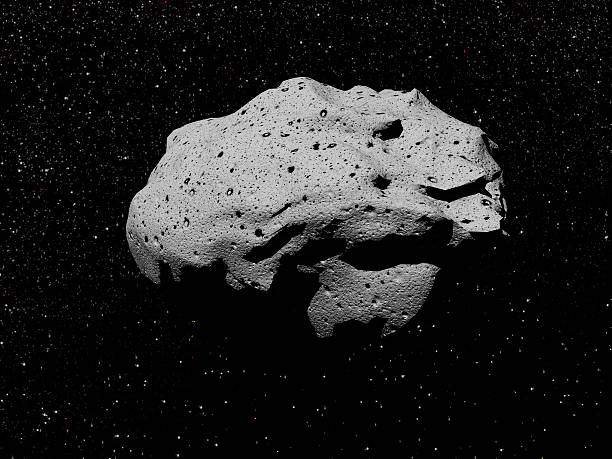
The Asteroid Belt sits between Mars and Jupiter, a region of over a million objects ranging from dust grains to Ceres, a dwarf planet nearly 600 miles wide. For decades, we treated it as a hazard zone for spacecraft. Now it’s a resource map. The platinum group metals—platinum, palladium, rhodium, iridium, osmium, and ruthenium—are the prize. These elements are essential for catalytic converters, electronics, hydrogen fuel cells, and medical devices. On Earth, they’re rare, expensive, and concentrated in a few unstable regions. In the Belt, they’re sitting inside certain metal-rich asteroids, often in concentrations hundreds of times higher than the richest terrestrial mines.
The first destination worth knowing is 16 Psyche. This is the rock everyone talks about, and for good reason. Psyche is about 140 miles wide, and radar and spectroscopic data suggest it’s almost entirely made of nickel-iron alloy. That means it’s essentially the exposed core of a protoplanet that got smashed apart early in solar system history. The value of the metals in Psyche alone is estimated in the quadrillions of dollars. But the real draw isn’t the fantasy number—it’s the practicality. A metallic asteroid like Psyche doesn’t have the same processing challenges as a carbonaceous or stony body. You don’t have to melt it down and separate silicates from metals. You can mine it like a giant chunk of pre-refined ore. NASA’s Psyche mission, launched in 2023 and expected to arrive in 2029, isn’t a mining mission. It’s a reconnaissance flight. But the data it returns will tell us exactly how porous, how magnetic, and how fractured the surface is. That’s the kind of intel that turns a destination from a science target into a mining site.
Another high-priority destination is the family of M-type asteroids. These are the metallic ones, and they cluster in the inner Belt. Names like 22 Kalliope, 216 Kleopatra, and 617 Patroclus don’t sound sexy, but they’re the ones with the highest platinum group metal concentrations. These asteroids are thought to be fragments of differentiated parent bodies—meaning they already went through the process of metal separating from rock, just like Earth’s core. That makes them the low-hanging fruit of space resources. You don’t need to ship a refinery to the Belt if the ore is already a metallic alloy. You just need a tugboat, a solar-powered smelter, and a return trajectory.
Then there’s the big one: Ceres. It’s not a metal asteroid. Ceres is a water-rich dwarf planet with a crust made of carbonates and clays. But water is the real rocket fuel of the solar system. Splitting water into hydrogen and oxygen gives you propellant. If you’re planning a sustained mining operation in the Belt, you don’t want to ship fuel from Earth. You want a pit stop. Ceres has vast subsurface ice deposits, and its low gravity makes it easy to land and take off. It’s the gas station of the Belt. The platinum group metals come from the M-types, but the infrastructure to process them comes from Ceres. That’s why any serious roadmap for asteroid mining includes a Ceres base camp. You harvest water on Ceres, refuel your haulers, then swing out to the metallic targets.
Don’t sleep on the smaller near-Earth asteroids either. Objects like 1986 DA and 2016 ED85 are tiny—maybe a few hundred meters across—but they cross Earth’s orbit. They’re believed to be fragments from larger M-type bodies in the Belt that got kicked inward. That makes them accessible with current propulsion systems. A return trip to a near-Earth metallic asteroid could take months, not years. For a startup or a national space agency, those are the testbed destinations. You prove your technology on a small rock before committing a billion-dollar ship to a multi-year Belt journey.
The bottom line is that the Asteroid Belt isn’t a single place. It’s a network of destinations with different compositions, different gravities, and different strategic value. The platinum group metals are the gold rush lure, but the real wealth comes from understanding which rocks are worth the trip. Psyche gives you mass. Ceres gives you fuel. The M-types give you the metals. And the near-Earth fragments give you the practice runs.
For the American guy in his twenties watching Starship tests and Falcon Heavy launches, this isn’t sci-fi. It’s logistics. The first mining missions will likely be robotic, autonomous, and launched within the next fifteen years. The destinations are already mapped. The only question left is who gets there first and brings home the platinum.
Space News
Latest Articles
New rockets, upcoming launches, and the stories shaping humanity's push off this planet. No astronomy degree required.