How to photograph a rocket launch
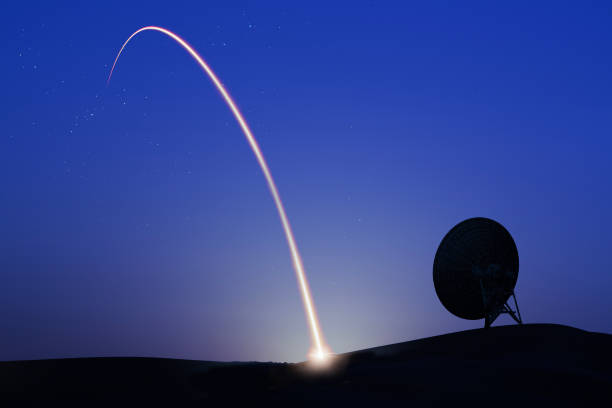
First, understand that a rocket launch is a lighting nightmare in the best way. The vehicle starts dark, then brightens into a searing fireball, then fades again as it climbs into the blue or black of sky. Your camera needs to handle this dynamic range like a fighter jet handles G-forces. Forget auto mode. Forget your phone. You need a DSLR or mirrorless camera with manual controls. A zoom lens in the 70-200mm range is the sweet spot for medium-distance viewing sites. If you’re at Kennedy Space Center or Cape Canaveral, you can get away with 200mm. If you’re at a public viewing area like Titusville or Jetty Park, you’ll want at least 400mm. Rent if you have to. Buy if you can. But don’t show up with a kit lens and hope for the best.
Tripod. Non-negotiable. A rocket launch generates massive vibrations even miles away, and your hands will shake from adrenaline. Get a sturdy carbon fiber or aluminum tripod with a ball head. Lock it down before the countdown. Practice panning if you want to track the rocket—smooth, slow motion, like you’re following a bird. But honestly, for most first-timers, a static shot with a wide enough field of view works better. Compose so the rocket leaves room in the frame for the sky. You want the plume, the smoke, the contrail. That’s the story.
Focus is where most amateurs blow it. Autofocus on a rocket? Not a chance. The engine flame will confuse your camera’s system. Switch to manual focus. Pre-focus on something at infinity—a distant building, a tower, the horizon. Then tape that focus ring. Seriously. Use gaffer tape or painter’s tape. Once a rocket lifts off, you won’t have time to tweak. Check your focus before liftoff by zooming in on your live view. If it’s sharp, leave it alone.
Now for the settings that matter. Shoot in full manual mode. Start with ISO 100 for clean, noise-free daytime launches. If it’s dawn or dusk, bump to ISO 400—no higher unless you like grain in your rocket exhaust. Aperture should be around f/8 to f/11. This gives you enough depth of field to keep the rocket in focus even if it drifts slightly out of your desired plane. Shutter speed is the real decision point. A 1/1000th of a second will freeze the rocket and its flame crisp and sharp. That works for daylight launches. For twilight or night launches, you need to slow down. Start at 1/250th and adjust based on your test shots. The rocket will blur slightly at the edges, creating a pleasing motion effect, but the core should still be distinct. The golden rule: expose for the flame, not the sky. If the sky is dark and the rocket is bright, your camera’s meter will lie to you. Underexpose by one stop to avoid blowing out the exhaust to a white blob.
Trigger timing is everything. You have about eight seconds from launch to when the rocket clears the tower and becomes interesting. After that, it climbs fast. Press the shutter early. Use your camera’s burst mode—continuous high-speed drive—and hold it down. You don’t want one shot. You want a sequence. Sort through the misses later. A single frame is a lottery. Burst mode gives you odds.
Don’t forget the soundtrack of the shot. The sound delay means you’ll hear the roar seconds after you see the vehicle. That disconnection is weird. You’ll feel it. Use it to remind yourself that you’re documenting something real. This isn’t a video game. That’s a hundred tons of steel and fuel pushing through gravity. Respect it.
Scout your location at least an hour before the window opens. Check for obstructions—trees, buildings, light poles. Check the wind direction. If the wind is blowing toward you, the smoke will obscure the rocket quickly. If it’s blowing away, you’ll get a clean line of sight longer. Use a compass app to know your azimuth. Most launch pads have fixed coordinates. Know where you are relative to them.
Finally, have backup. A spare battery. A spare memory card. A lens cloth. And a clear head. You’ll be standing there with hundreds of other people—some with phones, some with gear that costs more than your car. Ignore them. Your shot is yours. Frame it, hold steady, and press when the flame hits ignition. The rest is physics and luck.
When you get home, don’t just throw the images on social media. Edit them. Boost contrast. Shadows. Tone down highlights. A black-and-white version of a night launch looks like something from a Cold War spy manual. Use it. This is your story now. Make it sharp.
Space News
Latest Articles
New rockets, upcoming launches, and the stories shaping humanity's push off this planet. No astronomy degree required.