Trauma response and the floating blood problem
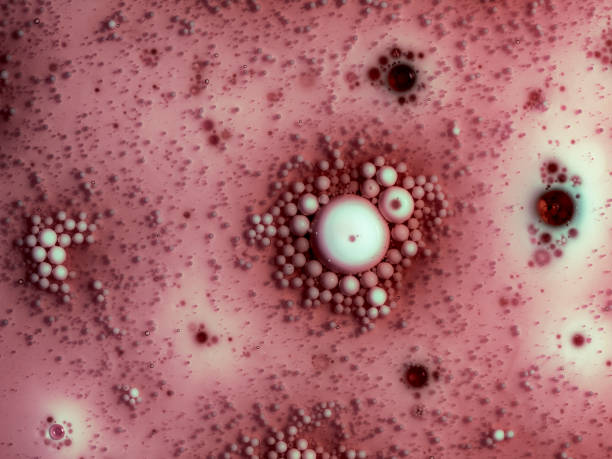
Let’s start with the physics. On Earth, blood obeys gravity. It pools, it drips, it settles. In microgravity, it does not. A severed artery in space doesn’t produce a gusher that hits the floor. Instead, surface tension and capillary action turn blood into a slowly expanding, wobbling sphere that clings to the wound. That sounds less dramatic than a movie geyser, but it’s far more dangerous. The blood doesn’t evacuate the injury site, so it obscures the source of the bleed. A surgeon trying to clamp a ruptured vessel is working blind inside a red, floating blob. And every time they try to clear the field with suction, the blood just reforms into another sphere that drifts back into the incision.
This is the floating blood problem, and it’s not hypothetical. NASA and space agencies have been studying hemorrhage control in microgravity for decades. The core issue is that standard surgical techniques rely on gravity to separate blood from tissue. In orbit, blood and tissue intermingle in a chaotic, low-viscosity slosh. Even a simple suture becomes a two-handed battle: one hand to hold the tissue, the other to keep the blood out of the way. And if the surgeon lets go, the blood doesn’t fall—it floats into the cabin, contaminating equipment, filters, and other crew members. In a closed environment like the International Space Station, airborne blood is a biohazard and a navigational hazard.
Now consider the trauma itself. A puncture from micrometeoroid or a crash inside a spacecraft can cause massive internal bleeding. On Earth, you’d lie flat, get IV fluids, and wait for a trauma team. In space, there is no “flat.” The heart doesn’t have to fight gravity, but blood distribution changes. Less blood pools in the legs, more rushes to the head. The body adapts over weeks, but in an acute trauma, that adaptation works against you. The astronaut’s blood pressure may drop faster because the vascular system is already redistributing fluid in ways that aren’t designed for sudden blood loss. And without gravity to help maintain a pressure gradient, even a small bleed can quickly compromise the brain and vital organs.
The hospital void is the worst part. There is no trauma bay on a Mars transit vehicle. There isn’t even a dedicated surgical suite on the ISS—just a modified cargo module with some basic medical gear. A major bleed on a mission to Mars means the crew has to stabilize the patient for months, not hours. Evacuation isn’t an option. The nearest emergency room is millions of miles away. So what do you do? You rely on techniques that don’t exist yet. Researchers are testing negative-pressure wound devices that suck blood away from the injury site and into a sealed container. Others are experimenting with injectable foams that plug bleeds from the inside, then dissolve later. But these are lab experiments, not flight-certified gear.
The psychological toll is equally brutal. Watching a crewmate bleed out in a confined metal tube while you can’t even get the blood to stop floating is a unique kind of horror. Every astronaut is trained in basic first aid, but no one trains for a scenario where the patient’s own blood becomes a biological fog that coats your visor and drifts into your mouth. The reality of trauma in space is that the human body was not built for this environment. Our clotting mechanisms, our surgical tools, and our emergency protocols are all optimized for a planet with gravity.
So what does this mean for you, the guy who wants to colonize Mars? It means space travel isn’t just about rockets and radiation. It’s about accepting that if something goes wrong medically, the odds of survival drop fast. The floating blood problem is a symptom of a deeper truth: medicine in space is still in the dark ages. Until we develop closed-system surgery, better hemostatic agents, and real-time blood suction that doesn’t rely on gravity, a hemorrhage is a death sentence. The heroic patch-job you saw in that film? It’s fiction. The real story is a slow, messy, blood-suspended struggle against physics. And that’s the one you need to prepare for.
Space News
Latest Articles
New rockets, upcoming launches, and the stories shaping humanity's push off this planet. No astronomy degree required.