Ratchet wrench and the spacesuit glove difficulty
The ratchet wrench is a brilliant piece of mechanical engineering. Its internal pawl-and-gear mechanism allows a user to apply torque in one direction while the socket spins free in the other. It saves time, reduces repetitive motion, and lets a single tool handle multiple fastener sizes with interchangeable sockets. But that same gearing relies on fine motor control, tactile feedback, and the ability to feel when the pawl engages. In a spacesuit glove, you lose all three. The glove’s internal pressure pushes your fingers into a constant half-closed curl. There is no pinch grip, no fingertip sensitivity, and no way to feel whether the ratchet has actually clicked into the next tooth. You can crank the handle, feel no resistance, and realize you’ve been spinning the tool in free air while the bolt sits untouched.
This is where the orbital toolbox gets interesting. NASA and commercial space operators like SpaceX and Axiom have spent decades iterating on EVA tool design, and the current solution is a reminder that sometimes the simplest gear is the smartest gear. Instead of fighting the glove’s limitations, engineers redesigned the tool around them. The modern EVA ratchet wrench uses a larger, more aggressive pawl that engages with a distinct audible and tactile click that can be felt even through the glove’s thickness. The handle is extended and shaped to fit the gloved hand’s natural curl, so the astronaut doesn’t have to fight the suit’s resistance to grip it. The gear teeth are spaced wider apart to reduce the chance of skipping under low-torque conditions. It sounds like a downgrade, but in practice, it is a hard-earned upgrade that prioritizes reliability over speed.
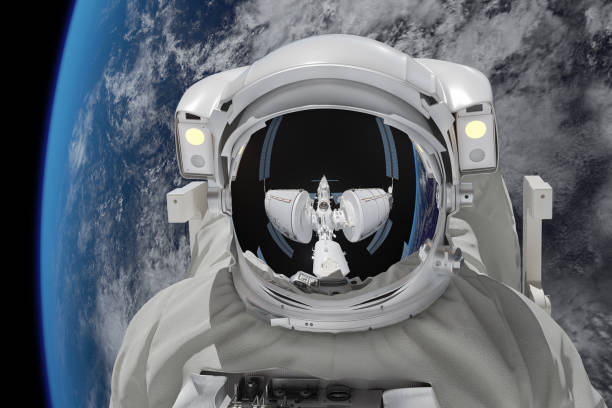
But the real innovation isn’t in the ratchet itself. It’s in how the tool interfaces with the gear of the spacesuit. The suit’s glove features a rotating bearing at the wrist, but that bearing has a torque limit. If you apply too much rotational force with a standard ratchet, you can lock the bearing, or worse, twist the astronaut’s arm inside the suit. That is not a theoretical problem. It has happened. The fix is a torque-limiting adapter that sits between the ratchet and the socket, a separate gear mechanism that clicks and slips when a preset force is exceeded. This tiny gear saves an astronaut from injury and saves a multi-million dollar spacesuit from damage. It is unglamorous, invisible, and absolutely vital.
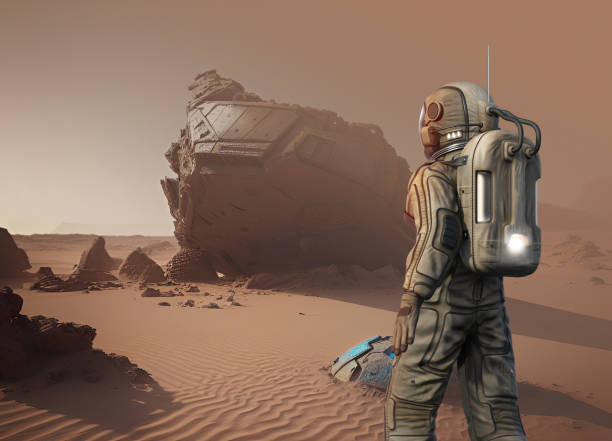
The parallel with Earth-bound gear is worth understanding. On the ground, we tend to obsess over high-speed mechanisms and micro-fine adjustments. A low-backlash gearbox in a racing car, a multi-speed hub on a bicycle, a precision planetary gear in a CNC machine. Those are impressive, but they are also fragile. They require clean environments, steady hands, and precise lubrication. In space, the environment is anything but clean. Temperature swings of hundreds of degrees, vacuum welding of metal surfaces, and fine regolith dust that acts like grinding paste all conspire to destroy delicate gear trains. The orbital toolkit has no room for fragility. Every gear, every pawl, every spring is overbuilt by a factor of three or four. The result is a tool that feels crude in the hand but performs flawlessly when a loose piece of thermal blanket or a stuck bolt could abort a mission or strand an astronaut.
For the casual space enthusiast, the lesson is clear. The future of space travel is not going to be built with sleek, gadget-heavy tools that look like they belong in a sci-fi movie. It will be built with thick-handed, torque-limited, deliberately clunky gear that prioritizes function over form. The ratchet wrench in your garage is a better tool in every measurable way except for the one that matters most: it cannot be used by a human in a spacesuit. The EVA version can. And that is the entire point. When you are 250 miles above the Earth, floating in the void with nothing between you and vacuum but a few layers of fabric and metal, you don’t need a better ratchet. You need a ratchet that works.
Space News
Latest Articles
New rockets, upcoming launches, and the stories shaping humanity's push off this planet. No astronomy degree required.