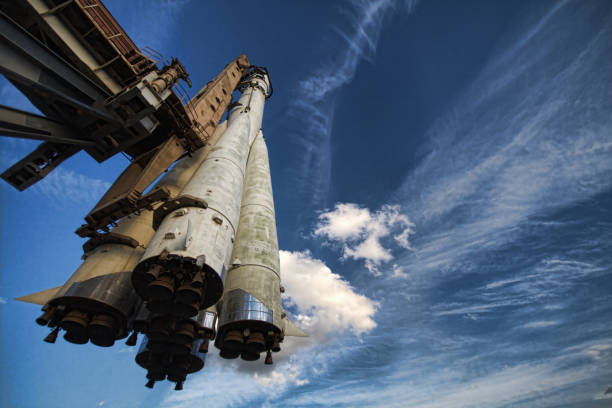
Apollo-era consoles still in use
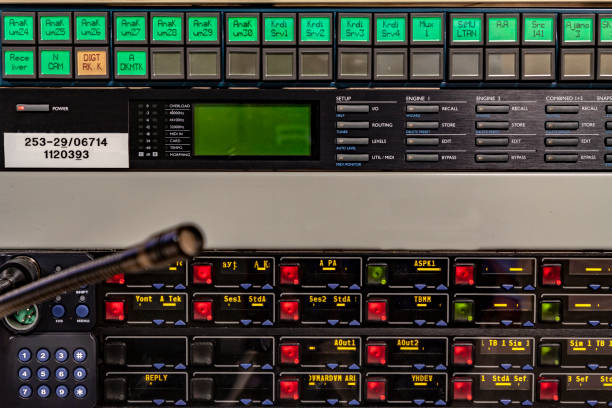
The answer is blunt. They work. They never broke. And replacing them would mean redesigning entire control loops that have been proven flawless for decades. Launch sites like Cape Canaveral’s Launch Complex 39 and the mission control rooms at Kennedy Space Center still host arrays of these consoles. They are not all original vacuum-tube relics. Many have been gutted and refitted with modern computers behind the old panels. But some of the actual analog switches, status lamps, and dedicated function buttons date back to the 1960s. These were built to handle radiation, vibration, and continuous operation for years. They were overengineered in a way consumer electronics never is. If it ain’t broke, you don’t tear it out and spend ten million dollars to replace it with touchscreens that have a three-year lifecycle.
Inside a launch control center today, the vibe is a mix of retro and modern. You’ll see a wall of CRT monitors still flickering with telemetry, because the signal processors are hardwired to those specific display units. The launch director sits at a console that looks like something from a Kubrick film. It has rows of toggle switches, indicator lights the size of your thumb, and a massive rotary dial for selecting communication channels. Those aren’t cosplay. They are the actual circuits that stripped away uncertainty during Apollo 11. When you flip a switch on that console, you are making a physical connection that bypasses software entirely. That matters when electromagnetic pulses, software bugs, or network failures could turn a launch into a fireball.
The main drivers for keeping these consoles in place are reliability and interoperability. Modern launch vehicles—Falcon 9, Atlas V, Delta IV, even SLS—still use the same pad interfaces that were standardized in the Apollo era. The countdown sequencers talk to the vehicle through the same umbilical connectors. The ground support equipment, like propellant loading systems, air conditioning ducts, and electrical grounding networks, all speak the same old voltages and timing signals. Replacing the console just so it looks new would require retrofitting every pad on the Eastern Range. That is a multi-year, multi-billion-dollar project that offers exactly zero improvement in launch success. So the engineering decision is coldly practical: keep the obsolete consoles, refit their guts with solid-state electronics where components die, but leave the user interface exactly as it was.
There is also a training advantage. Launch controllers who used to work on Space Shuttle missions can walk into a firing room today, see the same panel layout they learned thirty years ago, and immediately read telemetry without retraining. For commercial crews and NASA civil servants, this muscle memory reduces human error during the most stressful five minutes of a mission. The Apollo-era console design was based on human factors research from the 1960s. Researchers studied how fast a man could identify a warning light versus reading a digital readout. They found that a big red lamp with a specific shape, paired with a dedicated toggle, triggers a faster response than scrolling through a menu on a screen. That same logic still holds. When a valve fails at T-minus thirty seconds, you want the controller’s hand to hit the right switch without thinking.
Some of the most preserved Apollo consoles are in the Launch Control Center at Kennedy Space Center. Firing Room 1 and Firing Room 2 have been renovated multiple times, but the core consoles remain. They sit in rows facing the giant countdown clock and the pad video wall. Visitors see them and assume they are fake. They are not. They are live operational hardware. When SpaceX or ULA rolls out a vehicle, those same switches are thrown, those same lights flash, and those same analog meters twitch. The data eventually goes to modern computers, but the human interface is a direct link to the people who sent Armstrong to the Moon.
This is not romantic nostalgia. It is cold conservatism applied to risk management. Launch sites are not tech showrooms. They are industrial environments where failure results in explosions and lost payloads. The Apollo-era consoles are still in use because they solve a problem that newer technology often creates: complexity. A modern touchscreen interface adds layers of software, drivers, and network handshakes that can introduce failure modes. A toggle switch that makes or breaks a copper wire is simpler. It fails only when the metal fatigues, and that fatigue is predictable. So the launch sites keep them. They patch in new signal conditioners, replace failing capacitors, and keep the old faceplates. The result is a control room that looks like a time warp but works like a scalpel.
For those of us following spaceflight from home, this serves as a reminder that progress is not always shiny. The next time you watch a Falcon 9 lift off from pad 39A, know that the launch director’s console is the same model that certified the Saturn V. The switches are worn smooth by decades of thumbs. And they will still be there when the first crew goes to Mars. That is not a museum piece. That is a tool that has earned its place.
Space News
Latest Articles
New rockets, upcoming launches, and the stories shaping humanity's push off this planet. No astronomy degree required.