Trojans and the Jupiter Lagrange points
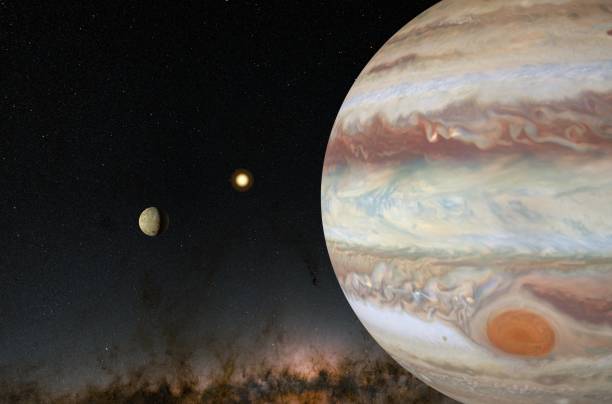
First, the basics. The Trojan asteroids are two distinct swarms of rocky and icy bodies that share Jupiter’s orbit around the Sun, but they never actually get close to the planet. Instead, they’re locked into gravitational equilibrium at two specific positions called Lagrange points. L4 is 60 degrees ahead of Jupiter in its orbit, L5 is 60 degrees behind. Think of them as cosmic parking lots where Jupiter’s gravity and the Sun’s gravity cancel out in a stable balance. Anything parked there stays put for billions of years. That stability is key.
Why should you care? Because these are not your run-of-the-mill near-Earth objects. Current estimates put the total number of Jupiter Trojans at over one million larger than one kilometer in diameter. The biggest, 624 Hektor, is about 200 miles across. That’s not a pebble. That’s a small city. And unlike the main asteroid belt’s population, Trojans have been largely untouched by collisions and thermal alteration. They are pristine, primordial debris left over from the formation of the solar system. That makes them a scientific goldmine for understanding how planets formed. For space enthusiasts, it also makes them a target for resource extraction you can actually plan around.
Now let’s talk about what’s actually out there. Spectroscopy and radar studies show that many Trojans are rich in carbon, organic compounds, and water ice. Some are dark, carbonaceous bodies like the C-type asteroids. Others show evidence of silicates and even metals. But unlike the rocky main belt, the Trojans are a mix of ice and rock, likely with substantial water locked in their interiors. For anyone thinking about in-space refueling or life support, that water is a non-negotiable resource. You extract it, split it into hydrogen and oxygen, and you’ve got rocket propellant. You also get breathable air. That’s a self-sufficient fuel depot waiting to happen.
Here’s where the Lagrange point location becomes a game-changer. The L4 and L5 points are not deep inside Jupiter’s radiation belts. They’re far enough away that a spacecraft can operate safely for years. And because these points are gravitationally stable, you can park a station or a mining outpost there with minimal station-keeping fuel. Compare that to low Earth orbit, where you’re constantly fighting atmospheric drag and orbital decay. Or compare it to the lunar surface, where you have to deal with two-week nights and dust. At the Jupiter Trojans, you have consistent sunlight, stable orbits, and direct access to raw materials. That’s the kind of infrastructure that makes interplanetary logistics viable.
From a shipping perspective, the Trojans are more accessible than you might think. The delta-v—the change in velocity needed to get there—is surprisingly low, especially if you use a gravity assist from Jupiter itself. A well-timed Hohmann transfer with a Jupiter flyby can get a probe to L4 or L5 with fuel requirements comparable to a Mars mission. For a manned mission, you’d need better shielding and longer life support, but the ballistic path is not insane. And once you’re there, you’ve got a local base for venturing deeper into the outer solar system or back toward the inner planets.
NASA already proved the concept with the Lucy mission, launched in 2021. Lucy is currently flying by several Trojan asteroids, analyzing their composition and surface features. The early data confirms what we suspected: these bodies are diverse, ancient, and loaded with volatiles. Lucy’s results will inform not just planetary science but also the economic case for future operations. You don’t send a billion-dollar robot to a rock that’s boring. Lucy’s going because the Trojans are the most undisturbed record of the solar system’s early chemistry.
For the private sector, companies like SpaceX and Blue Origin are already planning cislunar infrastructure. But the real prize for deep-space mining is out at the Jupiter Lagrange points. The Trojans offer materials that are rare in the inner solar system—hydrocarbons, water, and potentially precious metals. A single large Trojan could supply an entire generation of orbital construction. And because they’re not sitting in a planet’s gravity well, you don’t waste energy launching materials back out again. You process the rock on-site and ship the products where they’re needed, whether that’s a Mars colony or a fuel depot at Earth’s L1.
Casual observers think the future of space is Mars or the Moon. But the real frontier, the one that unlocks the resources to do anything beyond Earth orbit, is the Jupiter Trojans. They are stable, accessible, rich, and scientifically irreplaceable. If you’re tracking where the smart money and the smart science are going, look 60 degrees ahead of Jupiter. That’s where the next big destination sits.
Space News
Latest Articles
New rockets, upcoming launches, and the stories shaping humanity's push off this planet. No astronomy degree required.