Helmet design and the sun visor assembly
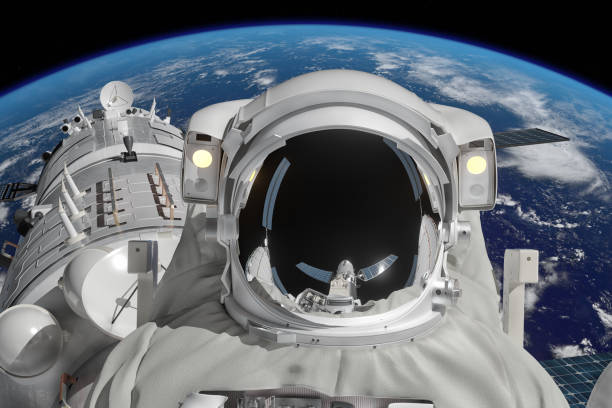
Let’s talk about helmet design and the sun visor assembly. Not from a museum curator’s perspective. From the perspective of a guy who wants to understand how the next generation of space travelers will actually survive the hard vacuum.
What the Visor Actually Does
A spacesuit helmet is a life support shell. It keeps your head pressurized, gives you oxygen, and lets you see. But the sun visor assembly adds a layer that is deceptively complex. In low Earth orbit or on the lunar surface, the sun is unfiltered. UV radiation, infrared, and visible light intensity are brutal. Without a visor, you’d go blind in seconds. Not just squinting-blind, but permanent retinal damage blind. The visor’s job is to block that radiation while still letting you see your instruments, your buddy, and the horizon.
Modern visors use multiple coatings. The gold or amber tint you see isn’t cosmetic. It’s a vapor-deposited layer of metal—usually gold or a specialized alloy—that reflects up to 99.9% of IR and UV light. This same principle is why military aviators wear gold-faced helmets. The difference is that a spacesuit visor has to work in a vacuum, resist scratching from micrometeoroid dust, and not fog up when you start breathing hard during an EVA.
The Fatal Flaw in Early Designs
Early Gemini and Apollo visors were simple: a clear polycarbonate bubble with a flip-up sunshield. They worked in theory. In practice, astronauts on the lunar surface complained about glare, fogging, and condensation. The primary visor could scratch from lunar regolith—that fine, sharp dust that gets everywhere. Scratching a visor isn’t just cosmetic. A scratch can scatter light, create glare hot spots, and reduce contrast. When you’re trying to perform a delicate repair on a space station arm, a glare spot can mean a misjudged hand movement. In space, misjudgment means death.
NASA learned this the hard way during Apollo 12. Astronaut Alan Bean reported that his visor assembly fogged up during the second moonwalk. He had to constantly wipe it with his glove, which only smeared the condensation. The fix was a better thermal control layer and a hydrophobic coating on the interior.
The Modern Assembly: Layers of Protection
Today’s spacesuit helmets—like those on the Extravehicular Mobility Unit (EMU) used on the ISS—are modular. The outer shell is a hard polycarbonate or composite bowl. Then comes the primary visor, which is actually a set of multiple curved panels. The sun visor assembly sits on the outside, usually as a flip-down or sliding shield. It’s not one piece. A typical assembly has an inner visor for impact protection, an outer visor with the gold coating, and sometimes a third intermediate layer for anti-fog or anti-scratch.
The key engineering challenge is thermal balance. In direct sunlight, the visor can hit 250°F. On the dark side of an orbit, it drops to -250°F. That thermal cycling would crack a standard plastic. So the visor materials are chosen for low thermal expansion. Polycarbonate won’t work alone. Modern assemblies use a blend of polycarbonate laminated with a special acrylic or even a thin layer of silica glass for durability.
The seal is another nightmare. The visor assembly has to mate with the helmet ring, which connects to the pressure garment. If the seal fails, you lose pressure. That’s why every visor assembly includes redundant O-rings and a locking mechanism that won’t accidentally open during an EVA.
Why You Should Care About This
You’re reading this on SpacePilgrim.com because you want to know what the future looks like. And the future of space travel—Moon bases, Mars colonies, asteroid mining—means thousands of people wearing suits. Not just elite test pilots. Construction workers, geologists, tourists. The sun visor assembly will be the first thing they touch, the first thing they adjust, and the first thing that breaks if the design is bad.
Companies like SpaceX and Axiom Space are already developing next-gen suits. Look at the SpaceX IVA suit: it has a fixed visor with a single curved face shield. No flip-down assembly. That’s because it’s designed for interior use and emergency depressurization only. But for lunar EVAs, you need the heavy-duty assembly. Axiom’s prototype suit includes a sun visor that can be swapped in orbit, because they know dust and debris will degrade it over time.
The takeaway is simple. When you think about spacesuit gear, don’t just think about the shiny helmet. Think about the layers of engineering that let you see clearly while standing on an airless rock. That visor assembly is a life support shell within a shell. And if you’re ever suiting up for a walk on the Moon, you will learn to treat it like the most fragile, most critical piece of gear you own—because it is.
Space News
Latest Articles
New rockets, upcoming launches, and the stories shaping humanity's push off this planet. No astronomy degree required.