Artemis II crew around the Moon return
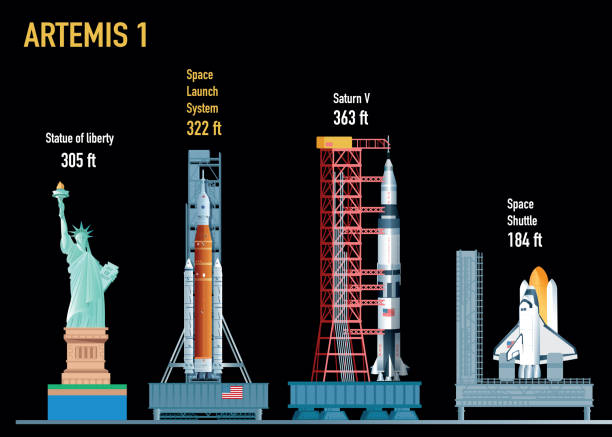
First, the hardware. Artemis II uses the Space Launch System rocket—the most powerful one NASA has ever built—and the Orion crew capsule. The SLS already proved itself during the uncrewed Artemis I in late 2022, sending Orion on a 25-day journey around the Moon and back. This time, there are people inside. The flight profile is similar but shorter: about ten days total. The crew will launch from Kennedy Space Center, spend roughly four days traveling to the Moon, swing around the far side to a distance of about 40,000 miles beyond it, and then coast home for a splashdown in the Pacific. No landing, no surface walk. Just a loop that proves the ship can keep humans alive in deep space.
The crew itself is a mix of experience and symbolism. Commander Reid Wiseman, a Navy pilot and veteran of a 2014 ISS expedition, leads the mission. Pilot Victor Glover, also a Navy aviator and former ISS crew member, will handle the spacecraft systems. Mission specialist Christina Koch holds the record for the longest single spaceflight by a woman—328 days on the ISS—and will serve as a key evaluator of life support and navigation. The fourth seat goes to Jeremy Hansen, a Canadian astronaut and former fighter pilot. Hansen’s inclusion marks Canada’s first trip beyond low-Earth orbit, a deal struck through international partnership agreements. Together, they represent the first mixed crew of men and women, and the first non-American, to travel this far from Earth.
Why does this matter to anyone not wearing a flight suit? Because Artemis II is the gatekeeper for the rest of the program. The mission’s primary objective is to validate Orion’s life support, navigation, and communication systems in the full radiation environment of deep space. If something goes wrong with the carbon dioxide scrubbers, the water recycling, or the heat shield on reentry, it’s better to discover it on a quick flyby than during a surface landing with no quick return option. Success here greenlights Artemis III, which aims to land two astronauts near the lunar south pole in 2026 or 2027. Failure resets the timeline by years.
There’s also the geopolitical angle. The United States is not alone in this push. China and Russia have their own lunar ambitions, with China targeting a crewed landing before 2030. Artemis II keeps the U.S. in the lead, demonstrating that the infrastructure for sustained human presence at the Moon is real, not just PowerPoint slides. The mission also tests the Orion docking system for future linkups with the Gateway station, which NASA plans to assemble in lunar orbit later this decade. That station will serve as a waypoint for deeper Mars missions. In short, Artemis II is the pivot point from nostalgia to actual operations.
For the casual observer, the details worth tracking are straightforward. Watch for the launch date to slip—NASA will only fly when weather and hardware are perfect. Follow the crew’s health reports during the radiation exposure period, which is the mission’s biggest unknown. And pay attention to the reentry footage. Orion comes in at nearly 25,000 miles per hour, faster than any crewed vehicle since Apollo, and the heat shield must survive 5,000°F plasma. If that goes smoothly, the Moon is back on the menu.
Artemis II isn’t flashy. There’s no flag-planting or rover driving. But it is the first real test of whether we can leave Earth again, not as a stunt but as a repeatable capability. That makes it the most important spaceflight of the decade. Keep your calendar open for late 2025 and watch this one live. You’ll be seeing history repeat itself for the first time.
Space News
Latest Articles
New rockets, upcoming launches, and the stories shaping humanity's push off this planet. No astronomy degree required.