Taikonaut corps training and selection
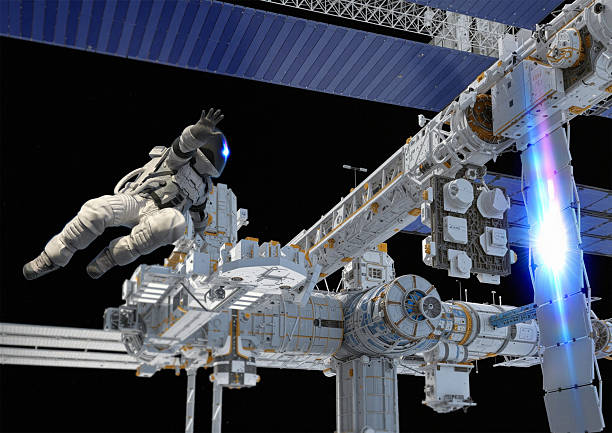
The selection process for China’s taikonauts is as no-nonsense as it gets. The CMSA runs two main tracks: military pilots and mission specialists. For the first track, candidates are pulled exclusively from the People’s Liberation Army Air Force. You need at least 1,000 hours of flight time on jet aircraft, a college degree in engineering or science, and a clean bill of health that would make a Marine drill sergeant jealous. Age limits hover around mid-thirties. Height and weight requirements are strict—under six feet, with a body weight that matches a low-fat, high-performance profile. The physical standards aren’t just about fitness; they’re about fitting into a Shenzhou spacecraft that has about as much elbow room as a compact car.
But what really sets China’s system apart from NASA’s or ESA’s is the role of the agency itself. CMSA isn’t a sprawling bureaucracy that debates mission objectives for years. It’s a command-and-control structure that answers directly to the military. That means selection decisions happen fast. If you pass the medical screenings, psychological evaluations, and survival training, you’re in. There’s no lengthy public relations campaign or astronaut class announcement with glossy headshots. The agency picks its people and moves on to training.
Training is where the CMSA flexes its real muscle. Taikonauts spend years in a dedicated facility near Beijing, running through simulators that replicate every phase of a Shenzhou launch, docking, and reentry. They train in neutral buoyancy pools for spacewalks, even though China’s EVA suits aren’t as flexible as NASA’s. They practice emergency procedures for fire, depressurization, and aborts. But the most grueling part is the psychological isolation training. CMSA puts its candidates in sealed chambers for weeks with no outside contact, monitoring their stress responses and team dynamics. The agency knows that a crew stuck on the Tiangong space station for six months has zero room for personality conflicts.
One key distinction: China’s approach to mission specialists. While NASA often recruits scientists and engineers straight from academia, CMSA keeps its specialist corps within the military system. That means even the payload experts—people who run experiments on the station—are officers with combat survival training. The agency reasons that anyone who can handle a high-G launch and a potential emergency landing in the Gobi Desert should have the mental toughness to operate a crystallization experiment. It’s not a bad bet.
The current generation of taikonauts, selected in 2020, includes the first civilian-trained candidates. But even they come from research institutes and state-owned aerospace companies, not from a public application pool. CMSA runs a closed loop. You don’t apply to become a taikonaut; you’re identified and recruited. The agency maintains lists of potential candidates years in advance, tracking their performance in flight tests, submarine duty, or Antarctic research stations. When a new crew rotation comes up, CMSA already knows who fits the profile.
Why does this matter for a casual space enthusiast? Because the CMSA’s no-frills, military-backed selection model is producing reliable crews faster than any Western agency. China’s Tiangong station is already crewed on a rotating basis, and the agency plans to keep it permanently occupied through the 2030s. That requires a steady supply of fully trained taikonauts. While NASA struggles with budget cycles and commercial crew delays, the Chinese agency just picks its next class and puts them through the wringer.
For American men in their twenties, here’s the reality: China’s space machine isn’t experimental. It’s operational. The CMSA has built a selection and training pipeline that prioritizes efficiency over flair. The taikonauts you’ll see on news feeds aren’t celebrities; they’re military professionals who treat spaceflight as an extension of their duty. That doesn’t make them better than NASA astronauts, but it does make them more predictable. And in the space race, predictable performance beats charismatic PR every time.
Space News
Latest Articles
New rockets, upcoming launches, and the stories shaping humanity's push off this planet. No astronomy degree required.