Tiangong space station open for business
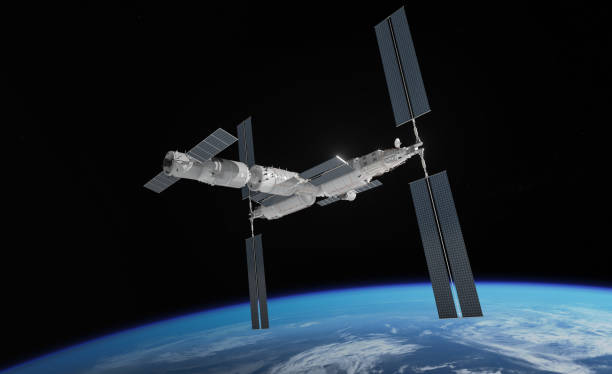
When we say “open for business,” we mean Chinese state-owned agencies, foreign national space agencies, and private companies can now book experiments, crew time, or even payload slots aboard Tiangong. The China Manned Space Agency (CMSA) has formalized a framework for overseas projects, with initial approvals already granted to experiments from countries like Pakistan, Switzerland, and Poland. This isn’t a one-off. It’s a deliberate, agency-driven strategy to turn Tiangong into a rival to the International Space Station, at least in terms of scientific and commercial access. The key difference? The ISS is a partnership of fifteen nations led by NASA, Roscosmos, ESA, JAXA, and CSA. Tiangong is entirely Chinese-controlled, with China’s own agencies setting the terms, pricing, and priorities.
For American readers, the immediate question is: What does this mean for NASA and U.S. aerospace firms? Right now, direct American participation on Tiangong is effectively blocked by the Wolf Amendment, a 2011 law that prohibits NASA from engaging in bilateral cooperation with China. That hasn’t changed, and it won’t change soon. But agencies don’t operate in a vacuum. The existence of a second, fully operational space station creates new options for countries and companies that aren’t part of the ISS partnership. Smaller space agencies in the Global South, for example, suddenly have a cheaper, less bureaucratic path to microgravity research. They don’t need to go through the ISS’s lengthy proposal cycles or deal with export control restrictions from multiple governments. China’s CMSA has streamlined its application process—think of it as a government-run API for space access, complete with published technical standards and pricing.
This is where the agency angle gets interesting. The European Space Agency (ESA) has already sent astronauts to Tiangong for joint training, though formal crewed missions are still under negotiation. Russia’s Roscosmos has its own parallel station plans, but it’s also cooperating with China on lunar projects. Even private agencies, like the United Nations Office for Outer Space Affairs (UNOOSA), have facilitated experiments aboard Tiangong. The pattern is clear: China is using its space station as a diplomatic and commercial lever, offering access that the ISS can’t always match in speed or cost. The ISS is nearing the end of its operational life, likely by 2030. When it’s deorbited, Tiangong could be the only permanently crewed station in orbit for a period. That’s a huge bargaining chip for Chinese agencies.
For U.S. space companies, the implications are indirect but real. Companies like Axiom Space and SpaceX are building their own commercial stations, but those won’t be fully operational until the late 2020s at best. In the meantime, any research or manufacturing that requires microgravity has a new option in Tiangong, provided the clients don’t have U.S. export restrictions. Pharmaceutical companies, materials science labs, and even tech startups in allied nations might find it easier to work with China than wait for the ISS replacement. That’s a competitive pressure on Western agencies to accelerate their commercial station plans.
The straightforward takeaway for the casual space enthusiast: China’s Tiangong is no longer a curiosity. It’s a functioning asset for agencies worldwide, and it’s forcing a reevaluation of how space access is governed. The ISS model was built on Cold War alliances and shared costs. Tiangong is built on state control and strategic invitation. Neither is inherently better or worse, but the existence of a second station with a different set of rules changes the game. If you’re following space travel, watch how smaller agencies react. If they start shifting experiments to Tiangong, it’s not just about science—it’s about who gets to set the terms for the future of orbit.
Space News
Latest Articles
New rockets, upcoming launches, and the stories shaping humanity's push off this planet. No astronomy degree required.