Haven-1 and the single-module luxury station
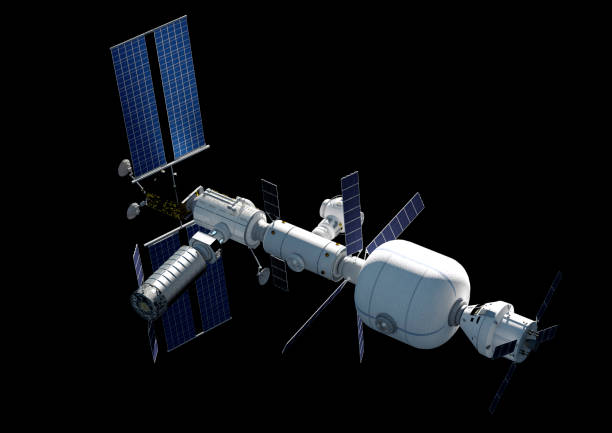
Haven-1 is a single-module space station. That means it’s not a sprawling complex like the International Space Station. It’s a single pressurized cylinder, roughly the size of a large RV, designed to support a crew of four. No laboratory racks for obscure biology experiments. No robotic arms. No years-long science missions. Instead, it’s a clean, purpose-built habitat with private sleeping quarters, a common area with a large window, exercise equipment, and a communications hub. Think of it as a minimalist cabin in the sky, but one that orbits Earth every ninety minutes.
The key difference between Haven-1 and the ISS is the mission. The ISS exists to do research in microgravity that can’t be done on Earth. Haven-1 exists to let people live in space. That shift in purpose changes everything. The design philosophy isn’t about maximizing scientific output per square foot. It’s about comfort, safety, and repeatability. The interior is sleek, with soft lighting, sound-dampening materials, and ergonomic seating. There’s even a dedicated sleep pod with a privacy curtain and a ventilation fan—luxuries that ISS astronauts would kill for after six months of sharing a space the size of a school bus.
For the target audience—American men in their twenties who grew up watching SpaceX land rockets on drone ships—this is what the commercial future looks like. It’s not going to Mars next year. It’s not a Mars colony by 2030. It’s a proof of concept for orbital living that can be built with current technology, launched on a Falcon 9, and occupied within a few days of arriving on orbit. Vast plans to have Haven-1 operational by late 2025 or early 2026, assuming the final testing and certification go smoothly. That timeline puts it ahead of anything Axiom or Blue Origin has publicly committed to.
Life on Haven-1 will be different from life on Earth, but not radically alien. You wake up to a sunrise every ninety minutes, because the station orbits the planet sixteen times a day. You eat pre-packaged, thermally stabilized meals that are a huge step up from the tube food of the Apollo era. You exercise two hours a day to prevent bone density loss, but you do it on a stationary bike or a resistance machine that doesn’t need gravity to work. You communicate with family via low-latency video calls when the station passes over ground stations. And you can look out that big window and see the whole curvature of the Earth, the thin blue line of the atmosphere, and the blackness of space beyond.
But let’s be realistic about what Haven-1 is not. It is not a vacation destination. The cost of a ticket is in the tens of millions of dollars, and the physical demands are severe. You need to pass a medical screening that would disqualify most people. You need to train for weeks on centrifugation, emergency procedures, and zero-g mobility. You don’t go to Haven-1 for a weekend getaway. You go because you have a specific goal—maybe it’s a corporate research project, maybe it’s a media assignment, or maybe you just have the money and the drive to be one of the first humans to live in a private orbital habitat.
The single-module approach is a deliberate constraint. By keeping it simple, Vast avoids the complexity and cost of docking multiple modules in orbit, which requires multiple launches, robotic assembly, and extensive on-orbit testing. Haven-1 launches as a complete unit, deploys solar panels, and is ready for crew within hours of achieving orbit. That simplicity also makes it safer. There are fewer systems that can fail, fewer interfaces between modules that can leak, and a much smaller set of failure modes that the crew has to train for. For a first-generation commercial habitat, that tradeoff is exactly right.
What this means for the future of space travel is straightforward. Haven-1 proves that private industry can build and operate a crewed space station without government contracts. It normalizes the idea of civilians living in orbit for weeks or months at a time. And it gives companies like Vast the operational experience they need to build the next generation of truly large habitats, like the planned Vast-1 station that will have multiple modules and a larger crew. The single-module luxury station isn’t the end state. It is the necessary first step, and it happens to be one of the most exciting developments in the current space industry.
So if you’re tracking where the commercial future of space is headed, forget the flashy Mars colony renders for a moment. Pay attention to a cylinder the size of a shipping container that will soon circle Earth with four people inside, living and working and looking out the window. That’s where the real action is. That’s where the space economy starts.
Space News
Latest Articles
New rockets, upcoming launches, and the stories shaping humanity's push off this planet. No astronomy degree required.