Japanese researchers and the mouse embryo culture
If we are serious about building families on the Moon or Mars, we need to know if the basic machinery of mammalian life works outside of a one-gravity environment. And the Japanese team just gave us a solid “yes.“
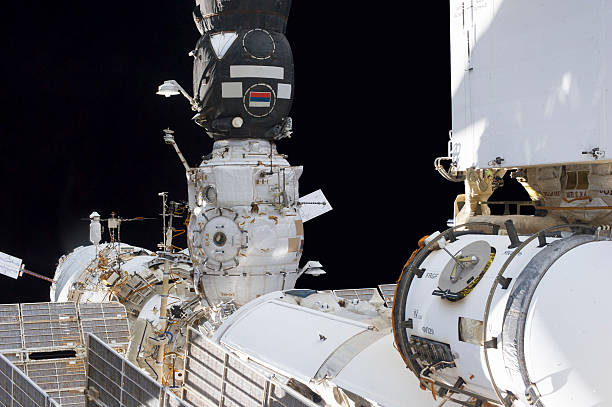
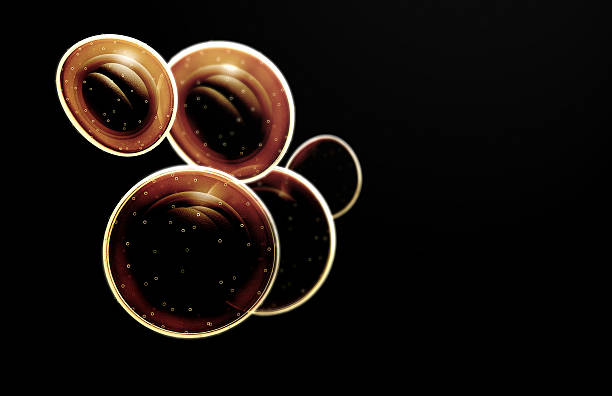
Here is what they actually did. In August 2023, the team froze mouse embryos at the two-cell stage. They launched them to the ISS, where astronauts thawed them and cultured them in a special device designed by JAXA. The embryos grew for four days, right through to the blastocyst stage—that’s the ball of cells that implants into a uterus and becomes a fetus. The astronauts then chemically preserved the embryos and sent them back to Earth. When the scientists analyzed them back in the lab, they compared them to control embryos grown in normal gravity. The space embryos had developed with no significant DNA damage, normal gene expression patterns, and, crucially, the correct number of cells in both the inner cell mass (which becomes the baby) and the trophectoderm (which becomes the placenta).
This was not a given. Microgravity messes with cellular mechanics. It changes how cells divide, how they organize their internal scaffolding, and how they signal to one another. Many researchers feared that gravity itself might be a required physical cue for the early embryo to properly segregate cells into the right lineages. The Japanese experiment proves otherwise. The embryo’s internal programming is robust enough to execute that first critical week of development without Earth’s gravitational pull.
Why does this matter for a guy in his twenties reading about space colonies? Because it moves one of the biggest existential blockers of space settlement from “impossibility” to “engineering challenge.“ We are not just talking about sending astronauts on six-month tours. We are talking about a permanent population. That means babies. That means families. That means pregnancies that last nine months in partial gravity. And this experiment suggests that the very beginning of that process—conception and early division—is not a showstopper.
The obvious next steps are brutal and necessary. We still do not know about implantation. A blastocyst is not a baby. It has to attach to a uterine wall, and that process involves incredibly precise molecular “zippering” between the embryo and the mother. Does microgravity change the adhesive proteins? Does it shift how the uterus prepares its lining? We do not know. And we certainly do not know what happens over the subsequent weeks when the neural tube forms, the heartbeat starts, and the limbs begin to bud. That is where the real “off-world pregnancy” risk lives.
But this Japanese study is the first clean green light. It tells us that the initial spark of a new human does not need one g. It can happen in freefall. Combine this with the fact that we have already grown sperm and eggs in space, and we are suddenly looking at a future where a child could be conceived, gestated, and born entirely outside the Earth’s gravitational well without a single generation of baseline data to guide us.
The practical takeaway for anyone tracking space development is this: human reproduction in space is no longer a speculative question. It is now an experimental one. Labs are going to race to figure out the microgravity pregnancy timeline. NASA and private companies will have to decide if they build artificial gravity centrifuges for habitats, or if they accept the risk of low-gravity fetal development. The Japanese mouse embryos just made that debate real.
We are a long way from a nursery on Mars. But the embryo that grew in orbit shows that biology is not the enemy here. The universe is not preventing us from becoming a multi-planetary species. It is just making us work for it. And this experiment proves that the work is worth doing.
Space News
Latest Articles
New rockets, upcoming launches, and the stories shaping humanity's push off this planet. No astronomy degree required.