TESS and the nearby bright star survey
TESS stands for Transiting Exoplanet Survey Satellite. It launched in 2018 with a straightforward job: scan the sky for planets that cross in front of their host stars, causing a tiny dip in brightness. That sounds basic, but TESS does it differently than its predecessor, Kepler. Kepler stared at a small patch of sky deep in the Milky Way, finding thousands of planets around faint, distant stars. Those discoveries proved planets are everywhere, but they’re practically useless for follow-up. You can’t measure the atmosphere of a planet when its star is too dim to analyze with spectrographs. You can’t send a probe somewhere you can barely see.
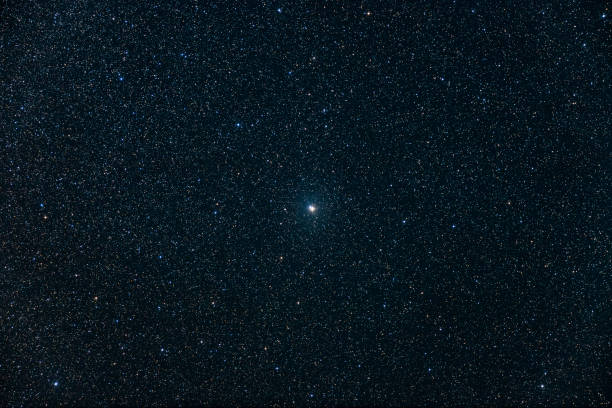
TESS flips that script. It monitors the entire sky, focusing on stars that are bright, close, and relatively easy for ground-based and space-based observatories to study. This is the “Nearby Bright Star Survey” in action. TESS breaks the sky into 26 sectors, each observed for about 27 days. Over its primary mission and extended operations, it has covered nearly the whole celestial sphere. The result? A catalog of planet candidates around stars visible to the naked eye or through small binoculars. That matters because when you find a planet around a bright star, you can use instruments like the James Webb Space Telescope to sniff its atmosphere, measure its temperature, and even look for signs of water, methane, or oxygen.
Think about what that means for the future of space travel. No one is building a starship tomorrow, but we are building telescopes that can characterize these worlds in detail. If we want to know which exoplanets are truly habitable—not just in the “right temperature zone” but with actual atmospheres and climates—we need targets we can study. The Nearby Bright Star Survey gives us those targets. It’s like having a map of the best campsites within a few days’ hike instead of a list of places on the other side of a continent you’ll never reach.
One of the most famous results so far is the TRAPPIST-1 system, but TRAPPIST-1 is a tiny, dim red dwarf. TESS found planets around stars like TOI-700, a small, cool star about 100 light-years away, but also around stars much more like our Sun. HD 21749 is a K-type star about 50 light-years away with a sub-Neptune planet. Pi Mensae is a Sun-like star about 60 light-years away with both a super-Earth and a massive gas giant. These aren’t impossibly distant. Fifty light-years is still a huge gap, but it’s in the neighborhood. For comparison, our nearest star system, Alpha Centauri, is just over 4 light-years away. We’re not building an interstellar highway yet, but we are identifying the most promising early exits.
The habitable zone—the region around a star where liquid water could exist on a planet’s surface—is the key filter. TESS has found dozens of planets squarely in their star’s habitable zone. Some are rocky, some are mini-Neptunes. The Nearby Bright Star Survey prioritizes those targets because they’re the ones we can actually test. Webb can look at their atmospheres now. Future missions like the Nancy Grace Roman Space Telescope or the proposed Habitable Worlds Observatory will go even deeper. The goal is to find a planet that is not only in the habitable zone but also has a stable atmosphere, a moderate climate, and some hint of biological activity. That’s the ultimate destination, even if we can only reach it with instruments and not boots.
For the average 20-something guy who follows space news, this shift is huge. We’ve moved from “there are probably a billion planets out there” to “here are twenty specific, bright-star planets we can investigate in detail right now.” The Nearby Bright Star Survey is essentially a real estate list for the next generation of astronomy. It tells us where to point our biggest telescopes, where to invest our time, and which worlds might one day be visited by robotic probes—or, if we get lucky, by humans.
TESS won’t last forever. Its orbit is slowly decaying, and eventually, it will run out of fuel. But its legacy is already set. It has turned the search for exoplanets from a numbers game into a navigation tool. The bright stars it found are beacons. They mark the way toward the places we might actually go, or at least see clearly, in the decades ahead. So keep an eye on TESS news. Every time you read about a new “Earth-sized planet around a bright star,” you’re reading about a possible destination—not just another dot in the sky.
Space News
Latest Articles
New rockets, upcoming launches, and the stories shaping humanity's push off this planet. No astronomy degree required.