Science priorities and the geology traverse planning
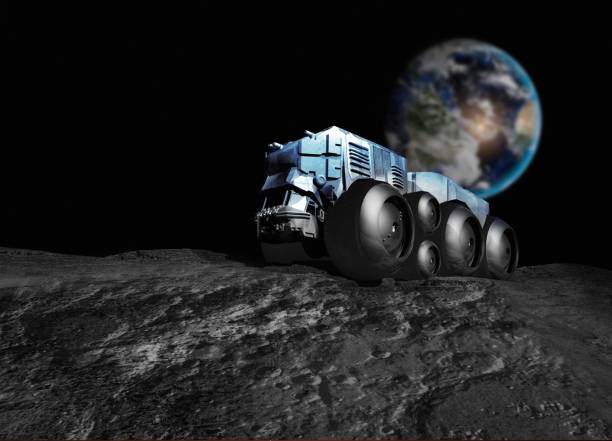
The average space enthusiast might think the biggest challenge of a lunar base is keeping people alive. And sure, radiation shielding, oxygen recycling, and water extraction are non-negotiable. But the science priorities for the first twelve months are actually about answering a blunt question: Can we live off the land? The Moon has no atmosphere, no liquid water on its surface, and a brutal temperature swing from 250°F to minus 250°F. Yet beneath that gray dust, there’s frozen water in shadowed craters, metal-rich rocks, and a geological history that holds the key to future Mars missions. To unlock that, you need traverse plans that get astronauts to the right spots without wasting days or fuel.
Why does traverse planning matter for life in space? Because unlike Apollo missions that lasted a few days, a lunar base is a long-term investment. The first year is a trial run. Every rover path, every sample collection, every drill core is a data point that tells mission planners where to build permanent infrastructure. If you want solar power, you need to avoid peaks that cast long shadows. If you want water ice, you need to know which crater rims are rich enough to mine. If you want to grow food in regolith, you need to test soil chemistry across different landing zones. Traverse planning is the bridge between “we landed here” and “we can stay here.”
The science priorities break into three hard categories. First, resource prospecting. The Moon’s polar regions, especially the south pole, are prime real estate because they harbor water ice. But not all ice is equal. Some is mixed with rock and dust, making extraction energy-intensive. Traverse plans must target permanently shadowed regions (PSRs) like Shackleton Crater, where sunlight never reaches and ice accumulates. Astronauts will drive rovers along the edges of these craters, drilling and sampling at multiple depths to map the ice’s purity and volume. Second priority: construction materials. The Moon’s surface is covered in regolith, a fine, sharp dust that can be processed into bricks or melted into glass. But different regions have different mineral compositions. A traverse plan might zigzag across a lava plain like Mare Imbrium to sample basalt-rich soils, or head toward the highlands where anorthosite (a calcium-rich rock) is more common. The third priority is radiation and thermal mapping. You can’t build a base without knowing which spots are shielded from cosmic rays by natural rock formations. Traverse routes will include stops at small craters and ridges where astronauts can deploy radiation sensors and thermal probes, building a risk map for future habitats.
All of this requires tight integration between the geology team on Earth and the crew on the lunar surface. Pre-planning is done with orbital data from satellites like NASA’s LRO, but that’s low-resolution. The real work happens when astronauts step onto the ground. They will use handheld spectrometers to analyze rocks in seconds, then relay that data back to mission control to adjust the next day’s route. The traverse plan is not a rigid checklist; it’s a living document that shifts based on what’s actually found. If a sample shows high water content, the crew might spend an extra day drilling at that site. If a rock sample is unexpectedly rich in titanium, they might reroute to a nearby outcrop for follow-up.
For the first year, the pace will be deliberate. Astronauts will stay within a few kilometers of the base at first, then expand their range as rovers improve and risk tolerance increases. The goal is not to explore the whole Moon, but to prove that a small, permanent settlement can thrive. Each sample bagged, each core taken, each sensor deployed is a piece of evidence that life in space doesn’t have to rely on supplies from Earth.
The bottom line is this: geology traverse planning isn’t boring paperwork. It’s the tactical playbook for a new kind of existence. The first year on the Moon will determine whether we can build a self-sufficient outpost or just another expensive camp. The rocks and dust under your boots are the raw materials for survival. And the decisions made during those first twelve months will echo for decades, as those same priorities—resource mapping, construction materials, and safety—apply directly to Mars, the asteroids, and beyond. Every traverse is a step toward making humans a multi-planet species. That’s the real science priority.
Space News
Latest Articles
New rockets, upcoming launches, and the stories shaping humanity's push off this planet. No astronomy degree required.