Hawking radiation and the evaporation theory
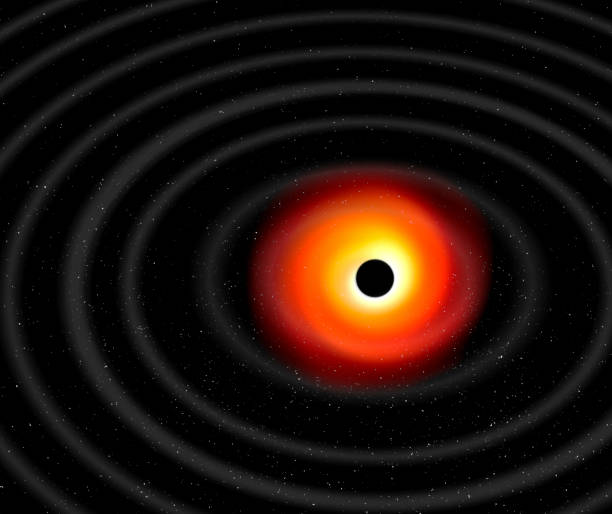
Here’s the no-nonsense breakdown. Near the event horizon of a black hole, the vacuum of space isn’t truly empty. Quantum mechanics says particle-antiparticle pairs constantly pop into existence and annihilate each other in a fraction of a second. Normally, this happens everywhere, and nothing changes. But right at the event horizon, something weird occurs. One particle gets sucked into the black hole while the other escapes. The escaping particle becomes real Hawking radiation. The particle that falls in has negative energy, so it reduces the black hole’s mass. To an outside observer, it looks like the black hole is slowly evaporating, particle by particle.
The smaller the black hole, the faster it radiates. A black hole with the mass of our Sun would take longer than the current age of the universe to evaporate—on the order of 10^67 years. But a microscopic black hole, if one exists, would pop like a firecracker in its final moments. That’s why we’ve never detected Hawking radiation directly. The signal is too faint for any telescope we’ve built. But the math is solid, and most physicists accept it as real.
This isn’t just an academic curiosity. Hawking radiation has deep implications for how we understand black holes and the fabric of spacetime. For one, it raises the famous information paradox. If a black hole evaporates completely, what happens to the information that fell in? Quantum mechanics says information can’t be destroyed, but Hawking’s original model suggested it would be lost forever. That contradiction has driven decades of research, leading to ideas like the holographic principle and string theory. The debate isn’t settled, but most physicists now believe the information somehow escapes in the radiation—just scrambled beyond recognition.
For casual space enthusiasts, here’s why this matters. Black holes aren’t eternal. They have a lifespan. That means the far future of the universe will be a slow, cold death where even the most massive black holes eventually dissolve into a faint glow of particles. This timeline is incomprehensibly long, but it’s a real endpoint. It also means that primordial black holes—theorized to have formed in the early universe—could be evaporating right now. If we ever detect a sudden burst of gamma rays from deep space, it might be the final death scream of one of these ancient objects.
There’s also a practical angle for space travel—eventually. If humanity ever builds a civilization around a black hole for energy (yes, that’s a real proposal), Hawking radiation would be a factor. The smaller the black hole, the more intense its radiation, so you could tune it like a cosmic engine. It’s pure science fiction for now, but the physics checks out.
Don’t expect Hawking radiation to be detected anytime soon. It’s too weak for stellar-mass black holes and too rare for small ones. But the concept forces us to think about deep space not as static emptiness, but as a dynamic theater where even the most extreme objects have an expiration date. Black holes don’t just swallow light—they slowly, reluctantly give it back. And in the process, they teach us that nothing in the universe, not even gravity’s ultimate victory, is forever.
Space News
Latest Articles
New rockets, upcoming launches, and the stories shaping humanity's push off this planet. No astronomy degree required.