Life in the ocean and the speculation
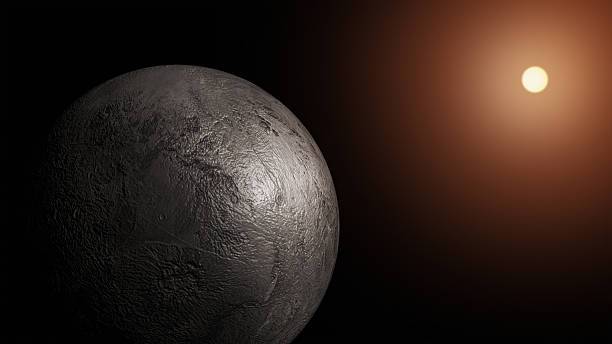
Europa is the star of the show. About the size of our Moon, it’s covered in a cracked, water-ice crust that hides a global ocean. Gravity data from the Galileo mission suggests this ocean could be 40 to 100 miles deep. That’s more than ten times the deepest point in Earth’s Pacific. Under that water, there’s likely a rocky seafloor. The key ingredient? Tidal heating. As Europa orbits Jupiter, the giant planet’s gravity constantly squeezes and stretches the moon, generating enough internal heat to keep that ocean liquid. No sunlight needed. No warm atmosphere. Just rock, water, and energy.
Now, the speculation part. If life exists there, it almost certainly looks nothing like a fish or a jellyfish. Think extremophiles—microbes that thrive on chemical energy from hydrothermal vents, similar to the ones we find in Earth’s deep ocean trenches. Some astrobiologists even argue that Europa’s environment could support complex organisms, like tube worms or crustaceans, if the nutrient cycle is robust enough. But here’s the reality check: we haven’t sent a probe to drill through the ice yet. All we have are models, orbital data, and educated guesses. The most credible speculation suggests that if life exists, it’s single-celled, carbon-based, and adapted to high pressure and low oxygen.
Enter Enceladus, the underdog that might actually be more promising. This small moon of Saturn sprays water vapor and ice particles from geysers at its south pole. The Cassini spacecraft flew through those plumes and detected organic molecules, including methane and carbon dioxide. That’s not just water—it’s water with the building blocks of life. The ocean beneath Enceladus’s icy crust is less deep than Europa’s, but it’s in direct contact with hot rock, thanks to tidal forces from Saturn. That means chemical reactions that can power life. The speculation here gets gritty: some scientists think Enceladus could harbor a “habitable zone” in its hydrothermal vents, where simple organisms might form a stable ecosystem. We won’t know until we send a dedicated lander or a sample-return mission.
So why should a 20-something American guy care about these destinations? Because they represent the next real frontier. The Moon is a rock with resources. Mars is a desert with an atmosphere. But Europa and Enceladus? They hold the answer to the single most profound question: is there life elsewhere? If we find even a fossilized microbe under Europa’s ice, it changes everything. It means life is common in the universe. It means we aren’t alone, even if that life is microscopic.
The catch is the travel time. A mission to Europa using current ion drives would take about six years just to get there. NASA’s Europa Clipper, launching in 2024, will do flybys—not landings. A true subsurface mission is decades away. Enceladus is even farther, about 10 to 12 years travel time, depending on the gravity-assist route. That’s a long haul, but not impossible. The technology for drilling through miles of ice exists in prototype form. Nuclear-powered melting probes could slowly descend through Europa’s crust, sampling the ocean layers as they go. It’s slow, expensive, and risky. But it’s also the only way to know for sure.
The speculation also extends to what we might find on the seafloor. If hydrothermal vents exist on Europa, they could create chemical gradients that life exploits, just like on Earth. Some researchers propose that Europa’s ocean might have more oxygen than Earth’s early oceans, because ice radiation splits water molecules at the surface. That could mean higher potential for complex organisms. On Enceladus, the vent chemistry is more active, with silica particles found in the plumes that suggest hot, alkaline conditions similar to Earth’s Lost City hydrothermal field. That’s a known niche for life.
Bottom line: these moons are not abstract curiosities. They are concrete destinations for the next century of human exploration. If you want to bet on where we find extraterrestrial life before 2050, put your money on Enceladus. If you want to bet on the planet with the biggest ocean in the solar system, that’s Europa. Both require patience, engineering, and a solid budget. But the payoff—knowledge that life exists beyond Earth—is worth the wait. Keep an eye on the Clipper mission and any future Enceladus lander concepts. The era of ocean worlds is just beginning.
Space News
Latest Articles
New rockets, upcoming launches, and the stories shaping humanity's push off this planet. No astronomy degree required.