Repeating FRBs and the magnetar hypothesis
Let’s break down what we actually know. FRBs were first discovered in 2007, buried in archival data from the Parkes Observatory in Australia. Since then, telescopes around the world have logged hundreds of them. The non-repeaters could be anything from black hole mergers to collapsing neutron stars. But the repeaters? They’re the ones that keep firing off bursts from the same spot in the sky. That rules out cataclysmic, one-and-done events. Something is surviving and producing these blasts over and over again.
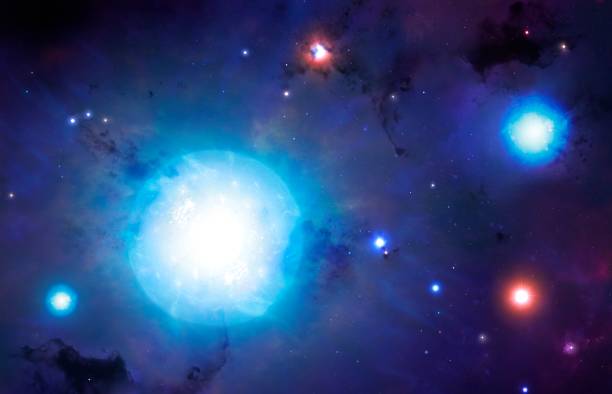
Enter the magnetar. A magnetar is a type of neutron star—the collapsed core of a massive star after a supernova—with a magnetic field a thousand trillion times stronger than Earth’s. Think of it as the universe’s angriest fridge magnet, except this one can warp atoms into spaghetti shapes. In theory, those insane magnetic fields can trigger starquakes or sudden reconfigurations that release enormous amounts of energy. That energy, channeled into radio waves, looks exactly like an FRB. The repeating part makes sense because magnetars don’t explode; they just keep having tantrums.
The smoking gun came in April 2020. A magnetar called SGR 1935+2154, located about 30,000 light-years away in our own Milky Way, let out a burst that was detected simultaneously by radio telescopes and X-ray observatories. It wasn’t as powerful as a typical extragalactic FRB, but it was close. More importantly, it proved that a magnetar in our backyard can produce the exact same kind of signal we see from deep space. Since then, astronomers have traced several repeating FRBs to regions of star formation in distant galaxies—exactly where you’d expect young, hyperactive magnetars to be born.
But don’t think this case is closed. There are still wrinkles. The repeating FRBs we’ve pinpointed seem to live in extreme environments, like dwarf galaxies with low metal content. That’s not where you’d expect run-of-the-mill magnetars to hang out. Some models suggest these repeaters could be “baby” magnetars, just weeks or months old, still glowing hot from their birth. Others propose that the bursts come from magnetars that are part of binary systems, with a companion star feeding material that triggers the flares. We don’t have enough data yet to know which flavor of magnetar is doing the work.
Then there’s the issue of timing. Some repeaters fire off bursts in chaotic, unpredictable patterns. Others, like FRB 180916, seem to pulse on a 16-day cycle. A magnetar’s magnetic field alone doesn’t explain that kind of periodicity. It might be the magnetar’s rotation, or maybe it’s precessing like a wobbling top. Or perhaps the magnetar isn’t the source itself but just the trigger. A competing idea says the bursts come from shocks in a magnetar’s wind, or from collisions between the magnetar’s magnetic field and surrounding debris. We’re still sorting the details.
For the casual enthusiast, here’s the bottom line: repeating FRBs are almost certainly coming from magnetars, but we don’t fully understand the mechanism yet. Every new observation narrows the possibilities. The Canadian Hydrogen Intensity Mapping Experiment (CHIME) and the Australian Square Kilometre Array Pathfinder are cranking out new detections weekly. Within a few years, we’ll likely have a direct image of a magnetar mid-burst, putting the debate to rest.
Until then, the magnetar hypothesis holds because it’s simple, it’s testable, and it already passed one big test with the 2020 event. Are there aliens involved? Almost certainly not. But a star so magnetically intense it could strip the electrons off your DNA from light-years away? That’s a story worth following. Keep your eyes on the radio sky—deep space isn’t silent. It’s just speaking in milliseconds.
Space News
Latest Articles
New rockets, upcoming launches, and the stories shaping humanity's push off this planet. No astronomy degree required.