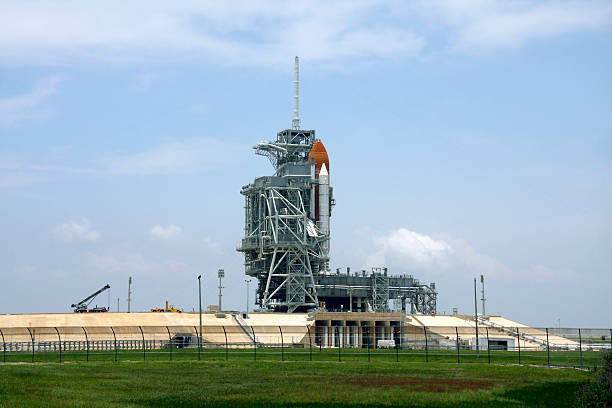
Launch site one in West Texas
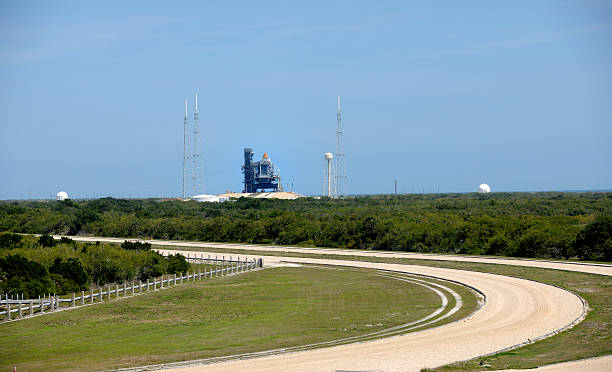
Blue Origin is not a government agency, but it behaves like one in the ways that matter most. It builds to spec, tests to failure, and iterates based on data rather than hype. The company was founded in 2000 by Jeff Bezos, but it grew up in West Texas. Launch Site One, also known simply as the West Texas Launch Site, became operational in 2006, years before Blue Origin ever announced a contract or a crew. For nearly a decade, it was the only place where the company’s engineers could light engines, push hardware to breaking points, and learn what actually works in the unforgiving vacuum of suborbital space.
The site sits on roughly 300,000 acres of leased ranchland, a buffer that allows Blue Origin to fly test vehicles without endangering anyone. That isolation is critical. When you are testing a rocket engine that has never flown before, you want a neighbor to be a cow, not a condominium. The company’s first vehicle, Goddard, took its maiden flight there in 2006. It was a relatively simple test bed—a small, squat rocket that reached only a few hundred feet before settling back down on its landing gear. But it proved the concept that powered vertical landing was possible. No NASA pad. No Air Force coordination. Just a private team, a patch of West Texas dirt, and the willingness to blow things up for a living.
What makes Launch Site One a true agency is not its infrastructure but its output. It is the only test facility that has matured a completely new reusable launch system from scratch. The New Shepard rocket and its crew capsule have flown over two dozen missions from that pad, including multiple abort tests that intentionally triggered failures to prove the spacecraft could save its crew. NASA, NRO, and Air Force agencies have all shown up at Blue Origin’s gate and handed over payloads or astronauts for training. In that sense, Launch Site One functions as an auxiliary agency of the broader American space architecture, providing data and capability that no government facility has matched in terms of turnaround speed and cost discipline.
The culture at Launch Site One is distinctly not the culture of Washington. There is no congressional oversight committee, no competitive bidding process that takes two years, no marching band for a zero-gravity press conference. Instead, there are engineers in jeans and boots who walk the pad every morning, check the lines, and scrub a launch if the wind shifts out of tolerance. The Texas operation has a flat hierarchy. The crew that prepares the vehicle is the same crew that reviews the data. That operational simplicity is why Blue Origin can loft a test flight within weeks of the last one, while government launches still require months of paperwork.
West Texas itself shapes the agency’s character. The heat in summer is punishing. The wind kicks up grit that finds its way into every bearing and seal. The nearest real town, Van Horn, has a population under two thousand. This is not a posting for someone who wants to telework or attend a ribbon cutting. The people who work at Launch Site One tend to be the kind who came up in aerospace by actually building and breaking things. They are former NASA technicians who got tired of red tape, military range safety officers who got tired of PowerPoint, and fresh mechanical engineering grads who got tired of waiting for permission to turn a wrench.
What Blue Origin has built in West Texas is an agency that operates by different rules. It does not need to lobby for a budget. It does not answer to a congressional schedule. It answers to the physics of the desert, the data from the last flight, and the next test that needs to be done. The company’s grander ambitions—the New Glenn orbital rocket, the Blue Moon lander, the factory in Florida—all trace their lineage back to those hot, open ranges of Culberson County.
Launch Site One is not flashy, and it never was meant to be. It is the quiet grind that produces the air and space agency of the private future. While the rest of the world watches big rockets lift off from the coasts, the men in West Texas keep welding, wrenching, and flying. They know that the real work happens in the silence between launches.
Space News
Latest Articles
New rockets, upcoming launches, and the stories shaping humanity's push off this planet. No astronomy degree required.