Physicist debates and the boundary of science
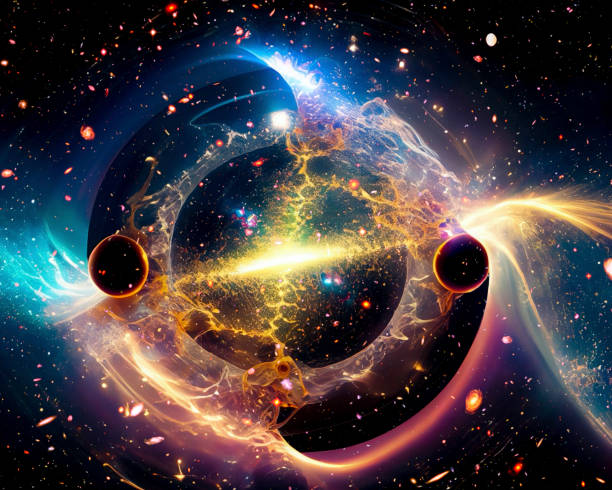
The problem starts with a simple fact: deep space is really, really far away. The observable universe stretches 93 billion light-years across, but that’s just the fraction of reality we can see. Beyond that horizon, standard cosmology says there’s more—much more—but we can’t detect it directly. No telescope, no probe, no signal can cross that boundary. So when a physicist like Andrei Linde or Max Tegmark starts talking about an infinite patchwork of universes, each with different physical laws, the skeptics sharpen their knives.
The core conflict here isn’t about data—it’s about what counts as science. On one side, you have positivist physicists who follow the Karl Popper playbook: a theory must be falsifiable. If you can’t design an experiment that could prove it wrong, it’s not science. It’s metaphysics, or worse, theology in a lab coat. Multiverse theories, especially the eternal inflation model, predict an infinite number of universes with every possible configuration. That means any observation we make is compatible with the theory. Too many fine-tuned constants? That’s just one universe in the ensemble. No detectable parallel worlds? Expected, since they’re causally disconnected. The theory becomes a perfect shelter from falsification, and that drives empirical physicists up the wall.
On the other side, you have theorists who argue that mathematical consistency and explanatory power are valid tools when direct observation is impossible. They point to historical examples: general relativity predicted black holes decades before we saw one. Quantum mechanics predicted entanglement long before Bell tests confirmed it. Why should multiverse theory be held to a different standard just because it makes us uncomfortable? For them, the equations of string theory and inflationary cosmology point inevitably toward a multiverse. Ignoring that math because we can’t build a spaceship to the next bubble universe isn’t scientific rigor—it’s intellectual cowardice.
The stakes are higher than academic turf wars. If the multiverse is real, it fundamentally changes how we think about our place in the cosmos. We are not the center. We are not even a special corner. Every possible outcome that could happen does happen, somewhere, in some universe where the electron has a different mass or the speed of light runs at half speed. That’s not just humbling—it’s existentially destabilizing. And that’s exactly why the debate matters for anyone following space travel and cosmology. The future of deep space exploration, even theoretical exploration, depends on whether we can define a workable boundary between science and speculation.
The most interesting voices in this fight are the ones who refuse to pick a side entirely. Physicist Sean Carroll, for example, argues that the multiverse is a legitimate scientific hypothesis, but he insists it must be treated with ruthless intellectual honesty about its testability. He doesn’t claim to have proof. He says, here’s the math, here’s what it implies, and here’s what we’d need to see for it to become credible. That’s the right attitude. It acknowledges that deep space will always push against the edge of what we can know, but it doesn’t abandon the scientific method just because the journey gets uncomfortable.
For the casual space enthusiast, here’s the takeaway: don’t let anyone tell you the multiverse is settled science or pseudoscience. It’s a frontier argument, a healthy tension that keeps cosmology honest. The boundary of science isn’t a wall—it’s a trench where data meets imagination, and the fighting is constant. As you follow the next generation of space telescopes and gravitational wave detectors, remember that every new piece of data either pushes the boundary deeper or forces us to redraw it. That tension is what makes cosmology exciting, not a weakness. Reality doesn’t care about our debates, but the debates determine how hard we try to find out what it actually is.
Deep space will always hold its secrets close. The question is whether we have the guts to keep asking the hard questions without pretending we already have the answers.
Space News
Latest Articles
New rockets, upcoming launches, and the stories shaping humanity's push off this planet. No astronomy degree required.