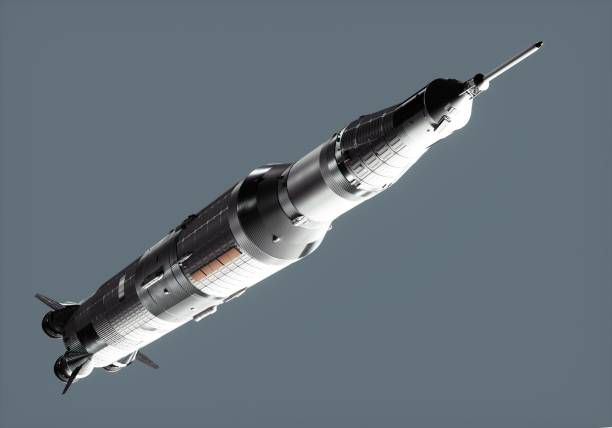
N1 moon rocket and its explosive failures
The N1 was designed to do one thing: put a Soviet cosmonaut on the Moon before the Americans got there. To do that, it needed to lift about 100 tons into low Earth orbit. That’s roughly the same payload capacity as the Saturn V. The problem was that the Soviet Union never developed a single large rocket engine powerful enough to do the job. Instead, Soviet engineers, led by chief designer Sergei Korolev before his death in 1966, decided to cluster thirty smaller NK-15 engines on the first stage. Thirty engines. That is not a typo. No rocket before or since has ever flown with that many engines on the first stage. For context, the Saturn V used five F-1 engines. SpaceX’s Falcon Heavy uses twenty-seven Merlin engines on the first stage, but those are modern, computer-controlled engines with decades of refinement behind them. The N1 had thirty engines designed in the 1960s, with no computerized engine control, no real-time telemetry feedback, and a guidance system that relied on analog computers.
The failures were immediate and violent. The first launch attempt, on February 21, 1969, lasted twelve seconds. A voltage surge in the control system shut down all thirty engines almost simultaneously. The rocket fell back onto the launch pad and exploded, destroying the complex. The second attempt, on July 3, 1969, was worse. A loose bolt got sucked into a fuel pump four seconds after liftoff. That engine shut down, but the control system, unable to compensate, shut down the opposite engine to balance the thrust. Then another engine failed. Then another. Within ten seconds, the rocket was yawing uncontrollably. At twenty-three seconds, the entire first stage exploded. The blast leveled the launch pad, shattered windows in buildings miles away, and hurled debris across the Baikonur Cosmodrome. The N1’s second stage, still full of propellant, crashed back onto the pad and detonated. It remains one of the largest non-nuclear explosions in history. And America had already landed on the Moon less than three weeks before that second failure.
The N1 flew two more times, both in 1971 and 1972. The third flight failed after forty seconds due to a roll control malfunction. The fourth flight made it to 107 seconds before a pogo oscillation—a longitudinal vibration like a jackhammer—ripped the fuel lines apart and triggered an explosion that destroyed the vehicle. After that, the Soviet Moon program was effectively dead. The N1 program was canceled in 1974, and the remaining hardware was scrapped or left to rust. Today, a few N1 engine components sit in museums. The launch pads at Baikonur are still scarred.
What makes the N1 relevant now, decades later, is what it teaches us about rocket design philosophy. The United States went with fewer, more powerful engines because they had the engine technology to do it. The Soviets didn’t, so they tried to brute-force the problem with numbers. That approach failed because each additional engine is not just another thruster—it’s another point of failure, another set of pipes, pumps, valves, and control signals that all have to work perfectly. The N1 proved that you cannot simply scale up complexity without scaling up reliability. Modern rockets like SpaceX’s Starship now use many engines, but they also have sophisticated computer networks that can shut down a failing engine and redistribute thrust in real time. The N1 had none of that. It was a brute-force solution built on Soviet pride and desperation.
For casual space fans, the N1 is a reminder that the Space Race was not a clean, inevitable victory for American engineering. It was a knife fight. The Soviets were just as ambitious and just as determined. They built a rocket that looked like a monster from a cold war nightmare, and it burned just as spectacularly. The N1 also serves as a warning for the future. As private companies and national space agencies push for heavier payloads and manned missions to Mars, the temptation to cut corners or overcomplicate will always be there. The N1 says that if you ignore the fundamentals—engine reliability, control system redundancy, and honest testing—you will end up with a crater instead of a spacecraft.
The wreckage of the N1 is not just a graveyard of hardware. It is a monument to what happens when ambition outruns ability. And if you ever find yourself watching a rocket launch and thinking it looks easy, remember the N1. That thing never flew a single successful mission. But it did teach the world a lesson in humility, paid for in steel, fuel, and broken dreams.
Space News
Latest Articles
New rockets, upcoming launches, and the stories shaping humanity's push off this planet. No astronomy degree required.