Europa Clipper searching for ocean plumes
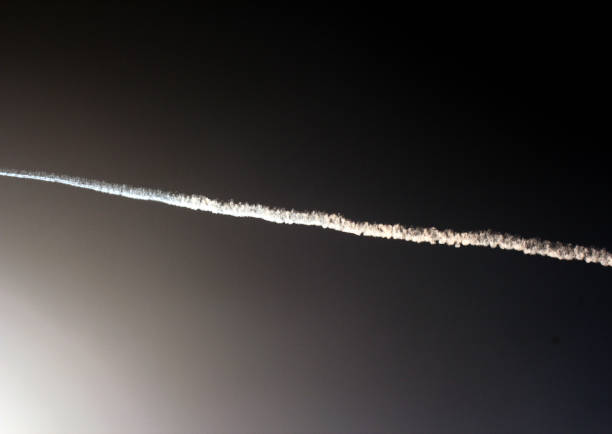
Europa Clipper isn’t a lander. That’s coming later, maybe. Instead, the spacecraft is a highly specialized orbiter—technically a multiple-flyby tourer—that will make about 49 close passes over Europa’s surface over roughly four years. Each pass brings it as low as 16 miles above the ice. That’s close enough to sample the moon’s tenuous atmosphere, map its magnetic field, and, crucially, look for direct evidence of plumes. Previous Hubble Space Telescope observations have spotted what look like 100-mile-high water vapor jets erupting from the southern polar region. But Hubble’s images are fuzzy. They’re suggestive, not conclusive. Clipper carries a suite of nine instruments, including spectrometers, cameras, and a thermal imager, designed to confirm whether those plumes are real and, if so, how and when they erupt.
The plume-hunting isn’t just a cool side quest. It’s the mission’s core scientific logic. If there’s a global liquid water ocean beneath Europa’s 10-to-15-mile-thick ice crust, the only way to study it without drilling through miles of rock-hard ice is to catch the ocean’s exhale. Plumes are the free sample return. They eject material from the subsurface ocean into space. When Clipper flies through those plumes, its mass spectrometer and dust analyzer will directly taste the chemistry—salts, organic compounds, maybe even biosignatures. Think of it as sniffing the ocean’s breath from orbit. If the plumes contain simple amino acids or complex carbon chains, that’s not proof of life, but it’s a smoking gun that the ocean has the ingredients for it.
One of the biggest unknowns is the plume timing. Are they constant like a geyser, or episodic like a volcanic eruption triggered by tidal stress? Jupiter’s immense gravity flexes Europa’s interior, generating heat that keeps the ocean liquid. That same flexing might crack the ice sheet and open vents. Clipper will characterize the plume activity over multiple flybys, building a pattern. If the plumes are predictable, future missions can target them directly. If they’re random, Clipper will have to rely on lucky passes and orbital adjustments. Either way, the data will define the design constraints for the next step: the Europa Lander concept, which would touch down near a plume source and drill for life itself.
Because Clipper is a Flagship-class mission—NASA’s most expensive category—it doesn’t do half measures. The spacecraft itself is built to survive Jupiter’s brutal radiation belts. Europa orbits inside Jupiter’s magnetosphere, which showers the moon with high-energy particles. Unshielded electronics would fry within months. Clipper’s critical components are encased in a thick titanium vault, and its trajectory is designed to minimize time spent in the worst radiation zones. This isn’t a quick in-and-out. It’s a calculated, repetitive assault on an extreme environment. The engineers at JPL have effectively built a spacecraft that can survive having its brains bombarded with pure radiation for years.
There’s also a practical, human-pilgrimage angle here. The outer planets have always felt like the final frontier—cold, dark, prohibitively distant. But Europa Clipper changes that calculus. It proves that we can operate complex, long-duration missions in the Jovian system, not just take snapshots as we zoom past. The technology developed for Clipper—radiation-hardened computing, autonomous navigation, deep-space communication—will be the backbone for missions to Enceladus, Titan, and even the ice giants. Every plume detected, every chemical profile recorded, is a blueprint for how to explore oceanic worlds without landing.
By 2030, when Clipper enters Jupiter orbit, American men in their 20s will be in their prime workforce years. This mission isn’t just for scientists in lab coats. It’s for anyone who wants to know whether humanity is alone in the solar system. The plume hunt is the first serious, funded attempt to answer that question beyond Mars. If Clipper finds active, chemically complex plumes, the next mission gets rubber-stamped. If it finds nothing, we go back to the drawing board. Either way, this is the moment when outer planet exploration stops being about pretty pictures and starts being about the search for other cells in the cosmic ocean.
So keep an eye on the launch window in 2024. When Clipper reaches Jupiter, it won’t just be another orbiter. It will be the first dedicated ocean hunter on the outer frontier. The plumes are out there. It’s time to find them.
Space News
Latest Articles
New rockets, upcoming launches, and the stories shaping humanity's push off this planet. No astronomy degree required.