What we would send and the payload constraint
First, understand the scale. Voyager 1, our farthest human-made object, is moving at about 17 kilometers per second. That sounds fast until you realize Alpha Centauri is 4.37 light-years away. At that speed, Voyager would take around 75,000 years to get there. We don’t have that kind of patience. For serious interstellar travel, we’re talking speeds of 0.1 to 0.2 times the speed of light—tens of thousands of kilometers per second. That requires energy densities far beyond chemical rockets. Nuclear pulse propulsion, ion drives, or laser sails are the only realistic candidates. And the more payload mass you add, the more energy you need exponentially. So the payload has to be ruthlessly optimized.
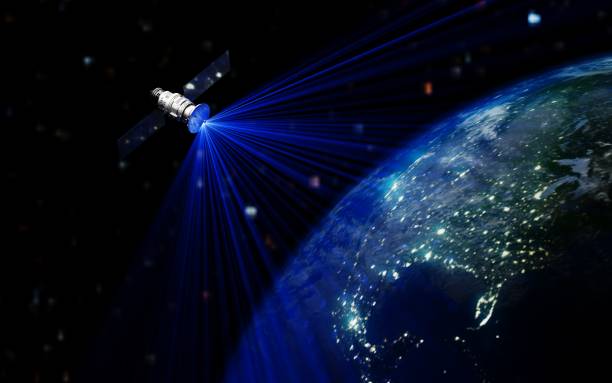
What do we actually send? The core of any interstellar probe will be a communication system. This isn’t optional. Without a way to get data back, the whole mission is a waste. But deep space communications are brutal. At interstellar distances, the inverse square law wreaks havoc on signal strength. You need a high-gain antenna, likely a phased array or a deployable dish, and a power source to run it. That power source is almost certainly a radioisotope thermoelectric generator or, if we can manage it, a small nuclear reactor. Solar panels are useless past Jupiter. So right there, you’ve burned a significant chunk of your mass budget on just talking home.
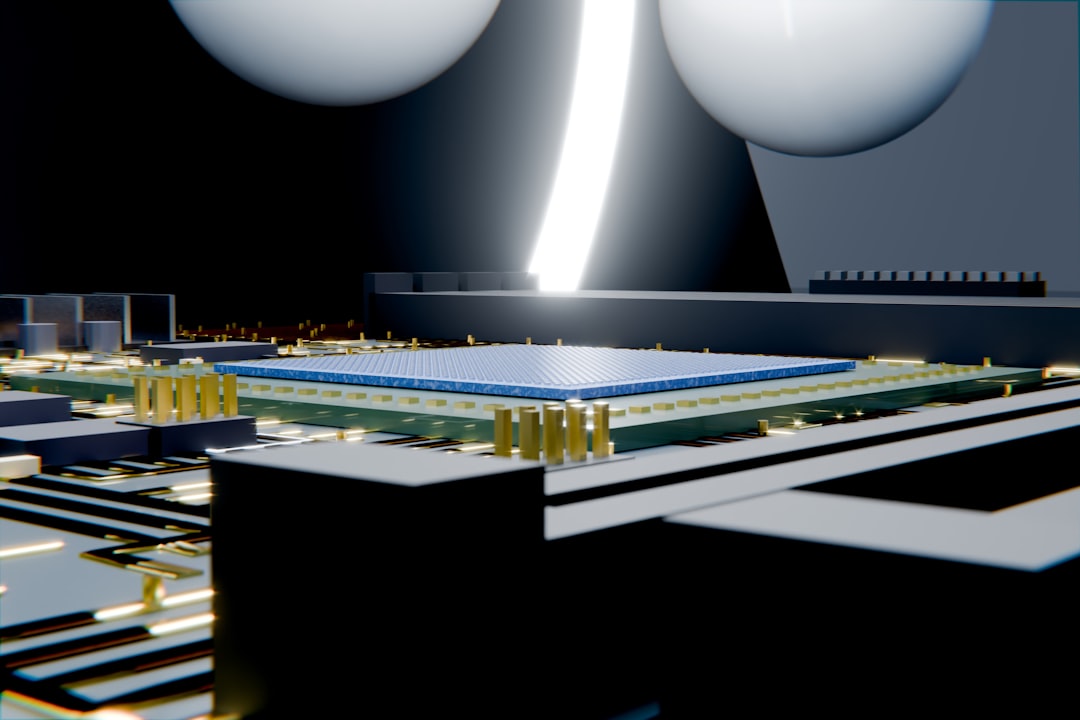
Next comes the science payload. This is where the pain really hits. You can’t send a full laboratory. You’re limited to a few instruments that give you the most bang for the kilogram. A magnetometer to measure interstellar magnetic fields. A plasma wave analyzer to detect charged particles. A dust impact detector to gauge the density of interstellar grains. Maybe a simple camera for the approach phase, but don’t expect Hubble-level optics at 4 light-years. The most ambitious proposals—like Breakthrough Starshot’s wafercraft—envision a gram-scale payload with a laser-comm system, a few sensors, and no propulsion of its own. That’s the extreme end: a stack of silicon chips smaller than your phone, blasted by a ground-based laser array. At that scale, the payload becomes almost trivial, but the engineering challenge of keeping it alive for decades in deep space is monstrous.
There’s also the elephant in the room: propulsion itself. If you’re using a sail concept, the sail material is part of the payload. A lightweight reflective membrane might weigh only a few grams per square meter, but it has to survive launch, deployment, and high-energy particle impacts. For fusion-powered concepts like Project Daedalus, the payload includes the entire fusion engine, fuel, and shielding. Daedalus was a 1970s design study that envisioned a two-stage fusion probe weighing 54,000 tons total, with only about 500 tons as actual scientific payload. That’s a weapons-grade efficiency problem: less than one percent of the mass does the actual science. The rest is fuel and structure.
So what’s the bottom line for the casual space enthusiast? The interstellar mission horizon is not about sending a shiny starship with a crew. It’s about sending a stripped-down sensor package that can survive radiation, temperature extremes, and time itself. The payload constraint forces us to think like a minimalist: no redundancy unless mass allows, no frills, no last-minute additions. Every decision is a trade-off between longevity, data quality, and weight. And because we can’t resupply or repair, the probe has to be built like a tank—but a tank that weighs as little as a suitcase.
Ultimately, the first interstellar payloads will be small, tough, and quiet. They’ll carry less computing power than your laptop and less sensing than a weather balloon. But they’ll be our first real scouts into the black, sending back whispers of what lies between the stars. And that’s a damn good reason to get the payload right, even if it means leaving everything else behind.
Space News
Latest Articles
New rockets, upcoming launches, and the stories shaping humanity's push off this planet. No astronomy degree required.