Underground labs and the shielding requirement
The concept sounds almost primitive. In an age where we can launch telescopes into orbit and land probes on asteroids, why are physicists literally burying their experiments? Because above ground, the Earth is constantly bombarded by cosmic radiation. A single muon from a supernova event miles away can ruin a detector’s reading. For experiments that are hunting for dark matter—the mysterious substance that makes up 85% of the universe’s mass—any background signal is a false alarm. Dark matter particles, if they exist, interact so weakly with normal matter that they pass through everything. They pass through rock, through concrete, through your body. So to catch one, you need a detector so quiet that nothing else trips it.
That’s where underground labs come in. The most famous one in the United States is the Sanford Underground Research Facility (SURF) in South Dakota, built inside the former Homestake gold mine. The lab sits about 4,850 feet below the surface. That mile of rock acts as a filter. It blocks nearly all cosmic rays, letting only the most elusive particles—like neutrinos and potential dark matter candidates—reach the detectors. Similar labs are scattered across the globe. Italy has the Gran Sasso National Laboratory under the Apennine Mountains. Canada has SNOLAB, two kilometers down in a nickel mine. Japan runs the Kamioka Observatory under Mount Ikeno.
The reason depth matters is brutally simple: shielding. The thicker the layer of rock above you, the fewer background particles get through. For dark matter detectors, which often use ultra-pure liquid xenon or germanium crystals, even a single stray neutron can mimic the signature of a dark matter particle. Scientists call these “fake” signals. They are the enemy. The deeper you go, the fewer fakes you see. But digging deep isn’t just about depth. It’s about cleanliness. These labs are kept cleaner than a hospital operating room. Dust, radon gas, and even the natural radioactivity in concrete must be controlled. Some experiments use copper that was mined centuries ago, because modern ore has trace amounts of radioactive isotopes from nuclear weapons testing. Yes, they worry about bomb fallout from the 1950s.
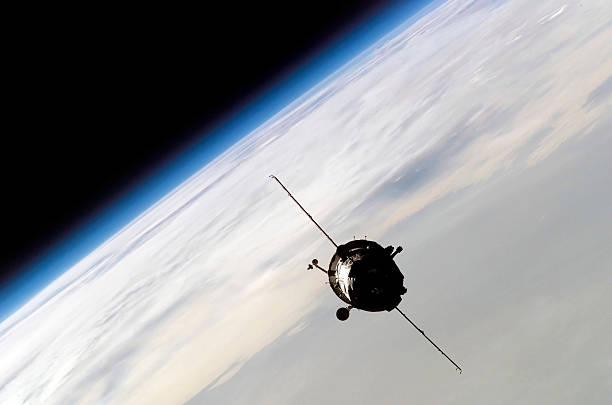
Now link this back to deep space. You might ask, “Why bother? If we want to study the universe, why not put detectors in space?” The answer is that space itself is noisy. The Sun pumps out a constant stream of charged particles. Cosmic rays from outside the solar system are even worse. A dark matter detector on the International Space Station would be overwhelmed by false signals. Underground labs on Earth actually provide a quieter environment than most of the solar system. They’re a cave, a sanctuary of silence in a universe that never shuts up.
This matters to the future of space travel for a practical reason. If we ever want to build deep-space habitats or long-duration missions, we will have to solve the same shielding problem for human bodies. Cosmic radiation doesn’t just mess with detectors; it damages DNA. NASA already knows that a trip to Mars without proper shielding would expose astronauts to dangerous levels of radiation. The lessons learned from underground labs—how to filter out background noise, what materials work best, how deep you need to go—are directly applicable to designing spacecraft and habitats. We might end up burying Mars bases under regolith, or building ships with water-filled walls. The principle is identical: use mass to block the noise.
For the casual space enthusiast, the takeaway is this. The invisible universe isn’t just out there among the stars. It’s also down here, hiding under your feet. Dark matter and neutrinos might feel like abstract physics, but the effort to detect them drives real engineering. Underground labs are not a relic of the past. They are a blueprint for how we handle the harsh reality of deep space. Rock is the cheapest, most reliable radiation shield we have. And if we get good at listening in the quietest places on Earth, we might finally hear what the universe is made of.
Space News
Latest Articles
New rockets, upcoming launches, and the stories shaping humanity's push off this planet. No astronomy degree required.