Spirit and Opportunity the rovers that wouldn't die
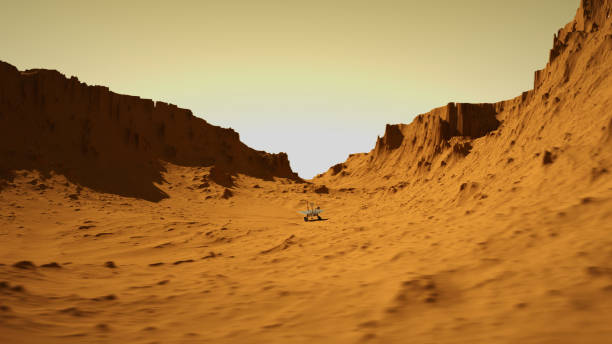
This wasn’t luck. It was obsessive, no-nonsense engineering and a mission design that treated Mars like a challenge to outsmart.
Spirit and Opportunity were twins. Each about the size of a golf cart, solar-powered, and built to handle the kind of temperature swings that would shatter consumer electronics. NASA called them Mars Exploration Rovers. The real nickname among the team was something closer to “the little bastards that wouldn’t die.” They landed using airbags—giant bouncing beach balls that cushioned the impact. Once they popped open and rolled upright, the real work began.
Their job was simple on paper: find evidence that Mars once had liquid water. That meant driving to rocks, grinding into them with a tool called the Rock Abrasion Tool (basically a diamond-tipped power sander), and sniffing the dust with spectrometers. They weren’t looking for life directly. They were looking for the ghost of it—minerals and sedimentary layers that only form in water.
Opportunity found that proof almost immediately. Within three months of landing in a region called Meridiani Planum, it discovered hematite spheres, nicknamed “blueberries,” that formed in acidic water. Then it found cross-bedded sandstone, the kind you see in ancient riverbeds. The conclusion was clear: Mars had standing water for long stretches, and it wasn’t just a one-time flash flood. That single discovery rewrote textbooks and justified the entire Mars Exploration Rover program.
But the real story isn’t the science. The real story is the survival.
By the time Spirit stopped communicating in 2010, it had driven 4.8 miles, which doesn’t sound like much until you remember Earth and Mars are never in the same place. Every drive had to be planned a day in advance, sent across interplanetary space, and executed with the patience of a guy parking a semi in a tight spot. Spirit got stuck in soft sand in 2009. The team spent months trying to free it, using test rovers back on Earth in a sandbox. They couldn’t. Spirit eventually froze to death that winter, its solar panels caked in dust and its batteries too cold to hold a charge.
Opportunity outlasted it by almost a decade.
It kept rolling through dust storms, kept climbing craters, kept sending back data long after its designed lifespan expired. In 2018, a planet-wide dust storm blotted out the sun for months. Opportunity’s solar panels couldn’t recharge. NASA sent hundreds of wake-up commands. Silence. They declared the mission over in February 2019.
The final transmission from Opportunity? A partial data packet NASA translated as: “My battery is low and it’s getting dark.” That line went viral. But the engineers who built it knew better. The rover didn’t say that. It just shut down. The poetry was ours.
What made these rovers special wasn’t just their durability. It was the way they changed how we think about Mars. Before Spirit and Opportunity, Mars was a dead rock where things landed and died. The Soviet Union’s Mars 3 lasted 20 seconds. NASA’s Pathfinder kept going for three months. These two rovers showed that if you build right, you can outlast the planet. They proved that remote exploration isn’t just about getting there—it’s about staying there long enough to see something unexpected.
That mindset now defines every Mars mission. Curiosity, which landed in 2012, was built with lessons from Spirit and Opportunity. Perseverance, which landed in 2021, carries a tiny piece of Opportunity’s aluminum chassis bolted to its side as a nod to the machine that refused to quit.
The search for life on Mars isn’t about finding little green men. It’s about finding the conditions where life could have existed. Spirit and Opportunity gave us the map. They showed us where water once flowed, where minerals could have fed microbes, and where future astronauts might dig for resources. They didn’t find life. They found the neighborhood where life might have lived.
For anyone watching from Earth, the takeaway is simple. Mars is a hostile place. It’s cold, dusty, and radiation-soaked. But if you design for ninety days and get fifteen years, you’ve done something right. Spirit and Opportunity weren’t just missions. They were proof that patience and good engineering beat luck every time. And for the guys building the next generation of Mars hardware, that’s the standard to beat.
Space News
Latest Articles
New rockets, upcoming launches, and the stories shaping humanity's push off this planet. No astronomy degree required.