Large format film and the Apollo mapping camera
First, let’s talk about the film. Large format film isn’t your dad’s 35mm. We’re talking about rolls of 5-inch-wide, high-resolution black-and-white and color film. The Apollo mapping camera, specifically the Fairchild Lunar Mapping Camera System (a mouthful, but just call it the mapping camera), used two cameras in one body. One was a metric camera for stereo photography and mapping, and the other was a stellar camera that captured star fields to triangulate exact positions on the Moon. The film itself was Kodak Aerographic film, custom made to survive vacuum, radiation, and extreme temperature swings. No digital sensor could touch the dynamic range or resolution of that film in 1969. And honestly, even today, large format film still outperforms most consumer digital sensors when it comes to pure detail per square inch.
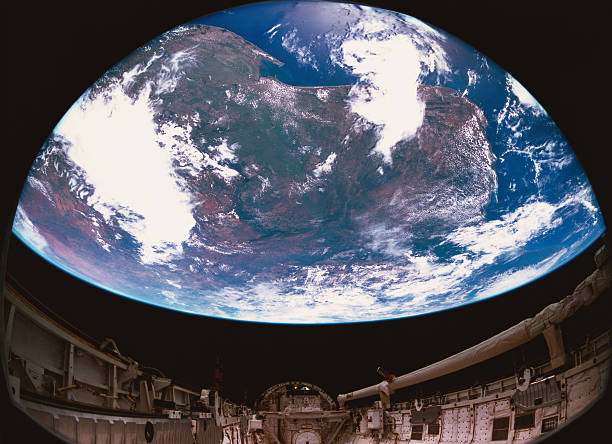
The mapping camera was mounted in the Service Module of the Apollo command ship, not the Lunar Module. That meant it stayed in orbit while astronauts walked around on the surface. It was operated remotely by the astronauts or by ground control, firing automatically at intervals to create overlapping images. Each frame covered roughly 114 miles by 114 miles of lunar surface at a resolution of about 2 meters per pixel. For context, that’s like being able to spot a car hood from a hundred miles up. The camera used a mechanical shutter, because in space, moving parts are a liability, but mechanical shutters beat electronic sensors for reliability at the time. It also used a rotating magazine system to advance film, which was heavy and clunky by modern standards but dead reliable.
Why does this matter to you? Because the Apollo mapping camera is a perfect example of the gear-first mindset that got us to the Moon. They didn’t wait for perfect digital sensors. They took the best analog film tech of the era, ruggedized it for space, and used it to map the entire lunar surface visible from orbit. That data is still used today for lunar science. You can download high-resolution scans of those film frames from NASA’s archives. They look sharper than most stuff you shoot on your phone. That’s not nostalgia talking—that’s physics. Large format film captures light directly onto a chemical substrate. No demosaicing, no compression artifacts, no Bayer filter interpolation. Just straight-up photons hitting silver halide crystals.
For the Apollo program, the mapping camera was a strategic asset. Before the Moon landing, nobody knew exactly what the surface looked like at ground level. The Ranger probes sent back lower-res images. The Surveyor landers gave us close-ups. But the mapping camera gave NASA the ability to see the Moon in stereo, measure elevations, and plan traverse routes for the later J-missions (Apollo 15, 16, and 17). Those missions carried a rover, and the rover’s route was partially planned based on mapping camera data. So the gear didn’t just take pretty pictures—it drove operational decisions.
Modern space photography is mostly digital. We use CCDs and CMOS sensors on orbiters like the Lunar Reconnaissance Orbiter. But the Apollo mapping camera film is still the benchmark for analog space photography. There’s a reason why NASA spent decades carefully scanning those rolls into digital files. The film had better dynamic range than early digital sensors, and it didn’t suffer from radiation-induced glitches the way early CCDs did. It’s a reminder that sometimes the best gear isn’t the newest gear. It’s the gear that’s been tested, hardened, and optimized for the job.
If you’re building your own space-photography kit—say for high-altitude balloon launches or experimental rockets—consider the lessons of the mapping camera. A large format film setup might sound archaic, but it gives you resolution and color fidelity that many digital sensors can’t match without heavy processing. You will pay for it in weight, bulk, and logistics. The mapping camera and its film magazines weighed over 120 pounds. But for the right mission, that weight buys you data you can’t get any other way.
In the end, the Apollo mapping camera wasn’t glamorous. It didn’t take the cover photos. But it did the job that made every Moon landing safer and more scientifically valuable. That’s what real gear does. It works. And it keeps working long after the hype fades.
Space News
Latest Articles
New rockets, upcoming launches, and the stories shaping humanity's push off this planet. No astronomy degree required.