Water-bearing asteroids and the refueling depot idea
First, understand why water matters so much. In space, you cannot just pull into a gas station. Every pound of fuel you bring from Earth costs thousands of dollars in launch costs. But water is hydrogen and oxygen. Split water into its molecules, and you have rocket propellant. The same technology that powers SpaceX’s Raptor engines can run on hydrogen and oxygen derived from asteroid water. That means a spacecraft that refuels in the belt can go farther, carry more cargo, or return home without needing a massive tank of Earth-launched fuel.
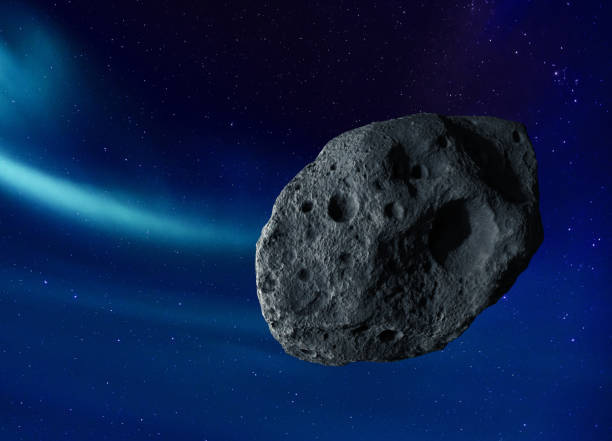
Not all asteroids are equal. The ones you want are called carbonaceous chondrites, or C-type asteroids. They are dark, ancient, and loaded with hydrated minerals. Some estimates suggest that certain C-type asteroids contain up to 20% water by weight. That is more water per ton than many deserts on Earth. A single asteroid a few hundred meters across could hold more water than all the freshwater lakes in the United States combined. And that water is just floating there, waiting to be tapped.
So where do you set up the depot? The smart play is to target a Near-Earth Object, or NEO, that has a stable orbit between Earth and the Main Belt. These are the water-rich asteroids that come close enough to Earth to make retrieval missions feasible. But the ultimate destination for a permanent refueling depot is not an asteroid itself. It is a Lagrange point, or a stable orbit around a large, water-rich asteroid like Ceres. Ceres is the largest object in the Asteroid Belt and is estimated to have more water than all of Earth’s fresh water. If you park a depot near Ceres, you have a virtually unlimited supply of fuel for missions heading to Mars, the Jovian moons, or beyond.
The concept is simple: send a robotic mining spacecraft to a water-bearing asteroid. It extracts the water, either by heating the rock or using a process called microwave sublimation. The water vapor is collected, purified, and then electrolyzed into hydrogen and oxygen. The hydrogen and oxygen are cryogenically stored in tanks. A tanker ship then transports the fuel to a central depot, where customer spacecraft dock, fill up, and continue their journey. This is not science fiction. NASA’s OSIRIS-REx mission already sampled a carbonaceous asteroid, and Japan’s Hayabusa2 returned samples from a similar object. The technology to extract water exists. The question is scale and cost.
Why would this matter to a 20-something American today? Because within your lifetime, private companies and government agencies will need to solve the fuel problem to make Mars colonization viable. SpaceX’s Starship is designed to refuel in orbit, but that fuel comes from Earth. A water-asteroid depot cuts the cost of deep space missions by orders of magnitude. It also creates a new industry. Think of it like the oil boom in Texas, but in space. The first companies that master asteroid water extraction will dominate the market for interplanetary travel.
The destination is not just the Asteroid Belt. It is every place beyond Earth’s gravity well. A refueling depot in the belt turns the solar system into a highway system. You launch from Earth with just enough fuel to reach the depot. You top off your tanks there. Then you push to Mars, the outer planets, or even the asteroid mining camps themselves. Without that depot, every mission is a one-shot deal with massive fuel constraints. With it, you have mobility.
The challenges are real. Radiation, microgravity, and the sheer distance make autonomous mining difficult. But these are engineering problems, not fundamental physics. The first crewed mission to Mars will likely happen in the 2030s. By the 2040s, you could see the first commercial water-mining operation in the belt. That means if you are in your twenties now, you have a front row seat to the creation of the solar system’s first gas station.
So forget the romanticized idea of mining gold from asteroids. The real money, and the real future of exploration, is in water. The Asteroid Belt is not a dangerous wasteland. It is a fuel farm. And the depots we build there will be the launchpads for the next century of human expansion.
Space News
Latest Articles
New rockets, upcoming launches, and the stories shaping humanity's push off this planet. No astronomy degree required.