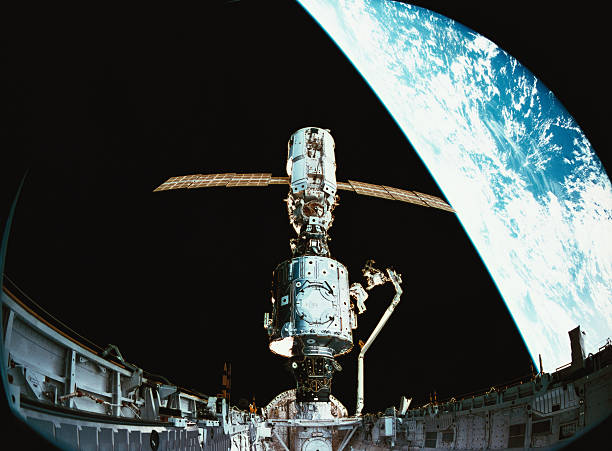
Delta IV Heavy final west coast launch
Let’s be clear: not all launch sites are created equal. Cape Canaveral in Florida gets all the glory. That’s where the crewed missions blast off, where SpaceX lands boosters on drone ships, and where tourists flock to see Artemis hardware. But Vandenberg, sitting on the California coast about 150 miles northwest of Los Angeles, serves a completely different purpose. It’s the only major U.S. launch site that can safely send rockets south over the Pacific Ocean without overflying populated land. That geometry is essential for polar orbits—the kind that let satellites scan every inch of the Earth’s surface as the planet rotates beneath them. Spy satellites, weather satellites, and many Earth-observation constellations rely on these trajectories. Without Vandenberg, you’d have to launch due east from Florida and waste massive amounts of fuel to tilt into a polar inclination. That’s inefficient, expensive, and often impossible for heavy payloads.
The Delta IV Heavy’s final mission was classified—it carried a National Reconnaissance Office satellite, likely a signals intelligence bird designed to monitor global communications from a highly elliptical orbit. That’s typical for Vandenberg. The base has been the go-to for national security space launches since the 1960s, hosting everything from Corona film-return capsules to modern GPS satellites. What made this launch particularly notable was the sheer size of the rocket. The Delta IV Heavy stood 235 feet tall and produced 2.1 million pounds of thrust at liftoff. It was the largest rocket ever launched from the West Coast, and its three common core boosters—each powered by a hydrogen-burning RS-68A engine—made a spectacle that could be seen for miles along the Central Coast. The payload was never revealed, but rumors pointed to a spacecraft weighing over 10,000 kilograms, which would have been the heaviest classified payload ever sent from Vandenberg.
Now, with the Delta IV Heavy retired, Vandenberg isn’t going quiet. Far from it. The base is undergoing a massive transformation driven by the commercial space boom. SpaceX operates two launch pads here: SLC-4E for Falcon 9 and Falcon Heavy, and SLC-4W for landing booster returns. They’ve already launched dozens of Starlink missions from Vandenberg, filling out the polar shell of their satellite internet constellation. The U.S. Space Force is also modernizing the base, investing in new processing facilities and range upgrades to handle higher launch cadences. The goal is to reach 48 launches per year from Vandenberg by 2026—up from roughly a dozen annually just a few years ago. That’s a tectonic shift for a facility that used to average one major mission every other month.
For casual enthusiasts, the takeaway is simple: launch sites are the unsung infrastructure that determines what kind of missions are possible. Vandenberg’s unique geography gives the U.S. a strategic advantage for polar and retrograde orbits—orbits that no other domestic site can efficiently support. When you see a live stream of a Falcon 9 lifting off from California at sunset, that’s not just a pretty image. It’s a window into the logistical and mechanical choreography that lets us monitor Arctic ice caps, track global shipping lanes, and keep an eye on foreign missile tests. And as companies like Relativity Space, Firefly Aerospace, and ABL Space Systems push for their own pads at Vandenberg, the site will only grow in importance.
The Delta IV Heavy’s final West Coast launch was a bittersweet moment—a last hurrah for a rocket that cost $400 million per flight and took years to prepare. But it also reminded us that the real story isn’t the hardware itself. It’s the ground beneath it. Vandenberg is the gateway to the polar express, and its role in America’s space future is only getting faster.
Space News
Latest Articles
New rockets, upcoming launches, and the stories shaping humanity's push off this planet. No astronomy degree required.