Wormholes and the Einstein-Rosen bridge speculation
First, let’s strip away the Hollywood gloss. A wormhole, formally called an Einstein-Rosen bridge, is a theoretical tunnel connecting two separate points in spacetime. It was first proposed in 1935 by Albert Einstein and Nathan Rosen. They were working on the mathematics of general relativity, specifically looking at solutions to the field equations that describe black holes. What they found was that a black hole’s singularity—the infinitely dense core—might not be a dead end. Instead, the equations suggested a bridge connecting the black hole to a white hole, a theoretical object that spews matter out into another region of the universe. This bridge, in principle, could allow matter to travel between the two locations faster than light would normally allow, because it bypasses the distance in between.
But here’s where the no-nonsense physics kicks in. The original Einstein-Rosen bridge is not stable. In fact, it’s downright suicidal. The throat of the wormhole collapses so quickly that nothing—not even light—could pass through before it pinches shut. For an astronaut, trying to fly through a classic Schwarzschild wormhole would be like trying to slip through a door that slams shut at the speed of light. You’d be crushed into quantum foam long before you reached the other side. Worse, the singularity inside a black hole is a one-way ticket to spaghettification—being stretched into a thin strand of particles by tidal forces. The bridge isn’t a tunnel you walk through; it’s a mathematical ghost.
That hasn’t stopped theorists from speculating about how to keep the bridge open. The key is exotic matter. This isn’t just rare or weird matter; it’s matter with negative energy density, meaning it violates the average null energy condition. In plain English, exotic matter would have to push spacetime outward, counteracting the gravitational collapse that closes the wormhole throat. If you could thread the bridge with enough exotic matter, the tunnel could stay open long enough for a spacecraft to pass through. The problem? No one has ever observed exotic matter. It exists only in certain quantum field theory calculations, like the Casimir effect, where two metal plates create a tiny region of negative energy between them. Scaling that up to a wormhole the size of a human would require more negative energy than exists in the entire observable universe. Good luck finding that at your local gas station.
Even if we solved the exotic matter problem, you’d still face the issue of time travel. One of the more unsettling implications of traversable wormholes is that they can become closed timelike curves—basically, time machines. If you move one mouth of the wormhole at relativistic speeds, the time difference between the two ends can create a scenario where you can travel backward in your own timeline. This is where causality breaks down, and physicists get very uncomfortable. Most theorists, including Stephen Hawking, have argued that some yet-unknown law of physics prevents wormholes from being used for time travel. The chronology protection conjecture suggests that quantum effects would destroy the wormhole the moment you tried to use it as a time machine.
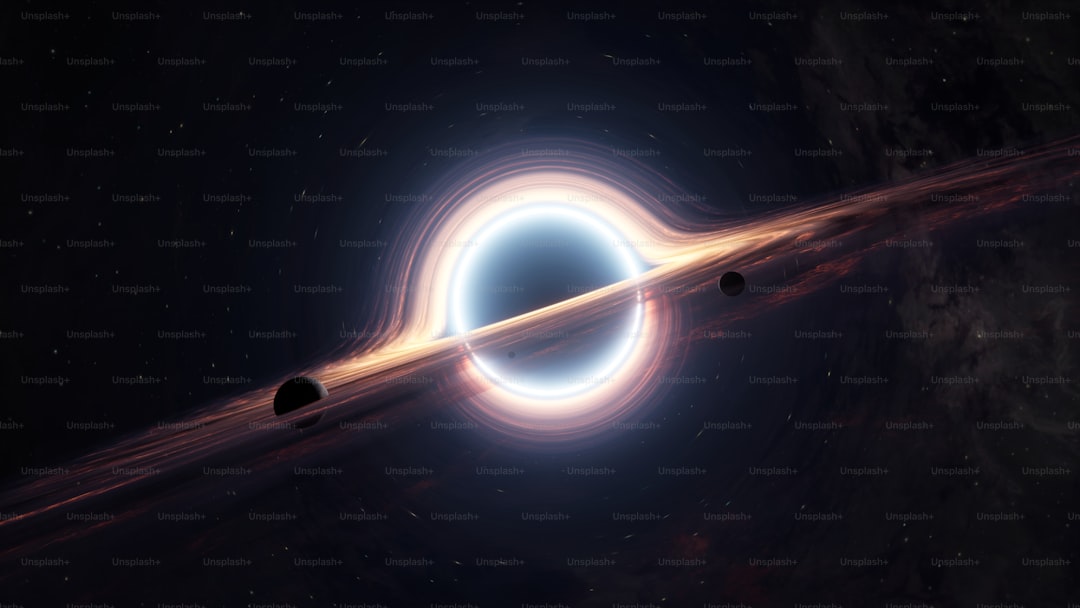
For the practical-minded space enthusiast, the takeaway is sobering but thrilling. Wormholes are not a near-term or even long-term solution for deep space travel. They require conditions that violate known physics and demand resources that don’t exist. But they remain one of the most powerful tools for understanding the nature of spacetime, black holes, and the event horizon itself. Every time you look at an image of a black hole’s shadow, you’re looking at a region where all possible paths lead inward. The Einstein-Rosen bridge is a reminder that our equations sometimes open doors to places we can’t yet reach.
In the end, wormholes are a speculation built on solid math but shaky reality. They represent the outer edge of what’s possible in deep space theory. For now, stick with chemical rockets and ion drives. But keep one eye on those event horizons. The bridge might not be ready for travel, but it’s already reshaping how we think about the universe.
Space News
Latest Articles
New rockets, upcoming launches, and the stories shaping humanity's push off this planet. No astronomy degree required.