The dark matter map and the cosmic web
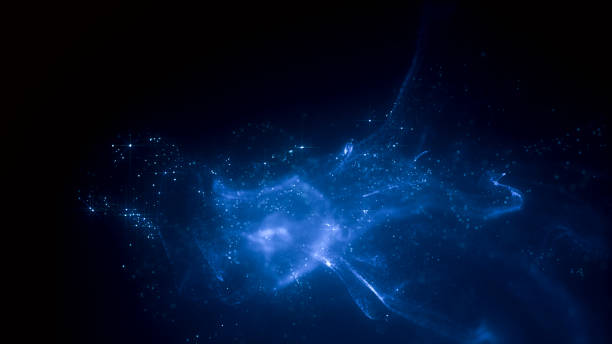
Let’s cut to the chase: what exactly is dark matter? Nobody knows for sure. It doesn’t emit light, absorb light, or interact with electromagnetic forces. It’s completely invisible to every instrument we have. But we know it exists because of its gravitational pull. Galaxies spin so fast that they should fly apart, but they don’t. Something massive and invisible is holding them together. That something is dark matter. It acts like a gravitational glue, but it’s not evenly spread. It clumps into a vast, interconnected structure called the cosmic web.
The cosmic web is exactly what it sounds like: a network of filaments, nodes, and voids stretching across billions of light-years. Imagine a spider web, but instead of silk, you have invisible threads of dark matter. Where these threads intersect, gravity pulls in gas and dust, and galaxies form. The filaments themselves are like cosmic highways, funneling material into clusters of galaxies. The voids between them are nearly empty, containing almost no matter at all. This structure is the largest known pattern in the universe, and until recently, we could only infer its existence from computer simulations.
That changed when the Subaru Telescope in Hawaii and the Hubble Space Telescope started producing the most detailed dark matter maps ever. Using a technique called gravitational lensing, astronomers measure how the gravity of dark matter bends the light from distant galaxies. It’s like looking through a warped window. By analyzing these distortions, researchers can map where dark matter is hiding. The results are staggering. The new maps show the cosmic web in unprecedented clarity, revealing massive filaments connecting galaxy clusters that were previously unknown. One study mapped dark matter out to a distance of 13 billion light-years, giving us a glimpse of what the universe looked like just after the Big Bang.
Why should a guy in his twenties who follows space travel care about this? Because the cosmic web doesn’t just explain the past—it shapes the future. If we ever push beyond our solar system, these dark matter filaments could be the navigational routes. They’re not physical roads, but they are regions where gravity is stronger, meaning spacecraft could use gravitational assists more efficiently. More importantly, understanding dark matter distribution helps us locate galaxies that might harbor habitable planets. The best chance for finding life is in regions where galaxies form, and those regions are defined by the cosmic web. If we want to target our deep-space probes, we need to know where the intersections are.
There’s also a practical angle for engineering. Dark matter doesn’t interact with normal matter, but it does interact with gravity. That means if we ever build spacecraft that use gravity-based propulsion or need precise navigation through deep space, we need to know where these invisible concentrations are. Voyager and New Horizons were shot out using brute force. Future missions will use gravity slingshots around stars and black holes. The cosmic web will be the rail map for those maneuvers.
Of course, we’re still at the mapping stage. The dark matter maps we have now are like a rough sketch of a continent we’ve only glimpsed from a plane. The next generation of telescopes—like the Nancy Grace Roman Space Telescope and the Euclid mission—will produce even higher resolution maps. They will track the cosmic web’s evolution over time, showing how it grew from the first moments after the Big Bang into the structure we see today. This isn’t just astronomy; it’s cosmology, the study of the universe’s origin and fate. Dark matter is the key to understanding why the universe looks the way it does.
If you’re serious about space travel, you need to think beyond rockets and fuel. The universe is not an empty void. It’s a structured, interconnected web of invisible matter that dictates every galaxy’s fate. The dark matter map is your first real look at that hidden landscape. It’s a rebel’s guide to deep space, showing you the routes, the clusters, and the voids. It’s not a map of stars. It’s a map of the universe’s bones. And the bones are the only things that will keep you from getting lost out there.
Space News
Latest Articles
New rockets, upcoming launches, and the stories shaping humanity's push off this planet. No astronomy degree required.