The far side and the radio quiet zone
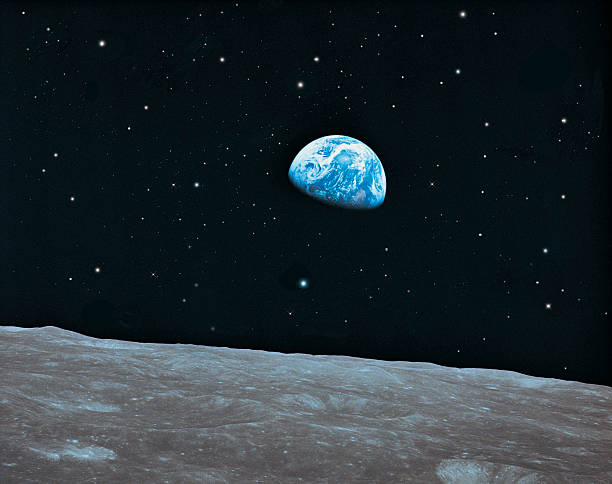
The far side gets a lot of mythologizing. “Dark side of the Moon” sounds ominous, but it’s not dark—it gets just as much sunlight as the near side. What makes it different is the Earth. Because the Moon is tidally locked, the far side permanently faces away. That means Earth’s radio chatter, satellite transmissions, Wi-Fi, cell towers, radar, and every other electronic burp we’ve been spewing for a century are completely blocked by 3,500 kilometers of solid lunar rock. The far side is the only spot in the inner solar system where a radio telescope can hear the faintest whispers from the cosmic dawn—signals from the early universe, exoplanet magnetic fields, or even potential extraterrestrial transmissions—without being drowned out by human noise.
Right now, the most talked-about destination within that zone is the proposed Lunar Crater Radio Telescope. The Chinese Chang’e-4 mission already put a small spectrometer on the far side in 2019, but the real prize is a massive array. NASA is looking at building a telescope inside a natural crater, using the rim as a parabolic dish. You’re talking about a radio observatory thousands of feet across, built on a world with no atmosphere, no ionosphere, and no human-generated static. That kind of instrument could detect signals from the universe’s first stars and galaxies, objects we’ve never seen because their light redshifts into frequencies we can’t pick up through Earth’s noise. It’s not science fiction—it’s engineering. The question is just how fast we can get there.
But the Radio Quiet Zone isn’t just about telescopes. It’s a destination for the entire return-to-the-Moon ecosystem. The Artemis program, China’s International Lunar Research Station, and private landers from companies like Astrobotic and Intuitive Machines are all planning far-side missions. And they’re not going there to sightsee. The far side’s isolation makes it ideal for deep-space communications relays, fuel depots, and even a staging ground for Mars missions. If you’re building a permanent presence on the Moon, you want a piece of that quiet real estate. The problem is that the quietness itself is fragile. If we start landing habitats, rovers, and mining equipment all over the place, we risk contaminating the radio environment. That’s why planners are already designating a protected zone—think of it as a national park for science, where no transmitters are allowed within hundreds of kilometers of the telescope site.
For the casual space enthusiast watching from Earth, the far side feels like the final frontier of the lunar surface. It’s not just another Apollo remake. It’s a legitimate, no-bullshit destination where the payoff is real data about how the universe began and whether we’re alone. The first crewed landing on the far side will likely happen this decade under Artemis, and when it does, those astronauts won’t see Earth in the sky. They’ll look up and see only the blackness of space, with the Milky Way splattered across their viewport like nothing you can see from any place humans have ever stood. That’s the kind of visual that makes people rethink their priorities.
But let’s be honest: the far side is also a pain in the ass to reach. No direct line-of-sight to Earth means you need relay satellites just to call home. Landing there is harder because there’s no Earth-based navigation assist. And the temperature swings are brutal—from 120°C in the day to -130°C at night. That’s why early missions will be robotic. The humans come later, and they’ll have to bring their own infrastructure. Still, the payoff is worth the hassle. The Radio Quiet Zone isn’t just a scientific curiosity—it’s the only place where we can truly listen. And for a generation of men who grew up on Carl Sagan and Star Trek, that’s exactly the kind of destination that turns a rock in the sky into a reason to go back.
So keep your eyes on the far side. It’s not a detour. It’s the main event.
Space News
Latest Articles
New rockets, upcoming launches, and the stories shaping humanity's push off this planet. No astronomy degree required.