xEMU and the Artemis south pole requirement
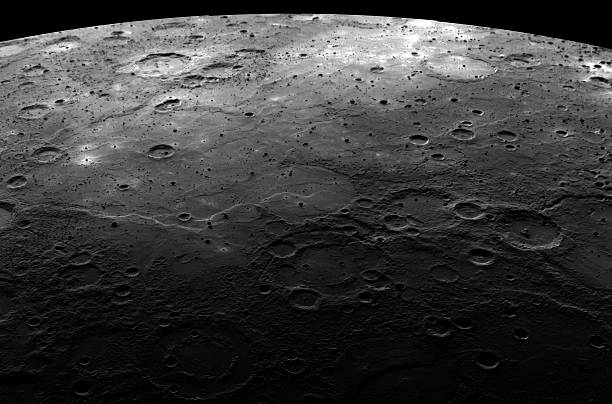
Let’s cut the hype and get into what this suit actually does. The xEMU isn’t a redesign of the Apollo suits your dad watched on TV. Those old suits were basically pressurized balloons with limited mobility. Astronauts shuffled around like they were wearing a tank. The xEMU, by contrast, is a wearable spacecraft. It’s built from the ground up to handle the unique nightmare that is the lunar south pole. That region is nothing like the Apollo landing sites. The equator gets baked in sunlight, sure. The south pole has permanently shadowed craters with temperatures that drop to minus 400 degrees Fahrenheit. It also has razor-sharp, jagged regolith that will chew through fabric like sandpaper through silk. The xEMU has to survive both extremes without a hitch.
The core of the system is the life support shell. That’s the hard upper torso, the cooling garment, the oxygen loop, and the carbon dioxide scrubber—all packed into a unit that fits around your body like a high-end exoskeleton. The shell is modular. That means you don’t send a one-size-fits-all suit to the Moon. You send interchangeable parts—arms, legs, torso segments—so each astronaut can get a custom fit. This sounds simple, but it’s a huge leap. Apollo suits were custom-built per astronaut and basically non-adjustable. If you gained or lost weight, you were stuck. The xEMU adjusts on the fly. Shoulders rotate independently. Hips flex. Knees bend. You can actually squat down to pick up a rock sample without falling over. That mobility is critical for south pole work, where terrain is steep, uneven, and often coated in fine dust that turns into a traction hazard.
Here’s where the gear gets interesting from an engineering perspective. The new suit has to handle sharp, abrasive regolith that’s been ground by micrometeorites for billions of years. Apollo suits got shredded after just a few hours of surface activity. The xEMU uses a layered dust-repellent coating on the outer shell. It’s not magic—it’s a combination of specialized polymers and a pattern that minimizes dust adhesion. On top of that, the suit’s bearings and seals are redesigned to prevent dust ingress. There’s even a dust removal port on the suit’s backpack that lets the crew blow particles off before re-entering the habitat. This isn’t optional. If dust gets into the life support system, it can clog filters, cause overheating, or even poison the oxygen loop. The south pole has some of the finest, most abrasive dust on the Moon. The xEMU’s dust countermeasures are not a luxury; they are a survival requirement.
Another big requirement is thermal management. The south pole has areas that are permanently shadowed and others that receive indirect but constant sunlight. The temperature delta between your boot and your helmet can be hundreds of degrees. The xEMU’s primary thermal control comes from a liquid cooling and ventilation garment—basically a full-body wetsuit with water tubes woven through it. This garment pulls heat away from your skin and dumps it into the backpack sublimator. That sublimator vents water vapor into space, which is a consumable, so it’s not infinite. But for a standard 8-hour EVA, it works. For longer dives, NASA is testing a radiator system that can reject heat without wasting water. The suit also has passive insulation layers that stop radiant heat from cooking or freezing you depending on which way you face. Getting this balance right is what makes the difference between a productive workday and a medical emergency.
Communications and heads-up display are also new. The xEMU helmet integrates a high-definition camera and a visor that can project data in your line of sight—oxygen levels, battery status, thermal warnings, navigation waypoints. You don’t have to look at your wrist or ask mission control. It’s like a HUD in a fighter jet, but for walking on the Moon. For the south pole, this is invaluable because terrain can hide hazards like deep crevasses or sharp boulders. A helmet that warns you where the next safe step is beats a paper map every time.
The bottom line is this: the xEMU is not a fashion statement. It’s a survival shell designed for the most demanding environment humans have ever tried to work in. The Artemis south pole requirement forced NASA to rethink every assumption about what a spacesuit should do. Mobility, dust protection, thermal balance, modularity, and smart systems all had to come together in a single integrated package. If you’re following Artemis and wondering whether we’re actually serious about landing at the south pole, look at the suit. That’s where the proof lives. It’s heavy, it’s complex, and it costs a fortune. But when it works, it’ll let humans do something no machine can: adapt, fix, explore, and survive on the edge of permanent darkness.
Space News
Latest Articles
New rockets, upcoming launches, and the stories shaping humanity's push off this planet. No astronomy degree required.