Autonomous landing and the hazard detection lidar
The fundamental problem with landing on another world is that you are blind until it is almost too late. A spacecraft coming in for a landing on the Moon or Mars is traveling at thousands of miles per hour relative to the surface. Cameras can see the big craters and the flat plains, but they cannot see a three-foot boulder or a five-degree slope until the vehicle is already committed to its descent trajectory. By the time a camera resolves that hazard, the craft is thirty seconds from impact, and a human operator back on Earth is too far away to help. The speed of light delay to Mars is between four and twenty-four minutes. You cannot joystick your way out of a rock field.
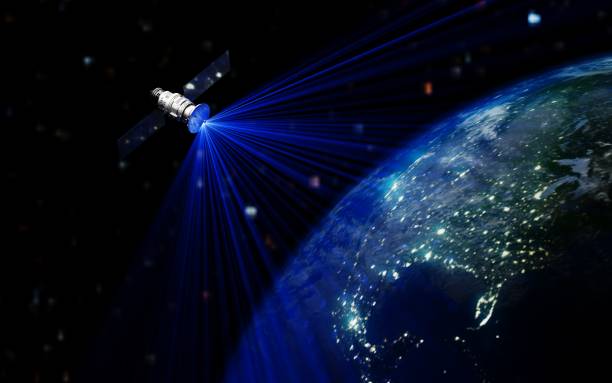
This is where lidar makes the difference. Lidar, which stands for Light Detection and Ranging, fires rapid pulses of laser light at the ground and measures how long each pulse takes to bounce back. The result is a dense, three-dimensional point cloud of the terrain below. Unlike a camera image, which gives you a picture with no depth, lidar gives you a topographical map of the surface in real time. A hazard detection system takes that point cloud, processes it through onboard algorithms, and identifies dangerous features like steep slopes, large rocks, and shadowed depressions that could snap a landing leg.
The real engineering achievement here is not the lidar itself, which has existed for decades in autonomous cars and surveying drones. It is the processing speed and the integration with the GNC system. The hazard detection lidar on a spacecraft like the Astrobotic Peregrine lander or the NASA-supported CADRE project has to generate that terrain map, run the hazard analysis, and feed a safe landing coordinate back to the guidance computer while the vehicle is still falling at several hundred meters per second. That is a feedback loop measured in milliseconds. The guidance computer then adjusts the throttle, gimbals the engines, and steers the vehicle toward the safe spot it never knew existed thirty seconds ago.
This capability changes the way we plan missions. Before hazard detection lidar, landing sites had to be chosen based on orbital imagery taken months or years prior. Mission planners picked a big, flat, boring ellipse and hoped the surface had not changed. That limited where we could go. High-value science targets often sit in rugged terrain near crater rims or volcanic vents, places that were too dangerous to attempt a landing. With autonomous hazard detection, you can aim for a smaller, more precise landing zone and trust the lidar to find a safe spot within that zone on the fly. The result is access to the most geologically interesting parts of the Moon and Mars without relying on decades-old maps.
The psychological shift for mission control is also worth noting. When the engineers at JPL or Lockheed Martin watch a landing stream, the moment that used to be the screaming heart attack—the final sixty seconds—is now a quiet data check. The lidar is running. The algorithms are confident. The guidance computer is doing the math that no human could do fast enough. The only thing left to do is wait for the confirmation signal that the legs are on the ground. That is the new normal. Autonomous landing systems are turning what used to be a stomach-churning gamble into a routine procedure.
This is not just for big landers either. The same technology is being miniaturized for small probes and commercial lunar landers. As the cost of lidar sensors drops and the processing power of space-grade FPGAs increases, even university-built cubesats will eventually land on the Moon using the same hazard detection logic that put Perseverance down in Jezero Crater. The technology is becoming commoditized, which means the barrier to landing on another world is falling.
So do not look for the dramatic heroics of a manual landing. The future of space travel is not about a pilot wrestling the controls. It is about a black box, a laser, and a set of algorithms that do the terrifying math while the rest of us watch a data feed. That is not less exciting. It is more exciting because it means we can finally go to the hard places. And when the footage of that first autonomous landing on a lunar skylight rim or a Martian canyon floor comes back, remember that the quiet hero was a hazard detection lidar that saw the danger before you did.
Space News
Latest Articles
New rockets, upcoming launches, and the stories shaping humanity's push off this planet. No astronomy degree required.