Vesta and the basaltic surface from Earth
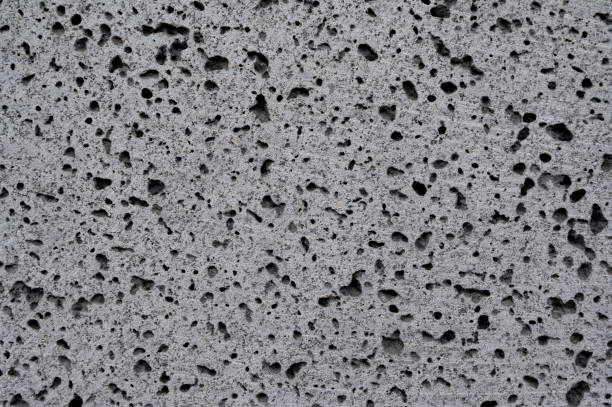
The basaltic surface is the first thing you need to understand. When you look at Vesta through a telescope, it’s not a dull gray lump. It has lighter and darker patches, and those darker regions are where the basaltic crust is exposed. Most asteroids in the belt are carbonaceous chondrites or stony-irons—primitive, unprocessed stuff left over from the solar nebula. Vesta is different. It got hot enough early in its history to melt and differentiate, meaning it formed a core, a mantle, and a crust. That crust is basalt. And basalt, as any geologist or construction worker will tell you, is tough, abundant, and versatile. For a future space mining operation, basalt means you have a raw material that can be melted down for fibers, used as radiation shielding, or processed for metals like iron, magnesium, and aluminum.
Now, why should you care about this as a destination? Because the Asteroid Belt is not just a scientific zone anymore. It’s the next frontier for resource extraction. The companies and agencies looking at deep space aren’t going to waste time on low-grade rubble. They want places with high concentrations of useful materials and stable surfaces to build on. Vesta gives you both. Its basaltic crust is uniform across large areas, which makes drilling and processing predictable. There’s also evidence of water ice in the polar regions, locked in craters that never see sunlight. Water means fuel, oxygen, and life support. Put it all together and Vesta starts looking less like a rock and more like a base camp.
The practical implications are huge. Basalt can be extruded into rods and fibers that are stronger than steel at a fraction of the weight. On Earth, basalt rebar is already replacing steel in some construction because it doesn’t rust. In space, you could build habitats, landing pads, and even spacecraft hulls without hauling materials up from Earth. Vesta’s surface is also rich in pyroxene, a mineral that contains iron and magnesium. These are the elements you need for structural alloys and for making magnesium-based propulsion systems. And because Vesta is so large, you’re not dealing with a tiny asteroid that you have to chase and capture. You’re dealing with a body that has its own gravity—about 0.025 g—which is enough to hold dust and loose rock but low enough that landing and launching are cheap compared to Earth or the Moon.
For anyone thinking about the economics of space, Vesta sits in a sweet spot. It’s in the inner main belt, which means it’s relatively close to Earth in orbital terms. A mission to Vesta requires less delta-v than a mission to Mars. The Dawn spacecraft proved that in 2011 when it orbited Vesta for over a year and mapped the entire surface. That data is now public, so any mining operation starting today would already have detailed geological maps, gravity models, and mineral composition data. You’re not guessing. You’re walking into a known quantity.
The other piece of this is the human angle. People in their twenties today will be the ones who actually see the first off-world mines get built. NASA’s Artemis program is pushing for lunar resources, but the belt is where the volume is. Vesta isn’t just a pit stop. It’s a destination where you can set up permanent operations. The basalt allows for additive manufacturing, so you can print spare parts or entire structures on the spot. You can extract oxygen from the rock—basalt is about 45% oxygen by weight. That breathing gas and propellant could support a refueling station that serves missions headed to Mars or the outer planets.
This is not science fiction. These are engineering problems that are being solved right now. NASA, the European Space Agency, and private companies like Planetary Resources (before its acquisition) and Karman+ have all looked at Vesta as a prime target. The basalt alone makes it worth the trip. Add in the ice, the metals, the stable gravity, and the pre-existing survey data, and Vesta becomes the most logical first industrial site in the asteroid belt.
So if you’re following the future of space travel, put Vesta on your map. It’s not a boring rock. It’s a basaltic world that has what we need to build the infrastructure of a spacefaring civilization. And it’s waiting for us to go get it.
Space News
Latest Articles
New rockets, upcoming launches, and the stories shaping humanity's push off this planet. No astronomy degree required.