Apollo 8 and the Earthrise photograph moment
The mission itself was a gamble of epic proportions. Originally, Apollo 8 was supposed to test the lunar module in Earth orbit. But the lunar module wasn’t ready. The Soviets had just sent Zond 5, an uncrewed capsule, around the Moon and back. Washington was nervous. NASA decided to scrap the original plan and turn Apollo 8 into a bold flyby mission—send a crew all the way to the Moon on the first flight of the Saturn V with humans aboard. That meant no lunar module for a lifeboat if something went wrong. If the main engine failed to put them into lunar orbit, they’d slingshot around the Moon and head home without a burn. If it failed during the return, they’d drift into deep space with no way back. The astronauts—Frank Borman, Jim Lovell, and Bill Anders—knew the stakes. They trained hard, talked through every failure mode, and climbed aboard on December 21, 1968.
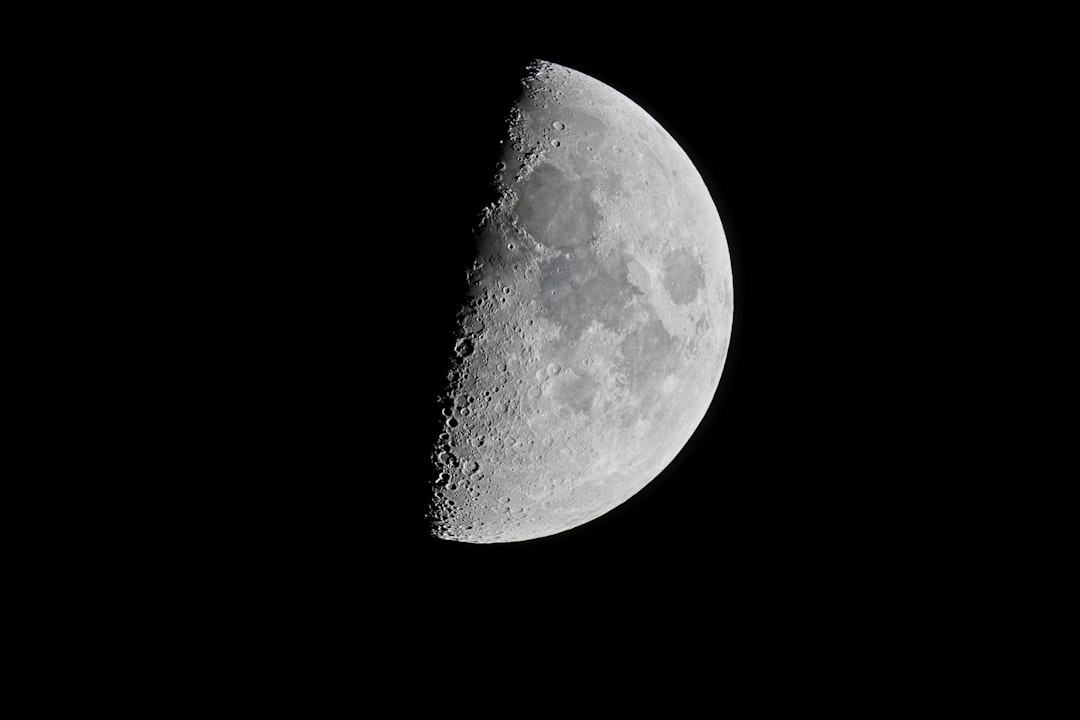
The flight to the Moon took about three days. The Saturn V performed beautifully, boosting them faster than any humans had ever traveled. On Christmas Eve, they fired the main engine to enter lunar orbit, disappearing behind the Moon with no communication to Earth. That was the close call moment. For ten minutes, nobody knew if the burn had worked. When the spacecraft emerged on the other side, the crew’s calm voices confirmed they were in orbit. They were the first humans to see the Moon’s far side with their own eyes—an alien landscape of craters and desolation, no Earth in sight.
Then came the moment that defined the mission. As the capsule rotated to prepare for photography, Bill Anders looked out a side window. He saw the Earth, small and fragile, rising above the lunar horizon. It was a brilliant blue-and-white marble against the black void. Anders snapped a color photo with a Hasselblad camera loaded with 70mm film. That image—Earthrise—is one of the most reproduced photographs in history. But in that moment, it wasn’t a planned shot. Mission control had asked the crew to take pictures of potential landing sites for future Apollo missions. Anders was just doing his job.
The cultural impact was immediate and lasting. Before Earthrise, people saw the Earth as a map of borders and nations, a backdrop for conflicts. That photo showed it as a single, vulnerable island in an endless ocean of space. It fueled the environmental movement, gave the planet a sense of shared fragility, and made even casual observers realize that our squabbles were tiny against the scale of the cosmos. For a generation of American men watching on black-and-white TV sets, it was a gut-punch reminder that exploration isn’t just about rockets and flags—it’s about perspective.
But let’s not romanticize the mission itself. Apollo 8 wasn’t just a photo op. It was a test of nerve and engineering. The crew had to navigate by stars, manually orient the spacecraft if the computer failed, and endure radiation exposure outside Earth’s magnetic field. They actually considered the possibility that reentry heat might kill them because the command module’s heat shield had never been tested at lunar return velocities. On the way back, Borman got violently ill from stomach flu, forcing Lovell and Anders to manage the spacecraft while he vomited in a bag. This was not a polished public relations stunt. It was three guys in a tin can, pushing the limits of what humans could do, with the whole world watching.
When they splashed down in the Pacific on December 27, the mission was a complete success. No one died. No major systems failed. They had orbited the Moon ten times, transmitted the famous Christmas Eve reading from Genesis, and brought back the first high-quality photos of the lunar surface and that Earthrise shot. It cleared the path for Apollo 11 seven months later.
For today’s casual space fan, Apollo 8 matters because it proves that bold decisions—risky ones—can pay off in a way that reshapes an entire civilization’s worldview. We’re heading back to the Moon with Artemis, and NASA is once again taking calculated risks with new rockets, new life support systems, and new landing methods. The Earthrise moment isn’t just a picture. It’s a lesson in what happens when you commit to a mission that seems just barely possible, and you get it right. Apollo 8 didn’t land on the Moon. It did something harder: it made us see where we live from a distance. That’s a mission that still matters.
Space News
Latest Articles
New rockets, upcoming launches, and the stories shaping humanity's push off this planet. No astronomy degree required.