Electron small rocket big ambitions
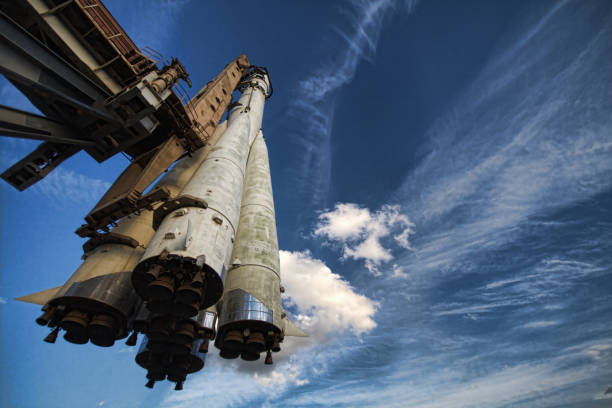
The Electron first launched in 2017, and since then it has logged dozens of successful missions, delivering cubesats, microsatellites, and small payloads to low Earth orbit. Its entire philosophy is built around efficiency, speed, and affordability. Unlike the massive rockets that need months of preparation and a huge launch complex, Electron can be assembled, integrated, and launched from a relatively small facility in New Zealand – and later from Virginia. The rocket uses a staged-combustion cycle with an electric turbopump, a clever piece of engineering that keeps the design simple and the costs down. Its first stage is powered by nine Rutherford engines, all 3D-printed, and its second stage uses a single vacuum-optimized Rutherford. This is no brute force machine. It’s a precision tool.
But the real ambition of the Electron is not just to get a few small satellites into space. Rocket Lab has been pushing boundaries with each mission. They’ve demonstrated that a small rocket can perform complex orbits, including capture and release operations for NASA and the U.S. Department of Defense. They’ve also begun experimenting with first-stage recovery, using a helicopter to snag the falling booster out of the sky in a dramatic mid-air catch attempt. That’s right – a helicopter catches a rocket. And they’ve actually caught it before, though not perfectly. The long-term goal is to make the Electron partially reusable, cutting costs further and enabling faster turnarounds. In a world where everyone is focused on Starship and New Glenn, the Electron is quietly doing the grunt work of reusability on a much smaller, more practical scale.
Why does any of this matter for a casual space fan? Because the future of space travel isn’t just about giant Mars ships or heavy lunar landers. It’s also about creating a robust ecosystem for small satellites that will power Earth observation, global internet constellations, scientific research, and defense applications. The Electron is the backbone of that ecosystem. When a startup needs to test a new communications payload, or a research group wants to get a spectrometer into orbit to study ocean health, they don’t need a Falcon 9. They need a ride that’s fast, reliable, and cheap enough to make the mission viable. That’s the Electron’s bread and butter.
Rocket Lab isn’t stopping there either. They’re developing a larger rocket called the Neutron, which will be about three times the size of the Electron and capable of lifting heavier payloads – including potentially humans. But the Electron remains the proving ground. It’s the platform where new tech gets flight-tested, where recovery methods get refined, and where the company builds its reputation for discipline and execution. In that sense, the Electron is like a farm team for spaceflight – working the small stuff now so the big stuff works later.
For American men in their 20s, the space industry can sometimes feel like a spectator sport for billionaires or a career path reserved for doctorate-holding engineers. But the Electron represents something more accessible. It’s a reminder that you don’t need to be a superpower to launch a rocket. You don’t need a Saturn V to change the game. You just need a solid design, good engineering, and the guts to try something different. Rocket Lab was founded by a New Zealander with a passion for space, and the Electron is the proof that ambition scales down as well as it scales up.
So next time you see footage of a big booster lifting off from Cape Canaveral, remember the little rocket from the other side of the world. It might not shake the ground like a Falcon Heavy, but it’s pulling its weight – and then some. The Electron is a giant in its own way, just a smaller one. And that’s exactly the point.
Space News
Latest Articles
New rockets, upcoming launches, and the stories shaping humanity's push off this planet. No astronomy degree required.