Automated docking and the Russian progress reliability
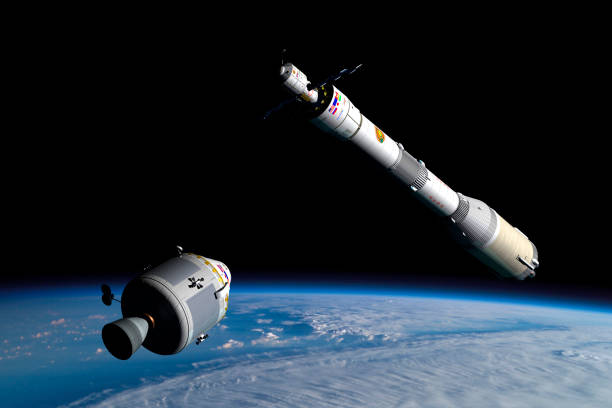
Let’s strip away the hype. Automated docking is exactly what it sounds like: a spacecraft flying itself into a port on the ISS without a human touching the controls. The Progress uses a system called Kurs, which is a radar-based rendezvous method developed during the Soviet era. It works by having the station and the Progress exchange radio signals, measuring distance, velocity, and relative position. The spacecraft’s onboard computer then fires thrusters to close the gap and gently kiss the docking port at a speed of about three centimeters per second. No joystick, no astronaut peering out a window. Just math and thrusters.
Why does this matter for you? Because reliability in docking isn’t just a technical curiosity. It’s the difference between a station that gets fresh supplies on schedule and a station that runs out of food or fuel. Every Progress mission—and there have been over 170 of them since the first one in 1978—must nail that approach. The success rate is north of 98 percent. That’s not an accident. The Kurs system is redundant, with multiple antennae and backup computers designed to handle a failure in mid-approach. If the primary radar fails, the backup takes over. If both go dark, the Progress can abort and try again. That level of fail-safe engineering is what allows NASA and Roscosmos to treat automated docking as routine.
Compare that to the early days. The first automated docking attempts in the 1960s were a mess. Soviet spacecraft had to rely on ground control and manual input because computers were too slow. By the time Progress launched, the USSR had spent a decade perfecting Kurs on the Salyut stations. The result was a system so robust that it has survived political upheavals, budget cuts, and the collapse of the Soviet Union itself. Today, the same basic algorithm runs on modern hardware. The Progress MS variant, which first flew in 2015, uses upgraded Kurs-NA electronics that are lighter, more power-efficient, and less susceptible to interference. It still docks autonomously within six hours of launch, sometimes faster.
Don’t mistake this for outdated technology. The Kurs system is deliberately simple because simplicity equals reliability in orbit. There are no lidar scanners, no optical cameras, no machine learning. Just a straightforward radio link and a computer that executes a pre-programmed trajectory. That’s why the Progress has never had a catastrophic docking failure. There have been close calls—a stuck antenna in 2017 forced an abort—but the spacecraft always backed away safely and tried again the next day. That kind of resilience is what you want when you’re sending a 7,000-kilogram container of food, water, and fuel toward a station traveling at 17,500 miles per hour.
The kicker is that this same technology is now being adapted for commercial spacecraft. SpaceX’s Dragon 2 uses a NASA-developed automated docking system called LIDS, which relies on infrared sensors and laser ranging. Boeing’s Starliner has its own system with cameras and GPS. But neither has the decades of flight data that Progress has. When a Dragon fails to dock on the first attempt—and it has—engineers look at the Kurs system’s history to understand what a robust automated approach should look like. The Russians proved that you don’t need cutting-edge sensors to get the job done. You need a system that works every time, under any lighting, and without human error.
For the casual space enthusiast, here’s the bottom line: automated docking is not a gimmick. It’s the backbone of modern space logistics. The Russian Progress spacecraft has been doing it so reliably for so long that most people forget it’s even happening. That’s the ultimate compliment. While Silicon Valley hypes up autonomous cars and self-flying drones, the real autonomous success story is a 50-year-old Russian cargo ship that docks itself to a space station without breaking a sweat. If you care about the future of space travel—whether it’s lunar bases, Mars missions, or commercial stations—you need to pay attention to this technology. Because if we can’t dock reliably in low Earth orbit, we sure as hell can’t do it on the Moon.
Space News
Latest Articles
New rockets, upcoming launches, and the stories shaping humanity's push off this planet. No astronomy degree required.