Uranus and Neptune why we haven't returned
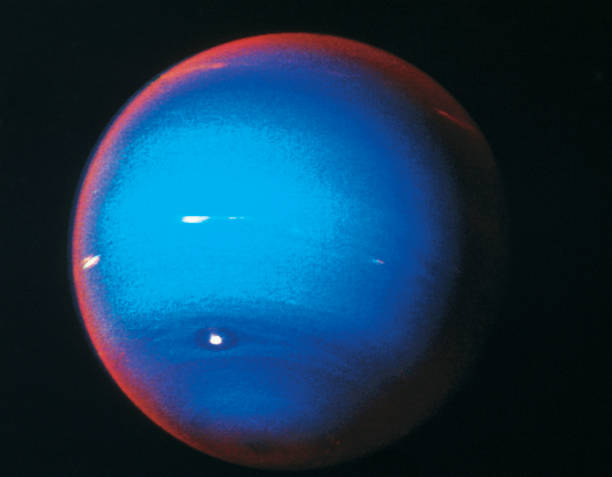
The first and most obvious reason is distance. Uranus sits about 1.8 billion miles from the Sun. Neptune is nearly 2.8 billion miles out. That’s not just a long drive. It’s a multi-year cruise that demands a spacecraft robust enough to survive extreme cold, radiation, and the slow decay of power systems. Solar panels become useless past Jupiter, so any Uranus or Neptune mission would require a radioisotope thermoelectric generator, the same plutonium-powered system used on Curiosity and Perseverance. Those units are scarce and expensive. The United States has a limited supply of plutonium-238, and every gram is allocated years in advance. A flagship mission to either ice giant would demand multiple RTGs, eating up a huge chunk of the national stockpile and leaving less for other high-priority missions.
Then there is the launch window problem. Planetary alignment dictates when you can slingshot a spacecraft past Jupiter to save fuel and time. The last ideal window for Uranus closed in the early 2010s. The next one opens around 2030. For Neptune, the window is even narrower and comes later. Miss these windows and your spacecraft either takes longer or requires a heavier, more expensive launch vehicle. That means mission planners have to commit a decade before launch, then wait another decade or more for arrival. That kind of timeline kills enthusiasm in a funding environment where Congress and NASA tend to prefer projects that deliver results within a single presidential administration.
Cost is the final nail. NASA’s last detailed study for a Uranus orbiter and probe, the Uranus Orbiter and Probe concept from the 2020 Planetary Science Decadal Survey, estimated a price tag somewhere north of four billion dollars. That is flagship territory, competing directly with Mars Sample Return, the Europa Clipper, and a potential Neptune mission. The Decadal Survey actually recommended Uranus as the top priority for a new flagship in the 2023-2032 period, but recommendations are not budgets. Congress has not allocated the money, and NASA has not officially begun development. Without a dedicated funding line, Uranus and Neptune remain a paper concept.
There is also a lingering technical challenge that most casual space fans overlook: entry conditions. Both planets have thick atmospheres with extreme pressures and temperatures. A probe designed to plunge into Uranus would need to survive crushing forces while sending back data in real time. That technology exists in theory, but it has never been tested at those depths. Any mission would require years of engineering development, adding more cost and risk to an already expensive endeavor.
Some people argue that we should go straight for Neptune because it has Triton, a captured Kuiper Belt object that could teach us about the early solar system. Others say Uranus is more accessible and its tilted magnetic field is a scientific goldmine. Both arguments are valid, but neither has generated the political will to break the logjam. Meanwhile, private companies like SpaceX have not stepped in because ice giant missions lack the commercial appeal of Mars or lunar infrastructure. There is no asteroid mining or tourism angle at 50 Kelvin.
The reality is that we are stuck in a holding pattern. The science community knows what they want. The engineering community knows how to build it. But until NASA gets a multi-billion dollar line item in the federal budget and the next launch window opens, Uranus and Neptune will remain the forgotten siblings of the solar system. For casual space enthusiasts who want to see those haunting blue worlds up close again, the wait is not over. It is just getting started. The next decade will decide whether we finally break the silence or let another generation pass without a return.
Space News
Latest Articles
New rockets, upcoming launches, and the stories shaping humanity's push off this planet. No astronomy degree required.